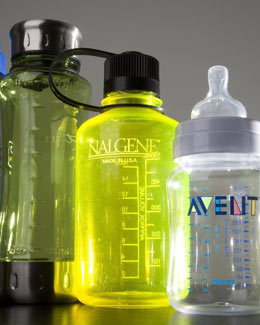
Concerns about plastic safety have been growing over the years, and the media has stepped up its efforts to expose potential dangers associated with plastic compounds such as bisphenol A (BPA) and phthalates. The problem is – there is very little scientific evidence linking plastic to human harm, and no credible evidence that our current typical exposures to BPA poses any health risks at all (so say the health agencies of the United States, Canada, the European Union, and Japan). But that’s not a very exciting story, is it?
Instead, what we often hear in the news is that microwaving our plastic containers or drinking from plastic water bottles could be dangerous to our health… and that BPA-free containers are better for baby. But where did the media come up with these ideas? I asked Dr. Chuck McKay, a toxicologist and emergency medicine physician at the University of Connecticut, to explain how safe levels of exposure (to various chemicals) are determined, and how to know if news reports are based on scientific evidence. I hope you’ll listen in to this educational Webinar.
Some of my favorite take-home messages from the Webinar include what I call “just becauses”:
1. Just because you can find a substance in your urine doesn’t mean it’s harmful. (Asparagus anyone?)
2. Just because an animal reacts to a substance, doesn’t mean that humans will. (How often have you caught a cold from your dog?)
3. Just because extreme doses of a substance can cause harm, doesn’t mean that tiny doses also cause harm. (Consider radiation exposure from riding in an airplane versus being near ground zero of a nuclear strike).
4. Just because something has a theoretical potential to harm, doesn’t mean it will. (Will you really be attacked by a shark in 2 feet of water at your local beach?)
5. Just because someone conducted a research study doesn’t mean their findings are accurate. (Do you really believe the Cosmo polls? There’s a lot of junk science out there!)
For an excellent review article of the high-quality science behind plastic safety, please check out this link. In the end, there are far more important health concerns to worry about than potential exposure to plastic compounds. And throwing out all your plastic containers may not even reduce your exposure to BPA anyway… A recent study found that people had higher concentrations of BPA in their urine when they followed a plastic-free, organic diet! Their exposure was actually traced to ground cinnamon, coriander, and cayenne pepper. Who knew?
Information circulating about the dangers of plastic containers has created fear and confusion. Are plastic containers toxic? Do harmful chemicals leach out into its contents? Do we need to discard all plastic containers?
While Dr. Schwarcz states that some plastics like those made by Tupperware and Rubbermaid are safe to use, there are other plastics made of Bisphenol A (BPA) that may cause some concern, however he did not become alarmed.
There is extensive information on the safety of plastics, and reading some of it can easily cause panic and confusion, but the smartest step health consumers can do for themselves is to remain calm and don’t become alarmed. Gather the facts and determine what’s best for you.
The Facts About Bisphenol A (BPA)
Bisphenol A (BPA) is used to manufacture polycarbonate plastics. This type of plastic is used to make some types of beverage containers, compact disks, plastic dinnerware, impact-resistant safety equipment, automobile parts, and toys. BPA epoxy resins are used in the protective linings of food cans, in dental sealants, and in other products.
General exposure to BPA at low levels comes from eating food or drinking water stored in containers that have BPA. Small children may be exposed by hand-to-mouth and direct oral (mouth) contact with materials containing BPA. Dental treatment with BPA-containing sealants also results in short-term exposure. In addition, workers who manufacture products that contain BPA can be exposed.
How Does BPA Get Into The Body?
BPA can leach into food from the epoxy resin lining of cans and from consumer products such as polycarbonate tableware, food storage containers, water bottles, and baby bottles. Additional traces of BPA can leach out of these products when they are heated at high temperatures. Read more »
*This blog post was originally published at Health in 30*
There has been a lot of media attention surrounding the safety of polycarbonate plastic products containing bisphenol A (BPA). BPA is found in polycarbonate, hard clear plastic products like eye glasses, bicycle helmets, and food containers, and also in epoxy resins that act as protective coatings on everything from food and beverage cans to steel pipes and car engines.
In the next week or so, the FDA is expected to provide a new analysis of the science behind BPA safety. To gain some insight into what the fuss is all about, Dr. Steve Novella and I interviewed Dr. Steven Hentges (Executive Director of the Polycarbonate/BPA Global Group of the American Chemistry Council) on a blogger briefing call.
You may listen to the entire conversation here (and please read on for my summary of the issues):
It’s no secret that doctors are disappointed with the way that the U.S. healthcare system is evolving. Most feel helpless about improving their work conditions or solving technical problems in patient care. Fortunately one young medical student was undeterred by the mountain of disappointment carried by his senior clinician mentors…
I am proud to be a part of the American Resident Project an initiative that promotes the writing of medical students residents and new physicians as they explore ideas for transforming American health care delivery. I recently had the opportunity to interview three of the writing fellows about how to…
I m often asked to do book reviews on my blog and I rarely agree to them. This is because it takes me a long time to read a book and then if I don t enjoy it I figure the author would rather me remain silent than publish my…
When I was in medical school I read Samuel Shem s House Of God as a right of passage. At the time I found it to be a cynical yet eerily accurate portrayal of the underbelly of academic medicine. I gained comfort from its gallows humor and it made me…
I am hesitant to review diet books because they are so often a tangled mess of fact and fiction. Teasing out their truth from falsehood is about as exhausting as delousing a long-haired elementary school student. However after being approached by the authors’ PR agency with the promise of a…


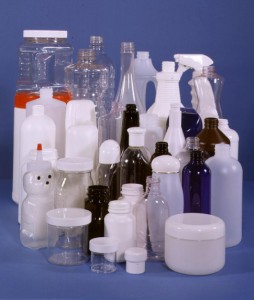 Concerns about plastic safety have been growing over the years, and the media has stepped up its efforts to expose potential dangers associated with plastic compounds such as bisphenol A (BPA) and phthalates. The problem is – there is very little scientific evidence linking plastic to human harm, and no credible evidence that our current typical exposures to BPA poses any health risks at all (so say the health agencies of the United States, Canada, the European Union, and Japan). But that’s not a very exciting story, is it?