August 17th, 2011 by Jessie Gruman, Ph.D. in Opinion
No Comments »


“Most physicians are competent and able to take care of most of the problems patients present with. The standards for getting into medical school are high and for getting out are higher. I think this call for patients to become experts in picking their doctors is overstated.” – David Rovner, MD, Professor Emeritus, Michigan State University
Most? What does “most” mean? Can most doctors treat me for the flu? How about pancreatic cancer? Must I conduct the same type of research to choose a doctor to set my broken arm that I do to find one to treat my mom’s congestive heart failure? Is the same level and type of research necessary to find a good surgeon as for a primary care clinician? Read more »
*This blog post was originally published at Prepared Patient Forum: What It Takes Blog*
November 27th, 2010 by KevinMD in Better Health Network, News, Opinion, Research
No Comments »

The following op-ed was published on October 27th, 2010 in USA Today:
When I ask new patients how they found me, frequently they say on the Internet through search engines such as Google.
Out of curiosity, I recently Googled myself. Numerous ads appeared, promising readers a “detailed background report” or a “profile” of me. Among the search results was information about my practice, whether I was board certified, had any lawsuits against me, and reviews from online doctor rating sites. Thankfully, most were favorable, but some were not.
Can patients reliably choose a good doctor online?
People already choose restaurants, movies, and their college professors based on what they read on the Internet, so it’s inevitable that many will research their doctors on the Web as well. But there are some good reasons consumers should be wary of the information they find online about doctors.
Random information?
An Archives of Internal Medicine study in September found that most publicly available information on individual physicians — such as disciplinary actions, the number of malpractice payments, or years of experience — had little correlation with whether they adhered to the recommended medical guidelines. In other words, there’s no easy way to research how well a doctor manages conditions such as heart disease or diabetes. That kind of relevant performance data are hidden from the public. Read more »
*This blog post was originally published at KevinMD.com*
May 5th, 2010 by JessicaBerthold in Better Health Network, Health Policy, Opinion
No Comments »

Some interesting points were raised at a recent Society of Hospital Medicine (SHM) session by Winthrop Whitcomb and Nancy Mihevc on patient satisfaction. To improve satisfaction scores:
1. Review the patient’s chart before you go in the room. It makes a big difference if the patient perceives you know what’s going on without having to bury your face in a chart.
2. Patients are often confused about who they are supposed to see after discharge. This, of course, is a safety issue as well as one that affects patient satisfaction.
3. Sit down when you are visiting a patient. Patients are happiest when they perceive you’ve spent enough time with them, and they are more likely to perceive this if you are sitting than standing with your hand on the doorknob. Read more »
*This blog post was originally published at ACP Hospitalist*
February 2nd, 2010 by Toni Brayer, M.D. in Better Health Network, Opinion
No Comments »

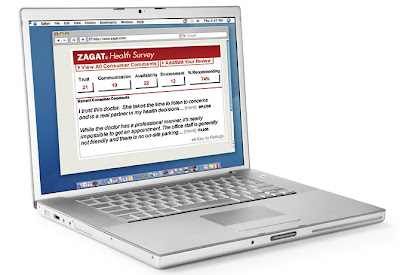 The organizations that rate hospitals and doctors have proliferated as the internet has become mainstream over the past 5 years. I’m sure you have seen some of these: U.S. World & News Reports, Consumer Reports Health, Health Grades, Leapfrog, Hospital Compare, Americas Best Doctors and 100 Best Hospitals. My local magazine lists the “top doctors” along with full page paid ads and promos that are very compelling. The questions is, do consumers care? Are these rating agencies really steering people toward top quality in health care?
Each of these agencies and organizations that “rate” have different measurements and criteria for their choices. The top rankings do not necessarily relate to quality outcomes. The Medicare data are two years old. Different treatments and conditions are judged, so a “top” hospital in one area may be a loser in another. Read more »
*This blog post was originally published at EverythingHealth*
December 1st, 2008 by Dr. Val Jones in Opinion
2 Comments »
I’d like to point out an error I made during a more optimistic time in my online career. Last year on my blog I suggested that physician ratings were “here to stay” so physicians should “embrace the inevitable.” What I hadn’t thought through at the time was the fact that virtually no one would use the ratings tools. I had made a fairly narcissistic assumption: that everyone cared so much about their healthcare experience that they were dying to describe it online.
The truth is that any online tool, portal, social network, or health 2.0 application must deliver a compelling “value proposition” to the user, especially if participation requires any degree of effort. It is human nature to take part in activities that reward us for our time. For example, we may slave over a hot stove because we stand to gain a delicious, satisfying meal in the end; we continue to work at jobs that we dislike because the paycheck makes it worthwhile. But why would a patient fill out a lengthy survey about his or her doctor when there’s no obvious value to them in doing so?
A recent article in Slate (h/t to the ACP Internist) makes a compelling case for why physician-rating sites have such low participation rates as to be fairly useless. The return on investment (time spent filling out a long questionnaire) is extremely low, and is worthwhile to only the most irritated patients. And of course, there is no policing of contributions – physicians can rate themselves into the highest quality rankings by logging in as fictional patients.
So does this mean that there are no worthwhile physician rating tools online? The Slate author would have you believe that there are none. However, I would suggest that Castle Connolly’s America’s Top Doctors list is a reliable, if somewhat limited source. Why? Because teams of staff (who are paid by Castle Connolly) do the heavy-lifting, requiring no effort from patients or online raters. Castle Connolly reviewers first request nominations for physician excellence from within a given specialty and region. Peers nominate others for the honor and then the Castle Connolly staff seek corroborative data from surveys sent to physician peers, hospital administrators, and support staff to ensure that nominated physicians are indeed highly esteemed by many of those with whom they work. In the end, about 10% of physicians are fully vetted and included in the list – and I’d say that the selection process is quite sensitive but not specific. In other words, a physician listed in America’s Top Doctors is likely to be excellent, but many excellent physicians are not captured by the methods.
I spoke to John Connolly in a recent interview about how to find a good physician and you may listen to the podcast here. Locating a good doctor is not too difficult – but finding one that will take your insurance (or still has some slots available for new patients) is another story.