September 7th, 2012 by Dr. Val Jones in Health Tips, Opinion
No Comments »
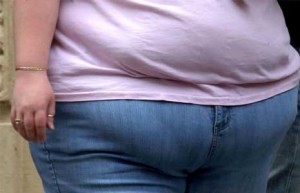 I recently found my way to an interesting NPR podcast via a link from Dr. Ranit Mishori (@ranitmd) on Twitter. The host of the show interviewed a physician (Dr. Mishori), an obesity researcher (Sara Bleich), and a family nurse practitioner (Eileen O’Grady) about how healthcare providers are trying (or not trying) to help patients manage their weight. Several patients and practitioners called in to participate.
First of all, I found it intriguing that research has shown that the BMI of the treating physician has a significant impact on whether he or she is willing to counsel a patient about weight loss. Normal weight physicians (those with a BMI under 25) were more likely to bring up the subject (and follow through with weight loss and exercise planning with their patients) than were physicians who were overweight or obese. Sara Bleich believes that this is because overweight and obese physicians either don’t recognize the problem in others who have similar body types, or that their personal shame about their weight makes them feel that they don’t have the right to give advice since they don’t practice what they preach. While 60% of Americans are either overweight or obese, 50% of physicians are also in those categories.
Although it’s not entirely surprising that overweight/obese physicians feel as they do, it made me wonder what other personal conditions could be influencing evidence-based patient care. Is a physician with high blood pressure less apt to encourage salt restriction or medication adherence? What about depression, smoking cessation, or erectile dysfunction? Are there certain personal diseases or conditions that impair proper care and treatment in others?
Several callers recounted negative experiences with physicians where they were “read the Riot Act” about their weight. One overweight woman said she handled this by simply avoiding going to the doctor at all, and another obese man said his doctor made him cry. However, the man went on to lose 175 pounds through diet and exercise modifications and said that the “tough love” was just what he needed to galvanize him into action.
Dr. Mishori felt that the “Riot Act” approach was rarely helpful and usually alienated patients. She advocated a more nuanced and sensitive approach that takes into account a patient’s social and financial situation. She explained that there’s no use advocating personal training sessions to a person on food stamps. Physicians need to be more sensitive to patients’ living conditions and physical abilities.
In the end, I felt that nurse practitioner Eileen O’Grady contributed some helpful observations – she argued that the rate-limiting factor in reversing obesity is not information, but motivation. Most patients know what they “should do” but just don’t have the motivation to start, and keep at it till they achieve a healthy weight. Ms. O’Grady devoted her practice to weight loss coaching by phone, and she believes that telephones have one big advantage over in-person visits: patients are more likely to be honest when there is no direct eye contact with their provider. Her secret to success, beyond a non-judgmental therapeutic environment, is setting small, attainable goals. She says that if she doesn’t believe the patient has at least a 70% chance of success, they should not set that particular goal.
Starting goals may be as simple as “finding a workout outfit that fits.” As the patient grows in confidence with their successes, larger, broader goals may be set. Weight loss coaching and intensive group therapy may be the most motivating strategy that we have to help Americans shed unwanted pounds. Apparently, the USPS Task Force agrees, as they recommend “intensive, multicomponent behavioral interventions” for those who screen positive for obesity in their doctors’ offices.
I think it’s unfortunate that most doctors feel that they “simply don’t have time to counsel patients about obesity.” Diet and exercise are the two most powerful medical tools we have to combat many chronic diseases. What else is so important that it’s taking away our time focusing on the “elephant in the room?” Pills are not the way forward in obesity treatment – and we should have the courage to admit it and do better with confronting this problem head-on in our offices, and also in our own lives.
December 5th, 2011 by Edwin Leap, M.D. in Health Policy, Opinion
No Comments »

Here’s my column in this month’s Emergency Medicine News.
In 1994 I was thrilled to become certified by the American Board of Emergency Medicine. I had worked very hard. I studied and read, I practiced oral board scenarios and even took an oral board preparatory course. It was, I believed, the pinnacle of my medical education. Indeed, if you counted the ACT, the MCAT, the three part board exams along the way and the in-service exams, it was my ultimate test. The one that I had been striving for throughout my higher education experience.
I am now disappointed to find that my certification was inadequate. In fact, all of us who worked so hard for our ABEM certification find ourselves facing ever more stringent rules to maintain that status. And it isn’t only emergency medicine. All medical specialties are facing the same crunch. Our certifying bodies expect more…and more…and more.
And the attitude is all predicated on the subtle but obvious assumption that those of us in practice are not competent to maintain our own knowledge base. Despite spending decades in education that we are not to be trusted. That we are not interested in learning. That we do not attempt to learn and that our practices are not, in fact, the endless learning experiences they actually are. They assume we need more supervision, despite demonstrating (by our continued practice) that we are willing to do hard work, in hard settings, and do the right thing.
Unfortunately, the rank and file Read more »
*This blog post was originally published at edwinleap.com*
December 3rd, 2011 by RyanDuBosar in Research
No Comments »

A simple optical illusion might encourage better eating habits, researchers found.
 The Delboeuf illusion makes equal size circles appear to be different sizes by surrounding them with larger or smaller concentric rings. Applied to eating, smaller plates make the food servings appear larger.
One problem is that the size of commercially available dinnerware has increased from 9.6 inches to 11.8 inches in the past century. Eating only 50 calories a day more as a result equals enough calories to add five pounds of weight annually.
Practical implications of the research include encouraging people to replace larger plates and bowls with smaller ones, choose plates that contrast starkly with food, and even choose tablecloths that match their dinnerware, the researchers noted. Those with eating disorders or elderly people who need to eat more could follow the opposite advice to improve their intake.
Researchers Read more »
*This blog post was originally published at ACP Internist*
December 1st, 2011 by MuinKhouryMDPhD in Opinion, Research
No Comments »

 In June 2011, the CDC Office of Public Health Genomics launched a community wide consultation process to develop priorities for the field of public health genomics in the next 5 years. This process was initiated as part of strategic visioning for integrating the emerging tools of genomics into practice and assuring the success of these new tools in improving population health. The process was conducted at a time of a widening gap between the rapid scientific advances in genomics and their impact on improving population health. The University of Michigan Center for Public Health and Community Genomics and Genetic Alliance spearheaded an effort to seek, collate and synthesize advice and recommendations from numerous stakeholders and constituents. The effort culminated in a workshop conducted on September 14, 2011 in Bethesda, Maryland. The results of the consultation, discussions and deliberations are summarized in a report published by the University of Michigan. Highlights of the recommendations are summarized here but readers should consult the full report. Some of the recommendations include:
To improve public health genomics education: Read more »
*This blog post was originally published at Genomics and Health Impact Blog*
October 10th, 2011 by MotherJonesRN in True Stories
No Comments »

 Nursing instructors grading Exams in the 1950s. Courtesy of Johns Hopkins Medical Archives on Flickr.
I remember it well. Cramming all night for a nursing exam, taking the test, and hoping for the best. It was a nerve racking experience for the students, but I’ve always wondered what it was like for the instructors. Check out these old gals. Grading papers was time consuming before computerized tests, but I bet they got some pretty entertaining answers.
Miss Jones, Medical Surgical Instructor: “Oh my God, I can’t believe this answer. It’s right up there with the excuse, “my dog ate my care plan.”
Mrs. Smith, OB/GYN Instructor: “I know what you mean. These young people are the future of our profession. Read more »
*This blog post was originally published at Nurse Ratched's Place*