November 23rd, 2010 by David H. Gorski, M.D., Ph.D. in Better Health Network, News, Opinion, Quackery Exposed, Video
No Comments »

Several of the bloggers on Science-Based Medicine have been — shall we say? — rather critical of Oprah Winfrey. The reason, of course, is quite obvious. Oprah is so famous that if you mention her first name nearly everyone will know exactly of whom you speak.
For the last quarter century, Oprah’s daytime TV talk show has been a ratings juggernaut, leading to the building of a media behemoth and making her one of the richest and most famous women in the world. Unfortunately, part of Oprah’s equation for success has involved the promotion of quackery and New Age woo, so much so that last year I lamented about the Oprah-fication of medicine, which scored me a writing gig in the Toronto Star.
Whether it be promoting bio-identical hormones, The Secret (complete with a testimonial from someone who used The Secret to persuade herself not to pursue conventional therapy for breast cancer), Suzanne Somers, the highly dubious medicine promoted by Dr. Christiane Northrup, or foisting reiki aficionado Dr. Mehmet Oz or anti-vaccine “mother warrior” Jenny McCarthy onto a breathless public, arguably no one is a more powerful force for the promotion of pseudoscience in America, if not the world.
Truly, the ending of Oprah’s TV show in the spring is a very good thing indeed for science and rationality. Or it would be, were it not for the fact that the reason Oprah is wrapping up her show after a quarter of a century is to start up her own cable channel, so that we can have Oprah-branded and -inspired programming 24/7. The mind boggles.
Still, my dislike for how Oprah promotes New Age mysticism and pseudoscience on a distressingly regular basis aside, I actually did think there were limits to how low she would go. I actually thought there were limits to how egregiously vile a quackery Oprah would endorse. The operative word, of course, is “did,” which now needs to be struck off after last Wednesday, which is when Oprah did an entire show entitled Do You Believe in Miracles? (Guess what answer was implicitly, if not explicitly, endorsed.) Featured prominently in that episode were several segments on the faith healer John of God. Read more »
*This blog post was originally published at Science-Based Medicine*
July 18th, 2009 by Dr. Val Jones in Expert Interviews, Quackery Exposed
3 Comments »
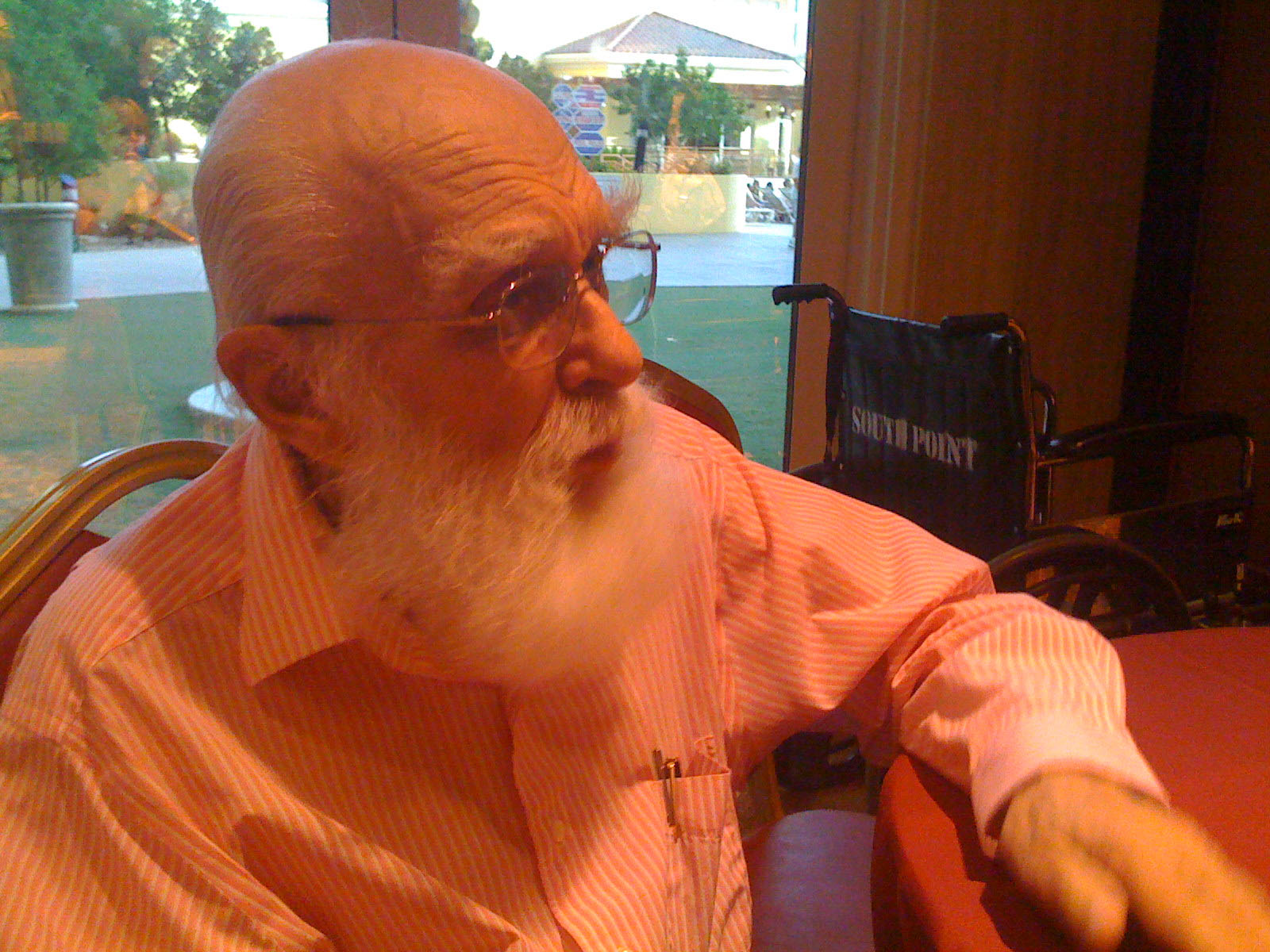 James Randi, perhaps better known as “The Amazing Randi” has spent most of his life performing magic shows. In 1996 he created the James Randi Educational Foundation (JREF) designed to expose the fraudulent claims made by psychics, faith healers, and snake oil salesmen. The ultimate goal of the JREF is to create a new generation of critical thinkers – people who will not be hoodwinked by the aforementioned hucksters.
I had the good fortune of interviewing Mr. Randi briefly at the recent conference known as “The Amazing Meeting.” I was eager to pick his brain about human behavior and magical thinking. This is what I learned…
Randi identified certain groups of people who seem to be more susceptible to magical thinking and/or belief in the paranormal. According to him, the top two are:
1. News reporters. Although at first I wasn’t sure if Randi meant that reporters like a good story versus they believe a good story – he told me that in his experience, they were some of the most gullible people on earth. In fact, they were more interested in implausible stories than true ones – and Randi said that the more fantastical his explanation for phenomena, the more likely they were to believe it and write about it.
2. Academics. This surprised me since I assumed that this group would actually be less susceptible. Randi suggested that they are more likely to be taken in because they are single-minded about phenomena. They are over confident in their ability to understand how things work, and when something cannot be explained in their framework, they’re willing to attribute it to the paranormal.
Who are the least susceptible? Children. Why? Because they are simple thinkers, and harder to distract. The art of magic is in distraction of the sophisticated mind. Children tend to be very concrete, so they don’t expect things to happen with hand-waving and flourishes. They keep their eye on the coin (or other item being transferred from hand to hand), and are more likely to know where it is at all times.
To wrap up our short interview, I asked Randi if he could explain why people believe in magic, fantasy, and the paranormal? He responded simply:
Ultimately it’s not about intelligence or lack thereof. It’s about people not wanting to accept that life is random, suffering is inevitable, and there is no good reason for bad things happening.
What do you make of Randi’s observations?
July 11th, 2009 by Dr. Val Jones in Announcements
2 Comments »
I’m in Las Vegas at the Science Based Medicine (SBM) conference – where I helped to explain the reasons why science is critical in separating fact from fiction. Following the SBM event, critical thinkers from across the US and Canada gathered to discuss myth-busting in various forms… I really enjoyed meeting up with SBM bloggers, Adam Savage (from the hit TV show, Mythbusters), Jennifer Ouellette (a physicist and Director of The Science and Entertainment Exchange at the National Academy of Sciences), astronomer blogger Phil Plait, and The Amazing Randy – a magician devoted to exposing medical fraud and the tricks of the trade.
Blogging will be a little light this weekend… please enjoy the pics! (I did get to interview both Adam Savage and James Randi… so stay tuned for those!)
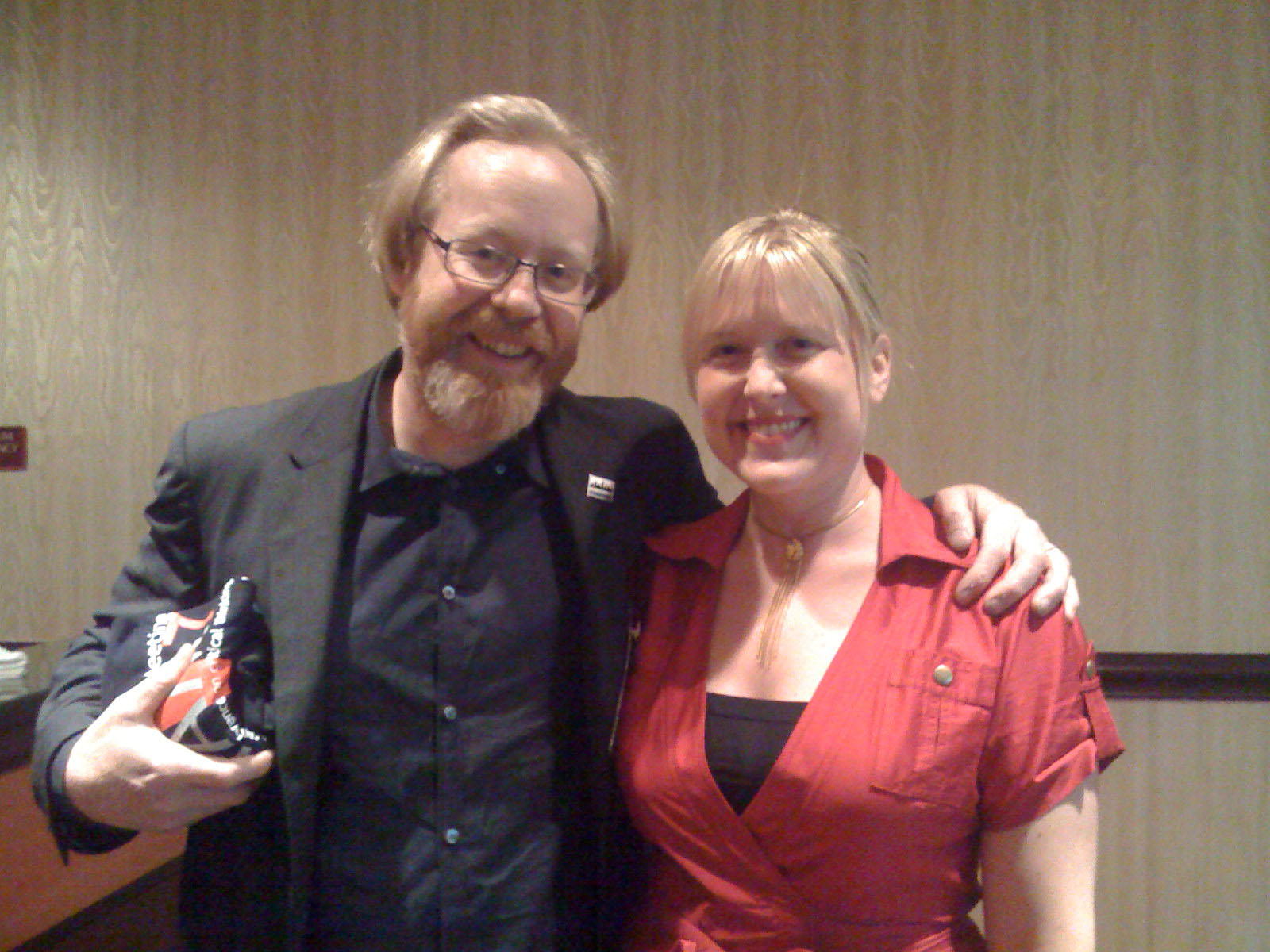
Adam Savage (Mythbusters) & Dr. Val
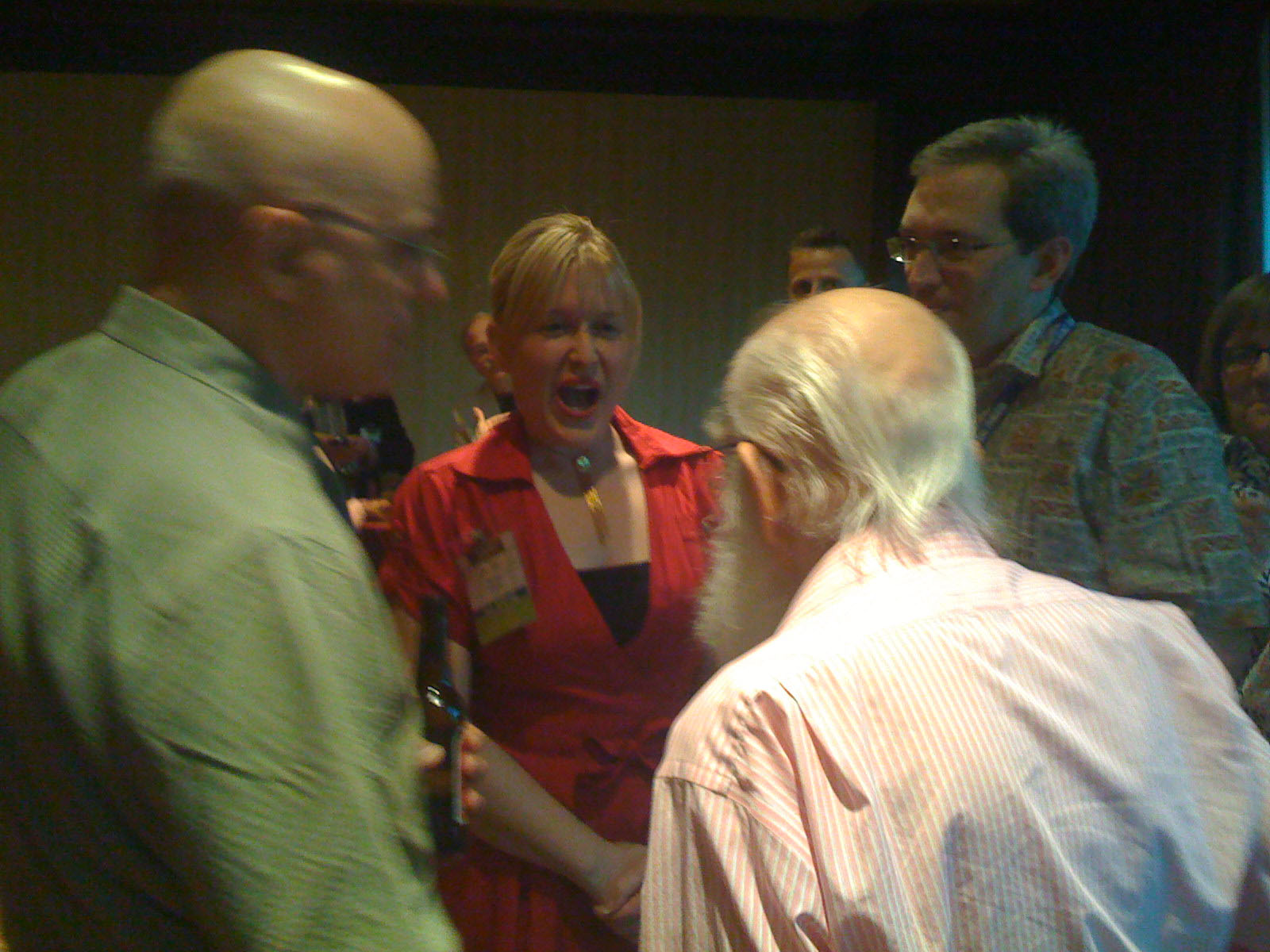
I'm amazed by Randi
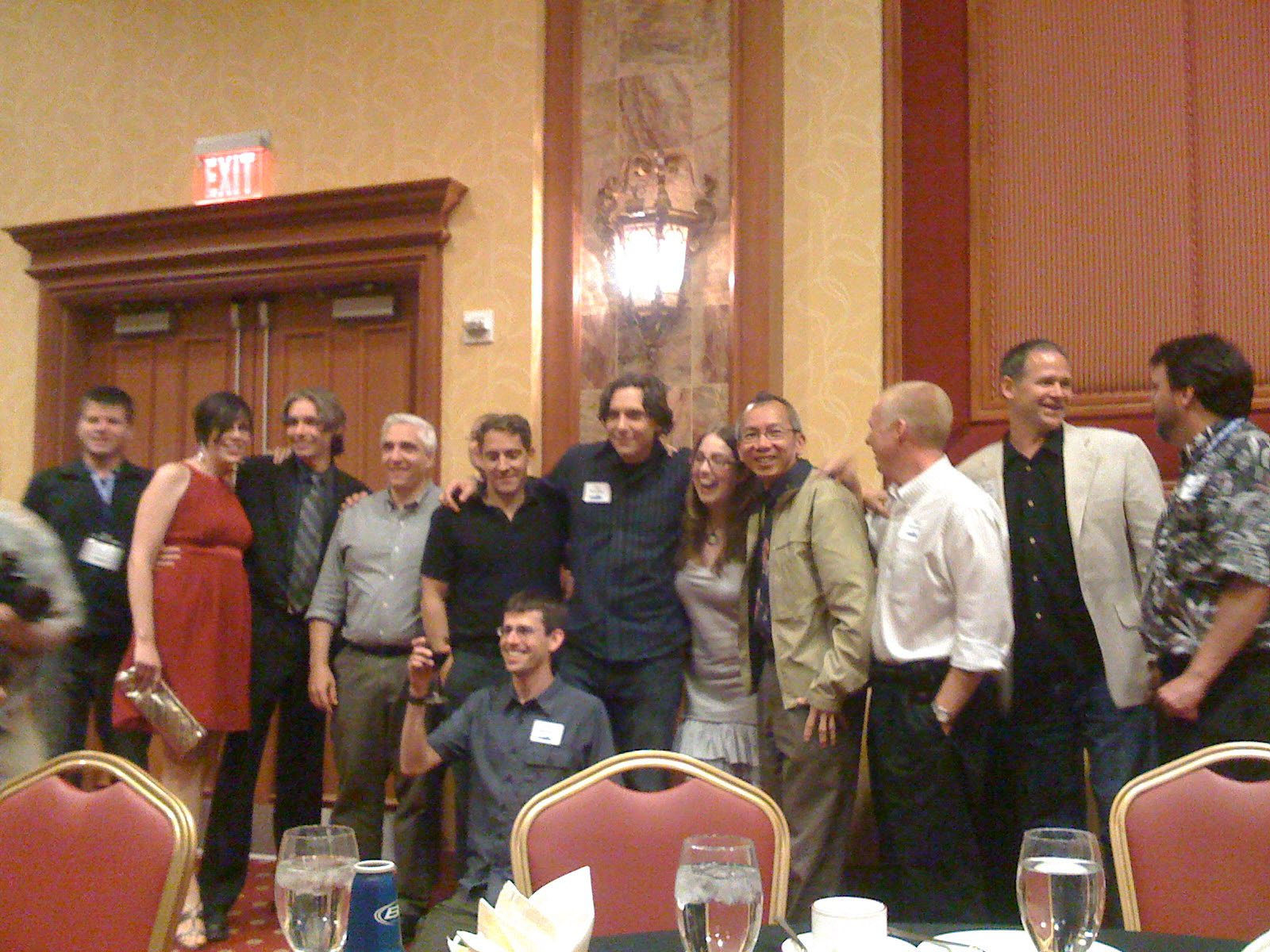
The Novella Brothers & Friends