July 27th, 2015 by Dr. Val Jones in Health Tips, True Stories
2 Comments »
 I met my newly admitted patient in the quiet of his private room. He was frail, elderly, and coughing up gobs of green phlegm. His nasal cannula had stepped its way across his cheek during his paroxsysms and was pointed at his right eye. Although the room was uncomfortably warm, he was shivering and asking for more blankets. I could hear his chest rattling across the room.
The young hospitalist dutifully ordered a chest X-Ray (which showed nothing of particular interest) and reported to me that the patient was fine as he was afebrile and his radiology studies were unremarkable. He would stop by and check in on him in the morning.
I shook my head in wonderment. One look at this man and you could tell he was teetering on the verge of sepsis, with a dangerous and rather nasty pneumonia on physical exam, complicated by dehydration. I started antibiotics at once, oxygen via face mask, IV fluids and drew labs to follow his white count and renal function. He perked up nicely as we averted catastrophe overnight. By the time the hospitalist arrived the next day, the patient was looking significantly better. The hospitalist left a note in the EMR about a chest cold and zipped off to see his other new consults.
Similar scenarios have played out in countless cases that I’ve encountered. Take, for example, the man whose MRI was “normal” but who had new onset hemiparesis, ataxia, and sensory loss on physical exam… The team assumed that because the MRI did not show a stroke, the patient must not have had one. He was treated for a series of dubious alternative diagnoses, became delirious on medications, and was reassessed only when a family member put her foot down about his ability to go home without being able to walk. A later MRI showed the stroke.
A woman with gastrointestinal complaints was sent to a psychiatrist for evaluation after a colonoscopy and endoscopy were normal. After further blood tests were unremarkable, she was provided counseling and an anti-depressant. A year later, a rare metastatic cancer was discovered on liver ultrasound.
Physicians have access to an ever-growing array of tests and studies, but they often forget that the results may be less sensitive or specific than their own eyes and ears. And when the two are in conflict (i.e. the patient looks terrible but the test is normal), they often default to trusting the tests.
My plea to physicians is this: Listen to your patients, trust what they are saying, then verify their complaints with your own exam, and use labs and imaging sparingly to confirm or rule out your diagnosis. Understand the limitations of each study, and do not dismiss patient complaints too easily. Keep probing and asking questions. Learn more about their concerns – open your mind to the possibility that they are on to something. Do not blame the patient because your tests aren’t picking up their problem.
And above all else – trust yourself. If a patient doesn’t look well – obey your instincts and do not walk away because the tests are “reassuring.” Cancer, strokes, and infections will get their dirty tendrils all over your patient before that follow up study catches them red handed. And by then, it could be too late.
July 25th, 2012 by Dr. Val Jones in Health Tips, Opinion, True Stories
6 Comments »
 Six weeks ago I had a skin lesion removed by a plastic surgeon. About 7 days after the biopsy, I received a letter from the pathology lab where the sample had been analyzed under a microscope. I eagerly opened the letter, assuming that it contained test results, but was disappointed to find a bill instead. As a physician, it felt strange to be in a position of having to wait for a colleague to give me results that I was trained to understand for myself. However, I knew that in this case I was wearing my “patient hat” and that I’d need to trust that I’d receive a call if there was an abnormality. I haven’t received a call yet, and I assume that no news is good news. But what if no news is an oversight? Maybe there was a communication breakdown between the path lab and the surgeon (or his office staff) and someone forgot to tell me about a melanoma? Unlikely but possible, right?
Patients experience similar anxiety in regards to lab tests on a constant basis. In a perfect world, they’d receive results at the same time as their doctors, along with a full explanation of what the tests mean. But most of the time there’s a long lag – an awkward period where patients have to wait for a call or make a nuisance of themselves to office staff. Shouldn’t there be a better way?
The New York Times delves into the issue of “the anxiety of waiting for test results,” with some helpful tips for patients in limbo:
As patients wait for test results, anxiety rises as time slips into slow motion. But experts say patients can regain a sense of control.
- Start before the test itself.
- Because fear can cloud memory during talks with doctors, take notes. If you can, bring a friend to catch details you may miss.
Some pretest questions:
- What precisely can this test reveal? What are its limitations?
- How long should results take, and why? Will the doctor call with results, or should I contact the office?
- If it’s my responsibility to call, what is the best time, and whom should I ask for?
- What is the doctor’s advice about getting results online?
Do I think that patients should have access to their results without their physician’s review? While my initial instinct is to say “yes,” I wonder if more anxiety may be caused by results provided without an interpreter. There are so many test results that may appear frightening at first (such as a mammogram with a “finding” – the term, “finding,” may mean that the entire breast was not visualized in the image, or that there was a shadow caused by a fatty layer, or -less commonly – it can also indicate that a suspicious lesion was observed). I’m not arguing that patients can’t understand test results on their own, but medicine has its own brand of jargon and nuances that require experience to interpret.
Consider the slight deviations from the mean on a series of blood tests. They can be perfectly normal within the patient’s personal context, but may simply be listed by the lab as high or low. This can cause unnecessary anxiety for the patient. And what about PAP smear results that are listed as “ASCUS” – atypical squamous cells of undetermined significance? These can occur if the patient merely had recent sexual intercourse, and are not necessarily indicative of cancer at all.
And what about the “ambulance chasing lawyers” out there? Will there be additional frivolous law suits created by lab test results reported direct-to-consumer as abnormal in some way (when they really aren’t, given the full clinical picture) and patients assuming that their physician was negligent by not reporting the abnormality to them sooner? It could happen.
In the end I think that physicians all need to make a concerted effort to forward (with an explanation when necessary) lab test results to patients as quickly as possible. But since doctors are the ones ordering the tests in the first place, they do have a right to see them (before the patient when appropriate) – and an obligation to pass on the information in a timely and fully explained manner. That’s the value of having a physician order a test – their expertise in interpreting the results are part of the package (and cost). When patients order their own tests (and in some cases they can) then they should be first to receive the results.
As for me, I’m going to have to resort to “office staff nuisance” to get my results confirmed… just like any other regular patient. Oh well. 😉
May 8th, 2011 by Elaine Schattner, M.D. in True Stories
No Comments »

Last week I had some blood tests taken before a doctor’s appointment. I went to a commercial lab facility, one of several dozen centers for collecting specimens have opened up in otherwise-unrented Manhattan office spaces lately.
I have to say I really like getting my blood work done at this place, if and when I need blood tests. And it’s gotten better over the past few years.
First, pretty much all they do in the lab center is draw blood and collect other samples based on a doctor’s orders. So the people who work there are practiced at phlebotomy, because it’s what they do most of the time. The guy who drew my blood last week did the same a year or two ago, and he was good at it back then. He used a butterfly needle and I didn’t feel a thing.
Second, they seem organized and careful about matching specimens to patients. The man who drew my blood didn’t just confirm my name and date of birth, but he had me sign a form, upon my inspecting the labels that he immediately applied to the tubes of blood he drew from my right arm, that those were indeed my samples and that I was the patient named Elaine Schattner with that date of birth and other particulars. Read more »
*This blog post was originally published at Medical Lessons*
December 31st, 2010 by Medgadget in Better Health Network, News, Research
No Comments »

GENTAG, Inc. has announced a new diagnostic platform which uses near field communication (NFC) technology to transmit test results from a disposable test strip to a patient’s cellphone. Once results have been sent to a phone, they can then be uploaded to internet-connected EMR systems. The company claims their platform can test for pregnancy, HIV/AIDS, pathogens, and a number of different cancers, and monitor glucose, fever, as well as deliver drugs.

From the press release:
GENTAG started with well-established immunoassay technology and made it wireless and compatible with Near Field Communication (NFC) technology, which enables consumers to use their cell phones as diagnostic tools to instantly test for pathogens, allergens or common medical conditions at any time, no matter where they are.
NFC is currently being integrated into all major cell phone brands, and GENTAG is working with major OEMs [original equipment manufacturers] worldwide to promote the uses of its disposable wireless sensor platform for consumer markets.
Press release: Cell Phones Are Now Personal Diagnostic Tools That Can Monitor Fertility, Pathogens, AIDS, Drugs, and Allergens…
GENTAG products page…
*This blog post was originally published at Medgadget*
November 14th, 2010 by Davis Liu, M.D. in Better Health Network, News, Opinion, Research
No Comments »

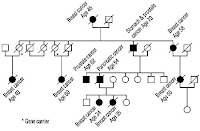 The Associated Press ran a provocatively-titled piece recently, “Family health history: ‘best kept secret’ in care”, which noted how a geneticist at the Cleveland Clinic discovered that asking about family members and their history of breast, colon, or prostate cancer was better than simply doing genetic blood testing.
Surprising? Hardly. This is what all medical students are taught. Talk to the patient. Get a detailed history and physical. Lab work and imaging studies are merely tools that can help support or refute a diagnosis. They provide a piece of the puzzle, but always must be considered in the full context of a patient. They alone do not provide the truth. Read more »
*This blog post was originally published at Saving Money and Surviving the Healthcare Crisis*