July 27th, 2015 by Dr. Val Jones in Health Tips, True Stories
2 Comments »
 I met my newly admitted patient in the quiet of his private room. He was frail, elderly, and coughing up gobs of green phlegm. His nasal cannula had stepped its way across his cheek during his paroxsysms and was pointed at his right eye. Although the room was uncomfortably warm, he was shivering and asking for more blankets. I could hear his chest rattling across the room.
The young hospitalist dutifully ordered a chest X-Ray (which showed nothing of particular interest) and reported to me that the patient was fine as he was afebrile and his radiology studies were unremarkable. He would stop by and check in on him in the morning.
I shook my head in wonderment. One look at this man and you could tell he was teetering on the verge of sepsis, with a dangerous and rather nasty pneumonia on physical exam, complicated by dehydration. I started antibiotics at once, oxygen via face mask, IV fluids and drew labs to follow his white count and renal function. He perked up nicely as we averted catastrophe overnight. By the time the hospitalist arrived the next day, the patient was looking significantly better. The hospitalist left a note in the EMR about a chest cold and zipped off to see his other new consults.
Similar scenarios have played out in countless cases that I’ve encountered. Take, for example, the man whose MRI was “normal” but who had new onset hemiparesis, ataxia, and sensory loss on physical exam… The team assumed that because the MRI did not show a stroke, the patient must not have had one. He was treated for a series of dubious alternative diagnoses, became delirious on medications, and was reassessed only when a family member put her foot down about his ability to go home without being able to walk. A later MRI showed the stroke.
A woman with gastrointestinal complaints was sent to a psychiatrist for evaluation after a colonoscopy and endoscopy were normal. After further blood tests were unremarkable, she was provided counseling and an anti-depressant. A year later, a rare metastatic cancer was discovered on liver ultrasound.
Physicians have access to an ever-growing array of tests and studies, but they often forget that the results may be less sensitive or specific than their own eyes and ears. And when the two are in conflict (i.e. the patient looks terrible but the test is normal), they often default to trusting the tests.
My plea to physicians is this: Listen to your patients, trust what they are saying, then verify their complaints with your own exam, and use labs and imaging sparingly to confirm or rule out your diagnosis. Understand the limitations of each study, and do not dismiss patient complaints too easily. Keep probing and asking questions. Learn more about their concerns – open your mind to the possibility that they are on to something. Do not blame the patient because your tests aren’t picking up their problem.
And above all else – trust yourself. If a patient doesn’t look well – obey your instincts and do not walk away because the tests are “reassuring.” Cancer, strokes, and infections will get their dirty tendrils all over your patient before that follow up study catches them red handed. And by then, it could be too late.
November 26th, 2012 by Dr. Val Jones in Health Tips, Opinion, Research
5 Comments »
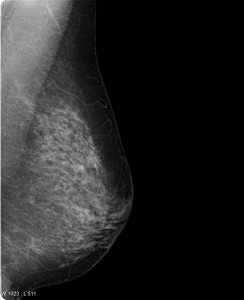 A recent mammogram study in the New England Journal of Medicine was so controversial that the authors (Drs. Welch and Bleyer) decided to make a YouTube video to defend and explain their conclusions. Now that’s a first, isn’t it? Well kudos to the study authors for their creative approach to getting ahead of a controversy. However, their video (created for the “general public”) is still a bit too technical in my opinion. I’d like to take a crack at distilling it further.
A question on most women’s minds (as they turn 40 and beyond) is whether or not they should get a screening mammogram (x-ray of the breasts). If you have found a lump in your breast or you have a family history of breast cancer the answer is yes. No need to read any further. However, for the majority of us lumpless, family-history-free women, a screening mammogram is far more likely to expose us to unnecessary follow up testing than it is to catch a tumor early. Dr. Welch explains that screening mammograms aren’t very good at identifying aggressive breast cancer early enough to make a difference in whether one lives or dies anyway. That’s very disappointing news.
Dr. Welch goes on to explain that most of the gains we’ve made in breast cancer survival have been because of improved breast cancer treatments, not because of early detection with mammograms. He estimates that every year in the U.S. 1.3 million women are “over-diagnosed” with breast cancer because of screening mammograms, subjecting women to unnecessary biopsies, surgical procedures, and further follow up studies. In the video, Dr. Welch doesn’t explain exactly what these “over diagnosed” cancers end up being exactly (Cysts? Benign calcifications? Early non-aggressive cancers that the immune system kills on its own?) But suffice it to say that they don’t contribute to the cancer death rates.
So, given the fact that you are more likely to suffer through a false alarm than to discover a cancer early (and even if you do find it early, if it’s the “bad” kind you may not survive) are you willing to undergo a screening mammogram? That’s a personal question that we each have to answer for ourselves. As time goes on, however, I suspect that the answer will be made for us since health insurance companies (whether public or private) will begin to balk at paying for tests that do more harm than good overall. I think this issue is really at the heart of the controversy (the perception of rolling back a health benefit that women currently “enjoy”). Eventually screening mammograms may become an out-of-pocket expense for women who simply prefer the peace of mind that a normal test can give – even at the risk of going through a false alarm.
That being said, it sure would be great if we could find a screening test that identifies breast cancer early – especially the aggressive kind. Perhaps a blood test will do the trick one day? At least it is comforting to know that we have made great strides on the treatment side, so that fewer women than ever before die of breast cancer. More research is needed on both the screening and treatment sides of course.
As for me, I do regular breast self exams – though because I have no family history of breast cancer I’ve opted out of screening mammograms because I feel the cost/benefit ratio is not in my favor. I certainly hope that a better screening test is developed before I face a potential diagnosis. I respect that other women will disagree with me – and I think they have the right to be screened with the only option we currently have: the mammogram. I’m not sure how long it will continue to be covered by insurance, but at a price point of about $100, most of us could still afford to pay for it out-of-pocket if desired.
The bottom line of this controversial research study is that screening mammograms don’t actually catch death-causing breast cancers early enough to alter their course. Even though it makes intuitive sense to be screened, long term observations confirm that overall, mammograms do more harm than good. So now we wait for a better test – while some of us continue with the old one (as the National Cancer Institute recommends), and others (like me) don’t bother.
***
Thanks to ePatient Dave and Susannah Fox who brought the issue to my attention on Facebook. Isn’t social media grand?
December 26th, 2011 by Medgadget in News
No Comments »


Abiomed‘s Impella left ventricular assist device, an endovascular percutaneously-delivered LVAD, will soon be getting a more powerful new model. The current model is capable of delivering an augmentation of cardiac output by up to 2.5 liters a minute, but the new Impella cVAD should do around 3.5 L/m, and possibly up to 4 L/m in the not too distant future.
The new device, and above numbers, were announced at Abiomed’s investor day conference and the company hopes to have the device available to clinicians by the Summer of 2012.
Here are the bullet points about Impella cVAD that were provided to us by Abiomed: Read more »
*This blog post was originally published at Medgadget*
September 30th, 2011 by ChristopherChangMD in Research
No Comments »

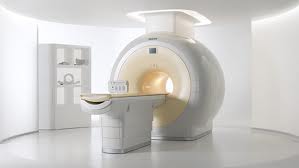 Researchers at Johns Hopkins published a study that reports that MRI scans CAN cause feelings of dizziness induced by magnetic fields causing motion of the electrically charged fluid of the inner ear.
In both ears, there is a “gyroscope” called the labyrinth. Whenever the head turns or a force like gravity is exerted on this system, fluid moves within, which tells the brain that motion has occurred. It’s much like looking into a glass of water and based on the way the water tilts in the glass, you can guess which way motion is occurring.
In any case, the study Read more »
*This blog post was originally published at Fauquier ENT Blog*
August 29th, 2011 by Medgadget in Research
No Comments »
Optical Coherence Tomography (OCT) has been demonstrated to be able to differentiate between benign and potentially malignant pancreatic cysts. Researchers from Massachusetts General Hospital, Physical Sciences, Inc., Brigham and Women’s Hospital, and Brandeis University have published their findings in Biomedical Optics Express. In their study they used surgically removed pancreas specimens of patients with pancreatic cysts to assess them with OCT and compare the results with histology examinations. OCT was able to reveal specific morphological characteristics used to differentiate between the low-risk and high-risk cysts. Read more »
*This blog post was originally published at Medgadget*