December 15th, 2011 by Paul Auerbach, M.D. in Health Tips, Opinion
No Comments »

The 2011 Annual Summer Meeting of the Wilderness Medical Society that was held in Snowmass, Colorado was excellent and provided terrific education for all in attendance. In a series of posts, I’ll highlight some of what we learned.
Brad Bennett gave a wonderful lecture on Tactical Combat Casualty Care (TCCC) for the Wilderness Provider. Military medicine and wilderness medicine share certain common elements: extreme and remote environments, a practice of medicine where definitive care can be hours or days away, difficult patient access, limited medical personnel and equipment, prompt decision making, creative thinking, and improvisation. Medical injuries may overwhelm resources and evacuation may be delayed due to environment conditions and the features of the terrain.
In military situations, Read more »
This post, Treating Combat Injuries And Its Similarities To Wilderness Medicine, was originally published on
Healthine.com by Paul Auerbach, M.D..
November 11th, 2011 by PJSkerrett in Health Tips
No Comments »

My ability to sit peacefully day after day and write about health or enjoy my family owes more than I’ll ever know to the hard work and sacrifice of generations of American men and women who served in the Armed Forces. On behalf of my colleagues at Harvard Health Publications: Thank you for your service.
One of the challenges faced by many servicemen and servicewomen returning from war is post-traumatic stress disorder, or PTSD.
In a nutshell, post-traumatic stress disorder is a lasting and exaggerated reaction to a terrifying or life-threatening event. It makes a person feel like he or she is living through the event over and over again. PTSD shows itself in three main ways:
Re-experiencing. People with PTSD mentally relive the triggering trauma in daytime flashbacks, nightmares, or inescapable thoughts about the event. Sights, sounds, smells, or other stimuli can bring the event to life.
Avoidance. People with PTSD tend to Read more »
*This blog post was originally published at Harvard Health Blog*
October 1st, 2011 by Toni Brayer, M.D. in Opinion
1 Comment »

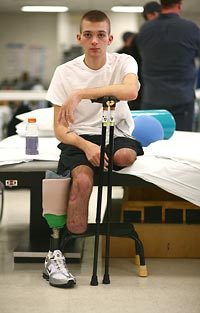 We must not turn a blind eye to the shocking facts about land mines and the damage they cause to civilians and our own troops. The fact that modern warfare involves buried explosives that are completely untargeted should shock the conscience of the world. The number of severe wounds that affect our servicemen is on the rise and the Army’s Landstuhl Regional Medical Center in Germany is filled with casualties from Iraq and Afghanistan.
There have been 79 cases of multiple amputations this year for our U.S. soldiers…more than any previous year and through July, 134 servicemen and women lost limbs. The year is only 1/2 over!
Doctors treating the troops said there is often damage to lungs, kidneys and livers from massive blood loss and shock. Infection is rampant and 90 soldiers lost Read more »
*This blog post was originally published at EverythingHealth*
April 4th, 2010 by Bongi in Better Health Network, Health Policy, News, Opinion, True Stories
No Comments »

This isn’t really my story, but in a sense it belongs to all South Africans. It’s our shame and may be part of our downfall.
We are a people at war. We war against ourselves and we war against peace. Each fights for himself and bugger the rest. But who heals the fallen? It seems in South Africa that quite soon it may be no one.
Recently a story made the news. It was shocking, but it actually gives an inclination of how morally decayed South African society has become. An ambulance was despatched to some informal settlement after a household fire burned a child. The caretakers of the child brought the child to an intersection that the ambulance would actually be able to find. quite soon the paramedics were hard at work stabilising the screaming child. At about this stage, two armed thugs turned up. They threatened the child’s caretakers with their lives and forced them to flee. Then, while the child continued to scream in pain, they raped the female paramedic. They were not caught. Read more »
*This blog post was originally published at other things amanzi*
January 27th, 2010 by StaceyButterfield in Better Health Network, News, Research
No Comments »

This week’s obvious news consists of findings that you might have hoped weren’t true, but really you already knew they were.
First, sending your spouse off to war will make you unhappy, according to the New England Journal. “Among wives of soldiers deployed for up to 11 months, researchers found almost 3,500 more diagnoses of depression, anxiety, sleep disorders and other mental health issues than among wives who husbands stayed home,” reported HealthDay. Guess these women actually liked their husbands!
Then, it turns out that diabetics should not pig out, especially on salt, according to the Archives of Ophthalmology via HealthDay. A study of black patients with diabetes found that those who ate more calories and more sodium were more likely to develop diabetic retinopathy. “These results suggest that low caloric and sodium intakes in African-American individuals with type 1 diabetes mellitus…might be part of dietary recommendations for this population,” the authors concluded. Shoot, now we will have throw out those “hot dog a day keeps the doctor away” guidelines.

*This blog post was originally published at ACP Hospitalist*