November 17th, 2014 by Dr. Val Jones in News, Research
4 Comments »
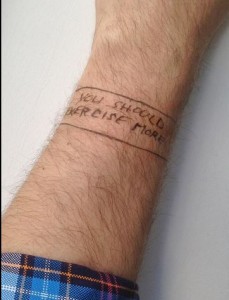
A Cost Effective Fitness Band
In a new study published in the Annals of Internal Medicine, researchers found that overweight and obese patients who used a popular smart phone app (MyFitnessPal) did not lose significant weight after a 6 month trial period. The randomized controlled trial is the first of its kind to demonstrate that well-liked mobile apps may be ineffective for most users.
Two hundred and twelve racially diverse (73% female) patients treated at two UCLA primary care clinics were enrolled in the study. All indicated that they were interested in losing weight and 79% who completed the study indicated that they were “somewhat” or “completely” satisfied with the app, while 92% reported that they’d recommend it to a friend.
Unfortunately, as pleased as the subjects were with the app, there was no statistically significant difference in weight loss between the intervention and control groups. On average, the MyFitnessPal users lost 0.66 lbs in 6 months.
The authors note:
“Most participants rarely used the app after the first month of the study… Given these results it may not be worth a clinician’s time to prescribe MyFitnessPal to every overweight patient with a smart phone… Our analysis did not show any demographic covariates to be important predictors of app use.”
This study serves as a reminder that “popular” and “effective” do not always go hand-in-hand when it comes to weight loss interventions. While mHealth apps are expected to earn $26 billion by 2017, one is left to wonder if this money will be well spent or if we’ll all be “somewhat to completely satisfied” with the apps without anything medically significant to show for it?
January 6th, 2014 by Dr. Val Jones in Health Tips, Opinion, Research
No Comments »
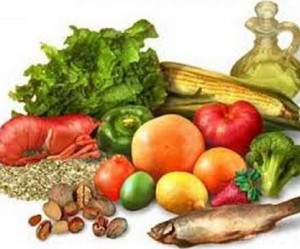 We’ve known for quite some time that weight loss can reduce the risk of developing insulin resistance and type 2 diabetes. However, a healthy diet alone (without weight loss) may also help to reduce risk. In a recent Spanish study (published in the Annals of Internal Medicine), 3,541 men and women ages 55-80 at risk for diabetes were followed for an average of 4.1 years. Those who ate a diet rich in fish, whole grains, fruits, vegetables, and olive oil were less likely to develop diabetes than those following other diets of similar caloric value.
This is interesting for a few reasons. First of all, it provides us with insight into the importance of what we eat (and not just how much we eat) for optimum health. When considering how to follow a Mediterranean diet, I think it might be easiest to focus on what is NOT on the menu, rather than what we need to add to our diet. Notice that the Mediterranean diet has very low sugar, refined carbohydrates, processed foods and animal fat (with the exception of fish oil). This is not a low carb or low fat diet. It is a low glycemic-index and unprocessed food diet.
Secondly, calorie-restriction alone may not be the optimal way to reduce the risk of developing type 2 diabetes. In the past we have focused primarily on fat loss for diabetes prevention – through calorie restriction and exercise. We’ve often heard that “a calorie is a calorie” and that folks can lose weight effectively on a low-carb, low-fat, or high protein diet. While it’s true that studies have been equivocal regarding the most effective type of diet for weight loss, and people have been able to lose weight on everything from a bacon and grapefruit to a cookie diet, a deeper look suggests that certain diets really are healthier for us in the long run.
Thirdly, what we eat can have a profound effect on our health, and food is an easily modifiable risk factor for illness. Unlike many diseases and conditions (such as type 1 diabetes and other autoimmune disorders) where we have little to no control over whether or not we contract them, it is exciting to know that a healthy diet is a powerful weapon against disease that does not rely on pharmaceutical products or medical interventions.
And finally, I found this study interesting because it confirms what I have noticed in my own life recently – that cutting out refined carbohydrates and sugars can have a very positive effect on body composition and overall health. I have always had a very difficult time with hunger during calorie restriction, and I finally realized that it had to do with being sensitive to blood sugar spikes and drops from too many refined carbs. Once I cut out all added sugars and white flours from my diet (replacing them with lean protein and whole grains) my chronic hunger resolved and I could settle in to a comfortable relationship with food without constantly battling the scale.
If you haven’t tried the Mediterranean diet, there’s no time like the present. While evidence suggests you’ll be healthier for it, my experience tells me you’ll feel a whole lot better too. Say goodbye to the food craving and hunger cycle, and hello to a new way of healthy eating that can be comfortably maintained for a lifetime.
June 3rd, 2013 by admin in Opinion, Quackery Exposed
No Comments »
 Dr. Oz is a powerful guy, blessed with a name that conjures up wizardry. He just unveils his latest “miracle,” which seems to happen on an almost daily basis, and people scamper off to the nearest the health food. Recently the great Oz anointed the oil extracted from the fruit of the palm tree that grows in Indonesia and Malaysia as a wonder product that can aid weight loss and reduce the risk of Alzheimer’s and heart disease. Introduced to this marvel by his a guest, a homeopath, Dr. Oz excitedly gushed about the beta carotene and “special form of vitamin E” found in “red palm oil.” A curious business. Tell me, does a Professor of Surgery at Columbia University with over 400 research publications under his belt really need advice on nutrition from a homeopath?
As is usually the case with Oz’s miracles, there is a seed of truth that then gets fertilized with lots of verbal manure until it grows into a tree that bears fruit dripping with unsubstantiated hype. For example, one study did show a reduction in the severity of cholesterol-induced atherosclerosis in rabbits fed high doses of red palm oil. This has little relevance for humans but magicians who pull rabbits out of hats may consider adding red palm oil to the diet of their little assistant. The red colour of the oil comes from beta-carotene, the same substance that contributes to the hue of carrots and many other fruits and vegetables. It is the body’s precursor for vitamin A, which makes it an important nutrient.
Unfortunately, in many areas of the developing world there is a shortage of both beta carotene and vitamin A in the diet leading to a high incidence of blindness, skin problems and even death. In such cases red palm oil would be useful, but of course there are numerous other ways to introduce beta-carotene into the diet including “golden rice” that has been genetically modified to provide the nutrient. Aside from remedying a vitamin A deficiency, there is not much evidence for increased intake of beta carotene outside of that contained in a balanced diet. There are suggestions that higher blood levels of beta carotene reduce the risk of breast cancer in high-risk women, but the beta-carotene levels may just be a marker for a better diet.
As far as the Alzheimer’s connection goes, Oz may have been referring to a study in which 74 seniors with mild dementia were compared with 158 healthy seniors. People with dementia had lower levels of beta-carotene and vitamin C in their blood. Again, this does not prove that the lower levels are responsible for the condition, they may just signal a diet that is poorer in fruits and vegetables. Tocotrienols, the “special form of vitamin E” Oz talked about, have shown some borderline effects in Alzheimer’s patients at doses way higher than found in red palm oil. There is no evidence for preventing the disease.
What about the claim that red palm oil causes loss of belly fat? That seems to come from a rat study in which a tocotrienol-rich fraction extracted from palm oil caused a reduction in fat deposits in the omentum, the tissue that surrounds organs. There was no evidence of abdominal fat reduction, and furthermore, the study involved putting the animals on an unnatural and unhealthy diet. But these are not the facts that the audience was treated to on the Dr. Oz Show.
What the eager viewers witnessed were three visually captivating but totally irrelevant demonstrations of the purported health benefits of red palm oil. First in line was a piece of apple that had turned brown because of “oxidation.” This could be prevented with a squirt of lemon juice, Oz explained. Then came the claim that red palm oil protects our brain the same way that lemon juice protects the apple. This is absurd. Vitamin C inactivates polyphenol oxidase, the enzyme that allows oxygen to react with polyphenols in the apple resulting in the browning. The human brain, however, bears no resemblance to an apple, except perhaps for the brains of those who think it does. Yes, oxidation is a process that goes on in the human body all the time and has been linked with aging but suggesting that beta-carotene because of its antioxidant effects protects the brain like lemon juice protects the apple is inane.
Just as zany was the next demo in which two pieces of plastic half-pipe representing arteries were shown with clumps of some white guck, supposedly deposits that lead to heart disease. Oz poured a gooey liquid, representing “bad fats” down one of the tubes, highlighting that it stuck to the goo. Then he proceeded to pour red palm oil down the other pipe and lo and behold, the deposits washed away. Totally meaningless and physiological nonsense. The homeopath then explained that saturated fats behave like thick molasses cruising through the cardiovascular system, but palm oil does not, despite being high in saturated fats. While saturated fats may lead to deposits, they do not do this by “thickening” the blood. Arterial deposits are the result of some very complex biochemistry and are not caused by “sludge” in the blood. Oz even exclaimed that this demo was indicative of how red palm oil reduces cholesterol in a month by 40%, better than drugs. A search of Pubmed reveals no such study.
The final demonstration involved Dr. Oz lighting a candle and a flare, without wearing safety glasses mind you. The message seemed to be that the body burns most fats slowly, but it burns red palm oil with great efficiency, preventing weight gain. Where does this come from? Possibly some confusion about medium chain triglycerides which are somewhat faster metabolized than other fats. But these are not found in palm oil. They are found in coconut oil and palm kernel oil. Oz and his homeopath expert were as confused about this as about the rest of red palm oil info they belched out.
Aside from scientists who took issue with the misleading information, animal rights groups also attacked Oz’ exhortations about the benefits of the oil claiming that it will lead to destroying larger stretches of the jungle, home to many wild creatures including the orangutan. They maintain that when the jungle is cleared every living creature is either captured or killed and adult orangutans are often shot on sight. A tragedy. Another tragedy is that Dr. Oz could be doing so much good if he just focused on real science, as he sometimes does, instead of drooling over the latest “miracle” as presented by some pseudo expert.
***
Joe Schwarcz, Ph.D., is the Director of McGill University’s Office for Science and Society and teaches a variety of courses in McGill’s Chemistry Department and in the Faculty of Medicine with emphasis on health issues, including aspects of “Alternative Medicine”. He is well known for his informative and entertaining public lectures on topics ranging from the chemistry of love to the science of aging. Using stage magic to make scientific points is one of his specialties.
May 2nd, 2013 by Dr. Val Jones in Health Tips, Opinion, Research
No Comments »
 A recent, 358-person survey conducted by researchers at Yale University (and published in the International Journal of Obesity) suggested that patients may be less likely to follow the medical advice of overweight and obese physicians. Survey respondents were 57% female, 70% Caucasian, 51% had BMIs in the normal or underweight category (31% overweight and 17% obese), and were an average age of 37 years old.
Respondents rated overweight and obese physicians as less credible than normal weight doctors, and stated that they would be less likely to follow advice (including guidance about diet, exercise, smoking cessation, preventive health screenings, and medication compliance) from such physicians. Although credibility and trust scores differed between the hypothetical overweight and obese providers and normal weight colleagues, the respondents predicted less of a difference between them in terms of empathy and bedside manner. Respondents said they’d be more likely to switch physicians based on their weight alone. There was no less bias against overweight and obese physicians found in respondents who were themselves overweight or obese.
The study authors note that this survey is the first of its kind – assessing potential weight bias against physicians by patients of different weights. Previous studies (by Puhl, Heuer, and others) have documented weight bias against patients by physicians.
While the study has some significant limitations (such as the respondents being disproportionately Caucasian, thin, and female), I think it raises some interesting questions about weight bias and physicians’ ability to influence patients to adopt healthier lifestyles.
Considering the expansion of pay-for-performance measures (where physicians receive higher compensation from Medicare/Medicaid when their patients achieve certain health goals -such as improved blood sugar levels), being overweight or obese could reduce practice profit margins. If patients are less likely to follow advice from overweight or obese doctors, then it stands to reason that patients’ health outcomes could suffer along with the doctors’ income.
I’m certainly not suggesting that CMS monitor physician waist circumferences in an attempt to improve patient compliance with healthy lifestyle choices (Oh no, did I just give the bureaucrats a new regulatory idea?), but rather that physicians redouble their efforts to practice what they preach as part of a commitment to being good clinicians.
Some will say that the problem here is not expanding provider waistlines, but bias against the overweight and obese. While I agree that weight has little to do with intellectual competence, it does have to do with disease risk. Normalizing and destigmatizing unhealthiness is not the way to solve the weight bias problem. We know instinctively that carrying around a lot of extra pounds is damaging to our health. It’s important to show grace and kindness to one another as we join together on the same health journey – a struggle to make good lifestyle choices in a challenging environment that tempts us to eat poorly and cease exercising.
To doctors I say, let’s fight the good fight and model healthy behaviors to our patients. To patients I say, show grace to your doctors who carry extra pounds – don’t assume that they are less competent or knowledgeable because of a weight problem. And to thin, female, 30-something, Caucasian survey respondents I say – Wait till you hit menopause before you judge people who are overweight! 😉
December 24th, 2012 by Dr. Val Jones in Book Reviews, Quackery Exposed
No Comments »
 I am hesitant to review diet books because they are so often a tangled mess of fact and fiction. Teasing out their truth from falsehood is about as exhausting as delousing a long-haired elementary school student. However, after being approached by the authors’ PR agency with the promise of a book that contains science-based nutrition information I decided to agree to the review. This is how the book was described to me in an email:
In their provocative new book, Eat to Save Your Life, best-selling authors Dr. Jerre Paquette and Gloria Askew, RRN, sort through the piles of information and misinformation about nutrition to reveal the true connection between food and health. Fed up with the advertising hype and conflicting nutritional advice, the duo provides common sense explanations for consumers everywhere who are looking to make smart nutritional choices.
Unfortunately, I was sold (quite predictably) a bill of goods. And rather than ignore the book and simply not do a review, I figured that maybe a negative review would reduce the number of incoming PR requests for future tomes of pseudoscience. In the end, I’ll probably just become the focus of personal attacks by dedicated proponents of various snake oils.
That being said, I thought it might be somewhat instructive to remind Better Health readers of certain basic “warning signs of pseudoscience” that I accidentally overlooked in agreeing to review the book. For a more complete review of similar “signs” I highly recommend Dr. David Gorski’s 2007 classic, humorous take on predictable arguments and behaviors of alternative medicine proponents (written in the style of comedian Jeff Foxworthy). As for me, I tend to think of much of the world of integrative medicine as a militant group of bakers eager to add odd, inert and occasionally toxic substances to cake recipes.
And so, without further ado, here is a small sample of what authors Askew and Paquette have added to their half-true diet book recipe:
- The “one true cause” fallacy: The book opens with an interesting review of vitamin C deficiency, noting that it (apparently) took the British Royal Navy 40 years before they accepted that the treatment for scurvy was citrus extract (rather than flogging). Citing this incident as an example of nutritional deficiency leading to life-threatening illness, it’s a short ride to the “one true cause” fallacy whereby the authors postulate that there are untold numbers of modern diseases caused by unrecognized nutritional deficiency syndromes. Nutritional deficiency may be the one true cause of most diseases, you see.
- The appeal to research without references. Countless appeals are made to “mounting evidence” of this and that (arthritis being caused primarily by food-related inflammation for example), either without reference footnotes, or with mentions of sources of dubious credibility (such as the Canadian Association of Naturopathic Doctors).
- The appeal to supplements in lieu of vaccines. No diet advice would be complete without a gratuitous attack on vaccines, right? The authors suggest that flu vaccines (for example) only provide immunity for 2 months “and only for certain individuals.” Meanwhile, they assert that a combination of Echinacea, garlic, and vitamin C support the immune system to successfully fight of viruses. These claims are simply unproven and multiple studies have already found no benefit (over placebo) of these supplements at preventing and treating the common cold.
- Over-diagnosis. If you think that the world of medicine is predisposed to seeing disease where there is none, try the alternative medicine world. The authors assert that everything from zits, to rashes, to “brain fog” are potential signs of grave underlying immune compromise – caused by, you guessed it, dietary deficiencies.
- Over-supplementation. The authors argue that “supplementation is a necessity in our nutrient-robbed world.” However, new evidence doesn’t support supplementation for the general population, though it had beentraditionally felt that multi-vitamins might be valuable. In addition, new studies are finding that food sources are preferable to supplements for daily nutritional requirements (such as calcium) and that anti-oxidants such as vitamin E may do more harm than good.
- The “organic is more nutritious” argument. Although a recent systematic review of the scientific literature found no support for the notion that organic foods contain more nutrients than those grown with traditional methods, the authors attribute Americans’ supposed vitamin deficiencies to poor soil quality caused by non-organic farming methods.
- Nutrigenomics and DNA hype. The authors do not take a sufficiently skeptical view of the emerging field of nutrigenomics (whereby certain foods and supplements are recommended to individuals based on their genetic profiles). They even suggest that nutrigenomic testing is so much fun, it’s “almost like being part of a CSI television show.” Who cares if it’s no more accurate than fortune telling?
So what’s the half true part? Well, obesity is certainly a driver of many modern illnesses, and obesity is caused by (in no small part) nutritional choices. The authors cite statistics on the ravages of heart disease, high blood pressure, and diabetes on the U.S. population which are all quite true. (How this supports the “deficiency” argument is somewhat lost on me – because it would seem more logical that a possible excess of nutrients could be the “one true cause” of a lot of these diseases, but I digress).
There are real nutritional deficiencies that cause medical problems, such as iron-deficiency anemia, neural tube defects related to folic acid deficiency, vitamin D deficiency and rickets, and osteoporosis contributed to by low calcium levels. These conditions underscore the importance of healthy eating habits, but do not support the idea that the entire population is deficient in these nutrients. In fact, a large population study analyzed by the CDC, suggests that most Americans are not deficient in any major nutrient even with their current sub-optimal and obesogenic eating habits.
In general, fair-minded individuals will find Eat To Save Your Life to be yet another example of a half-true, hysteria-peddling, micro-nutrient-obsessed diet advice book. Ironically, the book’s title itself states the opposite of what we really need to be doing to reduce obesity-related diseases: stop eating (so much) to save our lives.
This book may be purchased (against my medical advice) at Amazon.com.
***
This post originally appeared at the Science Based Medicine blog.