The App Gap: Why Baby Boomers Won’t Use Most Smart Phone Apps
 Along with the invention of smart phones, an entire medical mobile application (app) industry has cropped up, promising patients enhanced connectivity, health data collection, and overall care quality at lower costs. Last year the FDA put a damper on the app industry’s quick-profit hopes by announcing that it intends to regulate certain medical apps as medical devices. In other words, if the app is used to connect with a medical device or to turn a smart phone into such a device (whether it can check your blood sugar, blood pressure, heart rhythm, etc. or suggest diagnoses), it must undergo safety and efficacy checks by the FDA before it can be brought to market. That process is likely to inflate app development costs exponentially, thus creating a chilling effect on the industry.
I actually think that FDA oversight is a good thing in this case, since it could protect patients from potentially misleading health information that they might use to make treatment or care decisions. But more importantly, I wonder if a lot of this fuss is moot for the largest, sickest, segment of the U.S. population?
For all the hype about robo-grannies, aging in place technologies, and how high tech solutions will reduce healthcare costs, the reality is that these hopes are unlikely to be achieved with the baby boomer generation. I believe that the generation that follows will be fully wired and interested in maximizing all that mobile health has to offer, but they’re not sick (yet) and they’re also not the proverbial “pig in the python” of today’s healthcare consumption.
I’m not saying that mobile health apps have no role in caring for America’s seniors – their physicians and care teams use tablets and smart phones, their kids do too, and a small percent of seniors may adopt these technologies, but I’m a realist when it comes to massive adoption by boomers themselves. Wireless connectivity, texting, personal digital health records, and asynchronous communication is just not in their DNA. Take away a teenager’s smart phone and he or she is likely to be completely flummoxed by reality. Now give that phone to a baby boomer and the flummoxing will be roughly equivalent, but centered upon the device. The teen can’t live without the constant phone/internet connection, and the senior is overwhelmed by the lack of human interface and unfamiliar menus.
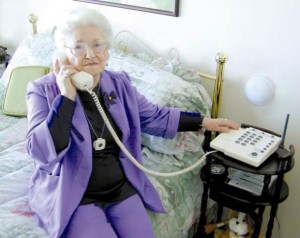
What makes me so sure of my pronouncements? I just spent a month making house calls to almost 70 different Medicare Advantage members in rural parts of this country. And I can tell you that almost none of them used any sort of smart phone app to manage their health. These “odd creatures” actually enjoyed face-to-face human contact, they used their phones almost exclusively to talk to people (not surf the Internet), and they took hand-written notes when it was important for them to remember something. They even had paper calendars that they used to schedule their physician appointments and keep records of their medications and procedures. How “weird” is that?!
When I asked one of the seniors if she’d be interested in using a cell phone to check her blood pressure and have that automatically uploaded to her doctor’s office she replied,
“I’m too old to learn that stuff, dear. I’m lucky if I can find my slippers in the morning.”
The reality is that the average app user isn’t sick, and sick people don’t see a need for apps… yet. So our challenge is to meet seniors where they are instead of trying to change their habits. House calls are the best way I know of to get a full appreciation for individual quirks, compliance challenges, and health practices. If we are really serious about reducing healthcare costs in our aging population, it may take some low-tech solutions. As un-sexy as that may be, it’s time that we put down the iPhone and practiced some good old-fashioned medicine.