A new study finds that half of men in America are infected with the HPV virus. Dr. Jon LaPook reports on the growing concern that the virus in men could be responsible for an increase in head and neck cancers.
HPV Affects Half Of U.S. Men
A study out [yesterday] in The Lancet by Moffitt Cancer Center researcher Anna Giuliano, Ph.D., and her colleagues finds that 50 percent of men ages 18 to 70 in Brazil, Mexico, and the U.S. have genital infection with human papillomavirus (HPV). HPV is the virus that causes cervical cancer in women. It also causes warts and cancer of the genitals and anus in both men and women. Over the past several years, researchers have realized that the virus can also cause cancer of the head and neck.
Aimee R. Kreimer, Ph.D., of the National Cancer Institute, estimates that about 65 percent of the approximately 8,000 cancers of the tonsils and base of the tongue (oropharynx) seen in the U.S. in 2010 were from HPV infection; eighty percent of these are in men. The rates for HPV-associated cancers like these are increasing; for sites like the mouth and larynx that are associated with tobacco and alcohol use, the rates are decreasing (though still too high since too many people still smoke and abuse alcohol).
An infection rate of 50 percent for a virus that can cause cancer sounds scary. But knowing a few more facts about HPV helps put the risk in perspective. About 90 percent of men and women infected with HPV virus get rid of it on their own within about two years. There are many different strains of HPV — some that cause cancer and some that don’t. Only about 6 percent of men have genital infection with HPV 16 — the strain linked to more than 90 percent of cancers of the head and neck. And only about 0.6 percent of men have HPV 16 in specimens taken from their mouths; what percentage of those men go on to develop head and neck cancer is unknown. Read more »
Dr. Mehmet Oz just might be the last person on earth people would expect to get a colon polyp. He’s physically fit (he left me in the dust the last time we ran together), he eats a healthy diet, he doesn’t smoke, and he has no family history of colorectal cancer or colon polyps.
But several weeks ago, when Mehmet had his first screening colonoscopy at age 50, I removed a small adenomatous polyp that had the potential to turn into cancer over time. Statistically, most small polyps like his don’t become cancer. But almost all colon cancers begin as benign polyps that gradually become malignant over about 10 to 15 years.
Since there’s no way of knowing which polyps will turn bad, we take them all out. The good news is there’s plenty of opportunity to prevent cancer by removing these polyps while they are still benign. But only about 63 percent of Americans between ages 50 and 75 get screened for colorectal cancer. Read more »
FilmAid International provides the children of Haiti what many doctors can’t bring earthquake survivors — a moment to forget about the pain and suffering the last six months has brought. Dr. Jon LaPook reports.
My mother was very proud of the fact that none of her four children ever became sick from her cooking. While it’s true she may have erred on the side of overcooking the turkey, being spared food poisoning is yet another in the long list of gifts from my mom.
Every year, about 76 million Americans develop illness from food, more than 325,000 are hospitalized, and about 5,000 die. The most common cause is contamination with bacteria such as Salmonella, Campylobacter, Shigella, and E. coli — though other organisms such as viruses and protozoa can also be culprits. As summer begins, I thought it would be a good time to review some basic tips about food safety. Read more »
It’s no secret that the U.S. has a weight problem and with chain restaurants serving up meals with thousands of calories in a single dish, it’s easy to understand why. Watch “CBS Doc Dot Com” to see which meals you should try to avoid — or at least share.
It’s no secret that doctors are disappointed with the way that the U.S. healthcare system is evolving. Most feel helpless about improving their work conditions or solving technical problems in patient care. Fortunately one young medical student was undeterred by the mountain of disappointment carried by his senior clinician mentors…
I am proud to be a part of the American Resident Project an initiative that promotes the writing of medical students residents and new physicians as they explore ideas for transforming American health care delivery. I recently had the opportunity to interview three of the writing fellows about how to…
I m often asked to do book reviews on my blog and I rarely agree to them. This is because it takes me a long time to read a book and then if I don t enjoy it I figure the author would rather me remain silent than publish my…
When I was in medical school I read Samuel Shem s House Of God as a right of passage. At the time I found it to be a cynical yet eerily accurate portrayal of the underbelly of academic medicine. I gained comfort from its gallows humor and it made me…
I am hesitant to review diet books because they are so often a tangled mess of fact and fiction. Teasing out their truth from falsehood is about as exhausting as delousing a long-haired elementary school student. However after being approached by the authors’ PR agency with the promise of a…


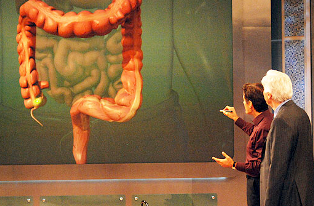 Dr. Mehmet Oz just might be the last person on earth people would expect to get a colon polyp. He’s physically fit (he left me in the dust the last time we ran together), he eats a healthy diet, he doesn’t smoke, and he has no family history of colorectal cancer or colon polyps.