August 17th, 2015 by Dr. Val Jones in True Stories
26 Comments »
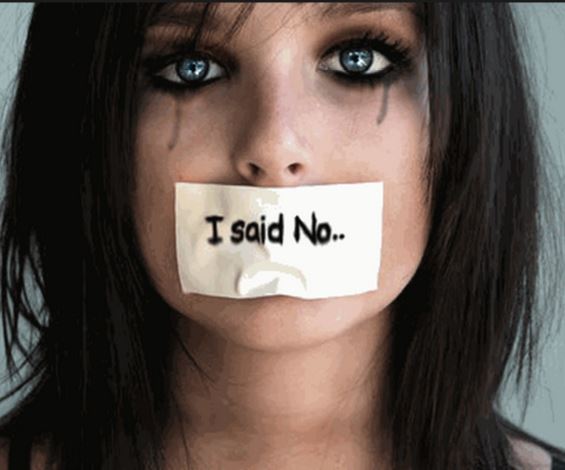 If you have not read the latest essay and editorial about scandalous physician behavior published in the Annals of Internal Medicine (AIM), you must do so now. They describe horrific racist and sexist remarks made about patients by senior male physicians in front of their young peers. The physicians-in-training are scarred by the experience, partially because the behavior itself was so disgusting, but also because they felt powerless to stop it.
It is important for the medical community to come together over the sad reality that there are still some physicians and surgeons out there who are wildly inappropriate in their patient care. In my lifetime I have seen a noticeable decrease in misogyny and behaviors of the sort described in the Annals essay. I have written about racism in the Ob/Gyn arena on my blog previously (note that the perpetrators of those scandalous acts were women – so both genders are guilty). But there is one story that I always believed was too vile to tell. Not on this blog, and probably not anywhere. I will speak out now because the editors at AIM have opened the conversation.
When I was a third-year medical student I was assigned to tag along with an ophthalmology resident serving his first year of residency as an intern in general surgery. We were to cover the ER consult service one night, and our first patient was a young Hispanic girl with abdominal pain. It was suspected that she may have had appendicitis. Part of the physical exam required that we rule out a gynecologic cause of the pain. And so a pelvic exam was planned for this young girl of about 12 or 13. She was frightened and clinging to her grandmother. She had never seen a gynecologist before and had explained through her grandmother that she was a virgin – making a gynecologic cause of her abdominal pain less likely. I offered her some reassurance with my broken Spanish and held her hand as we wheeled her on a stretcher to a private examining room. The resident whispered in my ear, “This is going to be fun.”
The resident was creepy at every stage of the exam. He was clearly relishing the process, slowly instructing the poor girl to position herself correctly on the table. He held her knees apart as she whimpered and cried. He pretended to have difficulty positioning the speculum, inserting and reinserting it an unconscionable number of times. All-in-all it probably took ten minutes for him to get a cervical sample (this usually takes under 60 seconds). He performed the bi-manual portion of the exam in a bizarre, sexualized manner. I was furious and nauseated.
The patient was finally returned to her grandmother and the resident took me aside to ask how I thought he did. The perverted expression on his face was not lost on me. I looked at him with daggers in my eyes, but I knew that if I confronted him head-on it could trigger an investigation and in the end I had no hard evidence to prove that he had done anything wrong. It would wind up being a “he said, she said” scenario. I mustered the courage to say, “I think you were slow.”
For a fleeting moment he was taken aback by my insubordinate criticism and then he said the sentence that still haunts me today, “Well it was her first time.”
Each time I think of this interaction I feel sick to my stomach. I wonder what more I could have done.* I wonder if he is still out there violating his patients, and if anyone has ever confronted him. My only consolation, I suppose, is that he did not go on to become an Ob/Gyn. As an ophthalmologist one would hope that he had fewer opportunities for sexual abuse of patients.
I guess you could say that in my medical training, I witnessed a child rape. I don’t think it gets much worse than that… and I don’t know what to do with this horrific memory. I am forever changed.
It is my hope that these sorts of situations become true “never events” and that we create a protective environment where there are no career consequences for medical students thrust into the unfortunate position of whistle blower. Maybe the courageous AIM editorial is the first step towards redemption and healing.
*Note that I never saw this resident again. Our paths did not cross after the incident, and it was only at the end of the exam that I fully recognized the evil of his intent.
August 10th, 2012 by Dr. Val Jones in True Stories
3 Comments »
 Dr. Pauline Chen recently wrote an interesting, if not slightly sterile, article about the prevalence of bullying in medical school. A survey published by JAMA in 1990 suggested that 85% of medical students had experienced some kind of mistreatment during their third year of training, and a quarter of the respondents said that they would have chosen a different profession had they known in advance about the extent of mistreatment they would experience.
One medical school (UCLA) took these sobering statistics to heart and implemented an anti-bullying program of sorts. Thirteen years after it was initiated, more than half of all medical students still said that they had been intimidated or physically or verbally harassed.
I recently wrote a fairly tongue-in-cheek blog post about why doctors are jerks. But I didn’t really delve into the more sinister side of the bullying culture. Some of my experiences in medical training were soul-suckingly bad, and just to add some flavor to Dr. Chen’s analysis, let me share some real-life anecdotes.
My worst experiences in medical training occurred during Ob/Gyn rotations. I don’t know if this has been the experience of other medical students, or if my gender had anything to do with it, but I spent time with a group of female residents who were so toxic to med students that the department chairman actually warned us about them ahead of time in a private meeting. He let us know that these residents had a history of “hazing” medical students, particularly females. I had always been a very conscientious and hard working student, so I presumed that they wouldn’t have much to criticize. My plan was to work hard, keep my head down, and get out unscathed. Unfortunately, nothing went as planned.
The tone was set for me the first day when I witnessed a female, Asian anesthesia resident slap a pregnant Hispanic woman who was in labor. The woman was frightened and spoke no English and was beginning to hyperventilate from pain. The resident was trying to put in an epidural anesthetic and the woman was moving around too much for her to get the needle safely into position. So instead of calling for a translator, the resident started raising her voice, eventually screaming at the woman to calm down. The woman was crying uncontrollably, so the resident slapped her, and told her that she was “going to lose her baby” if she didn’t shut up. The husband was also terrified and could understand some English. He translated to his wife that she was going to lose the baby and started begging her to be calm. I stood in the doorway with my mouth open. The resident told me to get the f-out of there as she threw her gloves at me.
I suppose the humiliation of being caught abusing a patient was enough to channel her hate towards me, so she told the Ob/Gyn residents that I was an incompetent medical student. For the rest of the month I was targeted by the hazing team, and like a pack of wolves they descended, bound to make my every moment a living hell. During the delivery of my first baby (a touching experience that moved me to tears), the new mom experienced a small tear during the birthing process. The residents blamed it on me, and convinced me that I had personally caused her harm by not “supporting her perineum” correctly. I was mortified and fell for the lie – hook, line, and sinker.
When a woman went into labor it was customary for the residents to page the medical student on call and have him or her assist with the vaginal birth or c-section. My peers were paged in a timely manner, while I was either paged at random times or paged to the wrong parts of the hospital so that I appeared to be late to several deliveries (especially when a senior physician evaluator was present to witness it). Once I caught on to this I had to remain awake 24/7 at the nursing station (rather than the more secluded med student lounge) so that I could follow visual cues regarding where and when to assist. After several shifts without sleep the residents began locking the chairs in their lounge so that I would have no where to sit or rest, but would be forced to remain standing “on guard” all night.
One page was particularly painful at the time (but almost laughable in retrospect). A resident took it upon herself to page me just to tell me some important news: I was the worst medical student in the history of the program.
Of course, my final resident evaluation was dripping with venom. I recall statements such as, “Valerie suffers from narcolepsy,” and “she is uniformly late and is never prepared… she doesn’t answers her emergency pages… she occupies valuable space at the nursing station instead of remaining in the medical student on-call room… her performance in deliveries borders on dangerous.” And on it went. I wish I had the maturity to take all of that in stride at the time and see that these women were nuts, and it had nothing to do with me personally. But I was too close to it then, and I bore the pain with a stiff upper lip.
I still think about that poor patient who was slapped, and I kick myself for not standing up to the resident who hit her. I guess I was in such shock that I didn’t know what to do. But living through this abuse helped me to become a stronger patient advocate during my residency years. Just two years after my brush with the Ob/Gyn residents, I gained a reputation for being the intern you never f-with. I know I saved the lives of some who were slipping through the cracks of the system, and I was willing to call in the hospital ethics committee if I had to. Yes, that pregnant woman’s suffering was not totally in vain – because she helped me to find my own cojones. And for that, I will always be grateful.
December 26th, 2011 by BarbaraFederOstrov in News, Research
No Comments »
 Domestic Violence: 25 percent of women surveyed by the government say they were violently attacked by their husbands or boyfriends in a finding one federal official called “astounding,” the Associated Press reports.
C-Sections: The number of births by Cesarean section in Calif. has risen 50 percent in the past 10 years, new research shows, but it isn’t because of the health benefits over vaginal delivery. Researchers cite financial incentives for doctors and an “awareness gap” of the procedure’s risks among the explanations, Stephanie O’Neill reports for KPCC public radio.
Health Reform: South Carolina Gov. Nikki Haley predetermined the findings of a state committee working on health reform even before Read more »
*This blog post was originally published at Reporting on Health - The Reporting on Health Daily Briefing*
November 3rd, 2011 by Linda Burke-Galloway, M.D. in Opinion, Research
No Comments »

 In a recent medical study, violent deaths of pregnant women outnumber traditional causes of maternal deaths such as post partum hemorrhage or pre-eclampsia . I am not surprised. In September 2010, I wrote an article entitled 7 Reasons Why Pregnancy Becomes a Deadly Affair after an 18 year old college student almost lost her life at the hands of her football-playing boyfriend because she became pregnant. Pregnancy is not a benign act and 50% of them are unplanned.
Dr. Christie Palladino, an ob-gyn physician at the Georgia Health Sciences University and main researcher of the study, looked at data from 17 states and found 94 pregnancy-related suicides and 139 homicides from 2003-2007. Approximately 45 % of suicides occur during pregnancy, often precipitated by Read more »
*This blog post was originally published at Dr. Linda Burke-Galloway*
August 22nd, 2011 by Dr. Val Jones in True Stories
3 Comments »
 A strange thing happened to me at a CVS pharmacy two days ago. I was attempting to purchase a protein drink when the girl at the counter asked me to show her my I.D. card. I assumed she meant my CVS savings card and was sincerely confused when she rejected it, saying, “No, your picture I.D.”
I dug through my purse to find my driver’s license while the girl explained,
“You have to be 18 years old to buy this product. I need to type in your date of birth into the computer.”
I wondered if the girl was partially visually impaired – at age 39 I didn’t think anyone would confuse me for a teen (though of course, I would enjoy it if they did), but beyond the amusement of being carded for the first time in over a decade, I was taken aback by the age restriction placed on protein. “I must be really out of the loop,” I thought to myself. “How on earth are teens abusing whey protein? And how did this become so common that CVS instituted a policy against it?”
As it turns out, Read more »