November 6th, 2011 by ChristopherChangMD in Health Tips
1 Comment »

 Though most people like the professional nose whistler shown here require an instrument to enable the nose to whistle, in others it occurs naturally due to unique anatomic features within the nose.
Why might someone’s nose whistle?
Septal Perforation
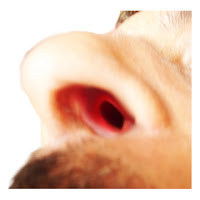 The most common reason it may occur constantly is due to a hole in the septum (septal perforation). The septum is a wall that divides the right nasal cavity from the left side. Normally, it should be straight and without any openings.
However, when a hole is present in the septum and it is in just the right size and place, whenever air is breathed in and out of the nose, it will whistle. In this situation, the hole is the “window” of the whistle and the nose itself is the mouthpiece.
Correction of this problem is by Read more »
*This blog post was originally published at Fauquier ENT Blog*
October 10th, 2011 by Steve Novella, M.D. in Opinion, Research
No Comments »

While we frequently on SBM target the worst abuses of science in medicine, it’s important to recognize that doing rigorous science is complex and mainstream scientists often fall short of the ideal. In fact, one of the advantages of exploring pseudoscience in medicine is developing a sensitive detector for errors in logic, method, and analysis. Many of the errors we point out in so-called “alternative” medicine also crop up elsewhere in medicine – although usually to a much less degree.
It is not uncommon, for example, for a paper to fail to adjust for multiple analysis – if you compare many variables you have to take that into consideration when doing the statistical analysis, otherwise the probability of a chance correlation will be increased.
I discussed just last week on NeuroLogica the misapplication of meta-analysis – in this case to the question of whether or not CCSVI correlates with multiple sclerosis. I find this very common in the literature, essentially a failure to Read more »
*This blog post was originally published at Science-Based Medicine*
October 9th, 2011 by ChristopherChangMD in Research
No Comments »
 In one of the stranger research projects I’ve encountered in awhile, French scientists reported on why in the sport of discus throwing, athletes tend to feel more dizzy than those who hammer throw.
Whether discus or hammer throwing, both require spinning on part of the athlete before letting the discus/hammer go for long distances.
59% report dizziness with discus throwing, but none with hammer throwing. Why?
This occurred even among athletes who did both sports eliminating individual susceptibilities to dizziness.
Based on slow-motion video analysis, it was conjectured that Read more »
*This blog post was originally published at Fauquier ENT Blog*
July 12th, 2011 by admin in Health Tips
No Comments »


Feeling tired? If so, it’s not surprising. Fatigue is one of the most common problems people report to their doctors. The Health and Retirement Study of more than 17 million older people ages 51 and up reported recently that 31% said they feel fatigued.
Fatigue is a symptom, not a disease. Different people experience it in different ways. The tiredness you feel at the end of a long day or after a time zone change might feel similar to that resulting from an illness. But fatigue from stress or lack of sleep usually subsides after a good night’s rest, while disease-related lethargy is more persistent and may be debilitating even after restful sleep.
Finding the cause. How do you know if your low-energy is caused by an underlying illness or is the result of stress, poor diet, or lack of sleep? For example, could you have chronic fatigue syndrome? That is an unusual illness and an uncommon cause of persistent fatigue, says Anthony Komaroff, M.D., professor of medicine at Harvard, world-renowned expert on chronic fatigue syndrome, and medical editor of a new Harvard Special Health Report, Boosting Your Energy. About 4 to 8 of every 1,000 adults in the United States suffer from chronic fatigue syndrome, which is about twice as common in women as in men. The causes of chronic fatigue syndrome are still unknown, and there is no accurate diagnostic test. However, scientists have found abnormalities in the brain and peripheral nervous system, in the immune system, and in energy metabolism in people with this syndrome. Read more »
*This blog post was originally published at Harvard Health Blog*
March 7th, 2010 by Harriet Hall, M.D. in Better Health Network, Research
No Comments »
When I first heard that a retrovirus had been identified as a possible cause of chronic fatigue syndrome, I withheld judgment and awaited further developments. When I heard that two subsequent studies had failed to replicate the findings of the first, I assumed that the first had been a false alarm and would be disregarded. Not so.
It’s a classic case of wishful thinking outweighing good judgment. One unconfirmed report of an association between the XMRV virus and chronic fatigue syndrome (CFS) resulted in a rush to test for the virus, speculation about possible implications, and even suggestions for treatment. And the subsequent negative studies did little or nothing to reverse the trend. Read more »
*This blog post was originally published at Science-Based Medicine*


 Though most people like the professional nose whistler shown here require an instrument to enable the nose to whistle, in others it occurs naturally due to unique anatomic features within the nose.
 The most common reason it may occur constantly is due to a hole in the septum (septal perforation). The septum is a wall that divides the right nasal cavity from the left side. Normally, it should be straight and without any openings.