FilmAid International provides the children of Haiti what many doctors can’t bring earthquake survivors — a moment to forget about the pain and suffering the last six months has brought. Dr. Jon LaPook reports.
My mother was very proud of the fact that none of her four children ever became sick from her cooking. While it’s true she may have erred on the side of overcooking the turkey, being spared food poisoning is yet another in the long list of gifts from my mom.
Every year, about 76 million Americans develop illness from food, more than 325,000 are hospitalized, and about 5,000 die. The most common cause is contamination with bacteria such as Salmonella, Campylobacter, Shigella, and E. coli — though other organisms such as viruses and protozoa can also be culprits. As summer begins, I thought it would be a good time to review some basic tips about food safety. Read more »
It’s no secret that the U.S. has a weight problem and with chain restaurants serving up meals with thousands of calories in a single dish, it’s easy to understand why. Watch “CBS Doc Dot Com” to see which meals you should try to avoid — or at least share.
Four-year-old Devan Tatlow’s struggle with leukemia has caused quite a stir on the Internet, prompting celebs like Paris Hilton and Kim Kardashian to encourage people to donate their bone marrow. Dr. Jon LaPook talks with Devan’s family about their search for a match.
Imagine throwing a lifesaving treatment in the garbage. That’s exactly what happens in the United States over ten thousand times a day because we do not routinely offer to collect precious umbilical cord blood at the time of birth. Thousands of Americans — many of them children — needlessly die annually because they cannot find either a bone marrow or umbilical cord blood match to help treat conditions like lymphoma and leukemia. Yet umbilical blood is discarded as medical waste in the vast majority of the more than four million births occurring each year. Read more »
For the first time in history, a living organism has been manufactured with the help of a computer-generated genome. Dr. Jon LaPook reports on the groundbreaking discovery’s widespread implications.
Craig Venter and his team of scientists recently announced that they had created the first “synthetic cell” — a bacterium controlled by genetic material that they had designed on a computer and concocted from four bottles of chemicals. This is the closest thing to creating life that has happened outside of a science-fiction movie. If it doesn’t fire your imagination, then you should fire your imagination.
Basically, what Venter et al did was remove the “brain” (the genetic material that runs the cell) from one species of bacteria (Mycoplasma capricolum) and inserted a new brain — one synthetically created based very closely on the known genetic makeup of a second species of bacteria (Mycoplasma mycoides). The new organism then divided just as a normal cell would and followed the instructions of the new brain. Think micro-Avatar, except that the Avatar’s body morphs into one designed by its new brain. Read more »
It’s no secret that doctors are disappointed with the way that the U.S. healthcare system is evolving. Most feel helpless about improving their work conditions or solving technical problems in patient care. Fortunately one young medical student was undeterred by the mountain of disappointment carried by his senior clinician mentors…
I am proud to be a part of the American Resident Project an initiative that promotes the writing of medical students residents and new physicians as they explore ideas for transforming American health care delivery. I recently had the opportunity to interview three of the writing fellows about how to…
I m often asked to do book reviews on my blog and I rarely agree to them. This is because it takes me a long time to read a book and then if I don t enjoy it I figure the author would rather me remain silent than publish my…
When I was in medical school I read Samuel Shem s House Of God as a right of passage. At the time I found it to be a cynical yet eerily accurate portrayal of the underbelly of academic medicine. I gained comfort from its gallows humor and it made me…
I am hesitant to review diet books because they are so often a tangled mess of fact and fiction. Teasing out their truth from falsehood is about as exhausting as delousing a long-haired elementary school student. However after being approached by the authors’ PR agency with the promise of a…


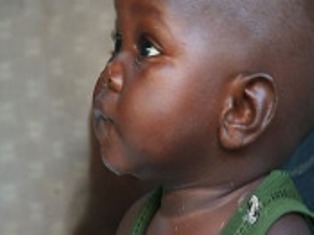 FilmAid International provides the children of Haiti what many doctors can’t bring earthquake survivors — a moment to forget about the pain and suffering the last six months has brought. Dr. Jon LaPook reports.