January 6th, 2014 by Dr. Val Jones in Health Tips, Opinion, Research
No Comments »
 We’ve known for quite some time that weight loss can reduce the risk of developing insulin resistance and type 2 diabetes. However, a healthy diet alone (without weight loss) may also help to reduce risk. In a recent Spanish study (published in the Annals of Internal Medicine), 3,541 men and women ages 55-80 at risk for diabetes were followed for an average of 4.1 years. Those who ate a diet rich in fish, whole grains, fruits, vegetables, and olive oil were less likely to develop diabetes than those following other diets of similar caloric value.
This is interesting for a few reasons. First of all, it provides us with insight into the importance of what we eat (and not just how much we eat) for optimum health. When considering how to follow a Mediterranean diet, I think it might be easiest to focus on what is NOT on the menu, rather than what we need to add to our diet. Notice that the Mediterranean diet has very low sugar, refined carbohydrates, processed foods and animal fat (with the exception of fish oil). This is not a low carb or low fat diet. It is a low glycemic-index and unprocessed food diet.
Secondly, calorie-restriction alone may not be the optimal way to reduce the risk of developing type 2 diabetes. In the past we have focused primarily on fat loss for diabetes prevention – through calorie restriction and exercise. We’ve often heard that “a calorie is a calorie” and that folks can lose weight effectively on a low-carb, low-fat, or high protein diet. While it’s true that studies have been equivocal regarding the most effective type of diet for weight loss, and people have been able to lose weight on everything from a bacon and grapefruit to a cookie diet, a deeper look suggests that certain diets really are healthier for us in the long run.
Thirdly, what we eat can have a profound effect on our health, and food is an easily modifiable risk factor for illness. Unlike many diseases and conditions (such as type 1 diabetes and other autoimmune disorders) where we have little to no control over whether or not we contract them, it is exciting to know that a healthy diet is a powerful weapon against disease that does not rely on pharmaceutical products or medical interventions.
And finally, I found this study interesting because it confirms what I have noticed in my own life recently – that cutting out refined carbohydrates and sugars can have a very positive effect on body composition and overall health. I have always had a very difficult time with hunger during calorie restriction, and I finally realized that it had to do with being sensitive to blood sugar spikes and drops from too many refined carbs. Once I cut out all added sugars and white flours from my diet (replacing them with lean protein and whole grains) my chronic hunger resolved and I could settle in to a comfortable relationship with food without constantly battling the scale.
If you haven’t tried the Mediterranean diet, there’s no time like the present. While evidence suggests you’ll be healthier for it, my experience tells me you’ll feel a whole lot better too. Say goodbye to the food craving and hunger cycle, and hello to a new way of healthy eating that can be comfortably maintained for a lifetime.
June 21st, 2013 by Dr. Val Jones in Health Tips, Research
7 Comments »
 It is estimated that in seven years from now, half of all Americans will suffer from one or more chronic diseases, a majority of which are weight related. The American Medical Association recently declared that obesity itself is a disease. Obesity advocacy groups say that this move will lead to better health outcomes by providing more treatment options, preventative programs and education, as well as better reimbursement for treating individuals fighting obesity.
But what do patients need to know about weight loss? The good news is that a medically healthy weight does not require a very low percent body fat.
Weight loss for health – not for appearance – comes with a different (and in many cases much less demanding) set of recommendations. So for the purposes of this blog post, I’ll focus on key evidence-based advice for patients at risk for weight related disease…
1. You don’t need to lose that much weight to realize substantial health benefits.
A five to ten percent loss of body weight can lower risk for heart disease and other killers. For obese patients, even a modest weight reduction can have significant health benefits. An eleven pound reduction in weight leads to a fifty-eight percent decrease in the chance of developing diabetes. Even just losing two pounds reduces the risk of diabetes by sixteen percent.
2. Most people who succeed at losing weight (and keeping it off) do so with a combination of diet and exercise.
According to the National Weight Control Registry (NWCR) (a database of more than ten thousand Americans who have successfully kept at least 30 pounds off for a year or more):
- Ninety-eight percent of Registry participants report that they modified their food intake in some way to lose weight.
- Ninety-four percent increased their physical activity.
3. Walking is the most common form of exercise reported by successful weight loss subjects.
According to the NWCR, their study participants’ most frequently reported form of activity was walking. That’s not to say that other forms of activity (such as interval and strength training) aren’t an important part of a healthy lifestyle, but it is encouraging to know that brisk walking is a simple, affordable, and easily accessible place to start for most people.
4. Exercise itself (even without weight loss) is one of the most powerful preventive health interventions available.
Physical exercise has been shown to reduce blood pressure; decrease the risk for type 2 diabetes, strokes, certain types of cancer, and heart disease; improve arthritis symptoms and sleep disorders, and reduce erectile dysfunction, anxiety and depression. No pill or procedure can come close to providing all these amazing health benefits.
5. Diet is more important than exercise for shedding pounds of fat.
As I often tell my patients, “You can’t outrun your mouth.” Which means – you can eat far more calories in a short period of time than you can ever hope to burn with exercise. For this reason, diet plays a larger role in weight loss than exercise.
6. It’s more important to lose fat than to lose it by following a particular diet.
If diet is so important for losing weight, the next logical question is “Which diet is best?” Interestingly, the answer may be – whichever one you’ll stick to. Now, of course there are some diets that are more nutritionally sound than others – but the benefits of fat loss are so great, that health benefits are achieved even on relatively “unhealthy” diets. In a landmark diet comparison study, Michael Dansinger showed that study participants achieved similar benefits (such as improved cholesterol profiles, blood pressure, and inflammatory markers) from adhering to any of four vastly different diet regimes ranging from low fat, high carb to low carb, high fat.
7. The healthiest diets limit refined carbohydrate and animal fat intake, while maximizing fruit, vegetable, and healthy fats and protein.
I’ve just argued that a variety of diets work if you stick to them, and adherence is the key to fat loss, and even modest amounts of fat loss can have substantial health benefits. So does it really matter which diet you choose? In the long run, yes. Research has shown that there are some common nutritional principles that result in optimal health. The key ones are:
- Avoid refined carbohydrates as much as possible (such as sugar, fructose, and white flour/rice products). Unrefined carbs (such as whole grains, flax, oatmeal, brown rice, quinoa, berries, and cruciferous veggies) are an important part of a healthy diet.
- Avoid animal fats (trans fats). Healthy fats such as olive, fish and nut oils are preferable.
- Eat a diet rich in fiber, fruits and vegetables.
- Choose lean protein sources, including beans, eggs, chicken, fish, pork, yogurt, and fish.
- Limit alcohol intake and opt for water as your main source of hydration fluid.
8. Aim to lose 1 pound per week.
Cutting out approximately 500 calories from your daily caloric needs (established with a calorie calculator or by personal trial-and-error) is about as much as people can tolerate comfortably over periods of time. Diet adherence decreases as deficits exceed 500 calories per day.
9. The optimal, minimal amount of exercise for the average American adult is about one hour of moderate intensity exercise each day.
There is some disagreement on optimal exercise duration – some groups recommend half an hour per day (American College of Sports Medicine), others (such as the Institute of Medicine) a full hour. A review of the various positions and guidelines is available here. In terms of types of activity, there is general consensus that strength training twice a week should be added to moderate daily aerobic activity for best results.
10. You probably don’t need to take any vitamin or nutrition supplements.
Contrary to popular belief, most Americans (even with their sub-optimal eating habits) meet all of their basic dietary requirements with food intake. Non FDA-approved weight loss supplements have not been found to provide lasting benefits for weight loss and are generally ineffective and sometimes dangerous.
Weight loss drugs and surgical procedures may be effective last resorts for those who have failed to achieve results with diet and exercise. New prescription anti-obesity drugs and FDA-approved over-the-counter options are effective at helping patients shed extra pounds, but often come with unwanted side effects such as anal leakage and adverse cardiac events.
In conclusion, obesity underlies most of America’s chronic disease burden but can be reversed with modest weight loss through diet and exercise modifications. Patient adoption of long-term lifestyle changes are challenged by economic factors (e.g. healthy food “deserts” in inner cities), sedentary lifestyles, poor urban planning, excessive fast food and sugary beverage consumption, increasing portion sizes, and high tech conveniences that reduce energy expenditure, among other factors.
Patients are more likely to begin weight loss programs if recommended to do so by their physician, though studies suggest that they take advice more seriously if their physician is not overweight or obese herself. In our efforts to treat obesity, it may be especially important to lead by example.
March 22nd, 2013 by Dr. Val Jones in Health Tips
No Comments »
 Finding Nemo is one of my favorite Disney-Pixar cartoons. Not only does it have a cute story line, but it’s full of medical themes – consider the movie’s namesake with a congenitally deformed fin (Nemo), the shark with addiction problems (Bruce), and the blue tang fish with memory impairment (Dory). Even Nemo’s captor turns out to be a dentist! But when I think about the scene where the fish attempt escape from the dentist’s tank by plugging up the filter system to get him to remove them for cleaning, I always think about kidneys. Yep, you heard me right. Kidneys.
Kidneys are fairly under appreciated organs. They filter waste out of 200 liters of blood each day, much the way a fish tank’s filter system purifies its water. Most of us probably don’t even notice a fish tank filter when we gaze at the plastic plants, pebbles, and colorful animals inside the tank – just as we don’t give our kidneys a second thought until they cause us problems.
But the reality is that an astonishing number of people will develop chronic kidney disease (CKD) in their lifetime, largely due to complications from diabetes. An estimated 26 million Americans have CKD, and the majority don’t even know it. Our fish tank filters are failing slowly – and the build up of “algae and grime” just doesn’t cause symptoms until very late in the failure process.
Since March is Kidney Awareness Month, I thought it would be a good time to reflect upon the hard work that our little guys are doing each day. Beyond filtering drugs and chemicals from the blood, kidneys balance body fluids and electrolytes, create Vitamin D, regulate our blood pressure, and produce hormones that stimulate our bodies to produce red blood cells. In fact, anemia can be one of the first signs of kidney failure, and may be experienced as generalized fatigue. People with CKD often suffer from anemia, which can be treated with dietary changes, oral iron, IV iron, or blood transfusions depending on disease severity.
So whether or not you’ve been feeling fatigued, why not ask your primary care physician to check your kidneys next time you’re there for a check up? A simple blood test can identify many kidney diseases early on – so that you can take steps to keep your filter system healthy for life. Just ask Nemo – being in a dirty fish tank is no way to live.
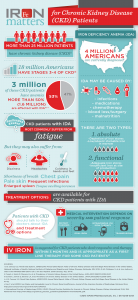
For more information about CKD and anemia, please check out this infographic:
January 4th, 2012 by KerriSparling in Opinion, True Stories
No Comments »

High blood sugars come in three different tiers for me: No Big Deal (NBD), Tricky Little Sucker (TLS), and What The Eff (WTE).
No Big Deal (NBD) highs are the ones I see when I first hear the Dexcom BEEEEEEEP!ing. They are the 180 – 240 mg/dL highs, where I’m cruising out of range, but not so far outside that it takes hours to correct. The NBD highs are usually mild in their symptoms (kind of thirsty, sort of tired, maybe wouldn’t have noticed if the Dex hadn’t hollered) are thankfully short in their duration, so long as I’m on the ball about keeping tabs on my blood sugars.
Tricky Little Sucker (TLS) highs are obnoxious pieces of garbage that hang on for hours. These highs are the ones where you hit anything over 200 mg/dL and just ride there for hours. HOURS. Like you can undecorate the Christmas tree and pack up all the holiday nonsense back into the attic and STILL find yourself rolling outside the threshold. They’re the ones that Read more »
*This blog post was originally published at Six Until Me.*
December 29th, 2011 by KerriSparling in Opinion
No Comments »
Back when I was a young bird with type 1 diabetes, insulin cost about $70 dollars per bottle. (And I had to walk uphill both ways to the endocrinologist’s office.) I had no concept of this cost, or how it played into my family’s finances, at the time. I would just open the fridge door, grab the bottle, uncap the orange top to a 1cc syringe, and take the units my mom would yell to me from the kitchen sink.
“Two. Two of Regular should do it. Rotate to your right arm this time, okay?”
“Okay!” (And then I’d proceed to jab it into my left arm because I’m right-handed and also stubborn.)
Now, twenty-five years later, insulin has taken a bit of a price hike. I just ordered a three month supply of Humalog from Medco and the total for the insulin came to six hundred and ninety-seven dollars. For six bottles of Humalog that will be all gobbled up by early March. (And thanks to a high, but manageable-on-paper deductible, we’re responsible for the full cost this round.) Almost seven hundred dollars worth of insulin.
We’re lucky that we’re able to pay for that cost without panicking, but knowing what these bottles cost without the assistance of insurance makes me look at everything through a diabetes lens. When three days are up on my insulin pump site, I am very aware of Read more »
*This blog post was originally published at Six Until Me.*