September 27th, 2013 by Dr. Val Jones in Health Tips
2 Comments »
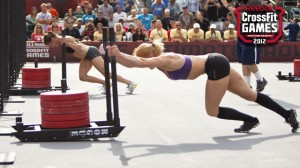 I’ve been following (and often participating in) fitness trends for decades. From Jim Fixx’s outdoor running to Jane Fonda’s work out videos, to Conan-the-Barbarian body building, to step aerobics, to Tae Bo, to hot yoga, to Zumba, and now CrossFit… America’s exercise pendulum has been swinging wildly across the spectrum of possible physical activities. So have we finally reached a balanced mix of strength and cardio for optimum fitness? Maybe.
CrossFit is a system of exercise and nutrition (founded in 2000 by Greg Glassman) that claims to “forge elite fitness.” Their Reebok-sponsored annual games boast that the winners have proven themselves to be “the fittest on earth.” CrossFit advocates a mix of aerobic exercise, gymnastics (body weight exercises), and Olympic weight lifting. Workouts are typically short—30 minutes or less—and intense, requiring maximal physical exertion.
I’ve attended multiple regional Cross Fit competitions, watched national games, competed in a CrossFit style competition, and worked out with several CrossFit athletes as well as attempted their work outs (WOD) on occasion, though I am not a member of a CrossFit gym. All this is to say that I’ve spent a good deal of time contemplating the merits of CrossFit, both as an athlete and as a physician trained in sports medicine. And here’s what I think:
Pros:
Difficulty. High intensity interval training (HIIT) is an effective and highly efficient way to improve muscle strength and cardio-vascular endurance. In my opinion, CrossFit’s greatest contribution to the fitness industry is its emphasis on HIIT, something that has not been sufficiently emphasized in the past.
Nutrition. CrossFit emphasizes the importance of healthy nutrition as part of its fitness strategy. This is sorely lacking in other systems/regimens. While I might quibble with some of the more extreme “Paleo” proponents within the CrossFit community, there’s no arguing that a diet rich in fruits and vegetables, lean protein, healthy oils, and complex carbohydrates (no sugars or refined flours) is a healthy way to eat.
Community. Peer support encourages consistency in participation. CrossFit does a good job in building community and making everyone feel welcome. All levels of fitness (and all ages) are welcome to join a CrossFit gym and participate to the best of their ability in the workout of the day (WOD).
Affordability. CrossFit gyms are relatively inexpensive to outfit (less high-tech equipment) and are easy to scale. For this reason they provide greater access to people at all income levels, which is a huge plus.
Portability. CrossFitters learn how to use their own body weight to create challenging exercise routines anywhere, anytime. There is no longer any excuse not to get a good workout in, whether you are traveling and can’t get to the gym or you are too busy to break free from the kids to do a more formal work out.
Cons:
Frequent Injury. CrossFit injury rates are substantially higher than most other fitness regimens. Herniated disks, muscle and tendon ruptures, rhabdomyolysis are not uncommon. In fact, most CrossFit athletes that I know presume that “injury just comes with the territory” and I frequently see Facebook photos of bloody/blistered hands as some kind of badge of honor. I myself sustained a low back injury even when carefully observing my technique during a CrossFit workout, and a dear friend actually ripped off one of the heads of his bicep when attempting an Olympic weight maneuver, while another friend fractured her wrist after falling down during a series of box jumps to exhaustion. Trust me when I say that if you do CrossFit long enough, you’re bound to become injured in some way.
Challenging Technique. Correct exercise form is hard to master, and since many CrossFit moves derive from gymnastics and Olympic weight lifting (sports that take many years to perfect), it is incredibly important to perform movements according to correct mechanical form. Although CrossFit experts strongly agree that good form is the key to safe and effective exercise, the fact is that people don’t always follow directions. In fact, most athletes that I’ve watched at CrossFit gyms suffer from poor form in one or more of their moves – sometimes because of inexperience, and other times because they are too exhausted to perform their final rep(s) correctly and their attention has waned. Functional movement is freer than the usual, controlled weight scenarios in a gym’s circuit training machines. And with that freedom comes the benefit of activating more muscles at a time, but the danger of injury, especially for new initiates or older athletes.
Peer Pressure. The flip side of having a “strong community” that encourages participation, is that the same community may push participants to engage in unsafe exercise practices. I’ve often seen well-meaning CrossFit instructors encourage people to pick up heavier weights than they feel comfortable with in order to push them to become stronger. There is a fine line between healthy encouragement to challenge yourself, and dangerously heavy weight lifting. It’s normal to want to “keep up with the Joneses” to your right and left during a WOD, but when Mr. Jones is a 250 pound tower of muscle, you might not want to be lifting the same weights.
Glorification of the mesomorph. There’s no doubt that committed CrossFitters develop enviably lean, muscular bodies. However, I wince a bit at the tendency for CrossFitters to promote the idea that their way is “THE best way” to be fit, and the bravado surrounding their competitions for “fittest on earth” is exclusionary and unfair. Just because an athlete was born with a different body type, ill-suited to Olympic weight lifting for example, doesn’t mean they can’t be fittest on earth (a rather subjective measure – why not an Ironman as the fittest?) There’s not much variation in the body types of those who are at the top of the CrossFit heap (i.e. large muscle mass, not too short or tall), which speaks to the fact that ultimately this sport is not optimal for all-comers (nor is the position of linebacker on a football team).
My bottom line: CrossFit must be approached with caution, though it provides some excellent HIIT and nutrition principles that can optimize one’s health. If you enjoy strength training (more than cardio or yoga for example) and like camaraderie but can resist the temptation to push yourself into the injury zone, then CrossFit may be for you.
I personally recommend (and participate in) what I would call “CrossFit light” – meaning workouts of similar CrossFit intensity but without extreme weight/maneuvers, and scaling up slowly (especially when new to exercise or a Masters athlete), adding additional cardiovascular training, and eating a diet slightly higher in complex carbohydrates than is generally recommended by strict “paleo” type CrossFitters. And of course, I do not believe that my way is the best or only way to be fit. If you like running, cycling, yoga, Pilates, or even step aerobics – good for you! Aim to be active for an hour/day – and add a little strength training in as you can. If you do that much, you may not be the “fittest on earth” but you’ll be doing more exercise than 96% of Americans!
June 21st, 2013 by Dr. Val Jones in Health Tips, Research
7 Comments »
 It is estimated that in seven years from now, half of all Americans will suffer from one or more chronic diseases, a majority of which are weight related. The American Medical Association recently declared that obesity itself is a disease. Obesity advocacy groups say that this move will lead to better health outcomes by providing more treatment options, preventative programs and education, as well as better reimbursement for treating individuals fighting obesity.
But what do patients need to know about weight loss? The good news is that a medically healthy weight does not require a very low percent body fat.
Weight loss for health – not for appearance – comes with a different (and in many cases much less demanding) set of recommendations. So for the purposes of this blog post, I’ll focus on key evidence-based advice for patients at risk for weight related disease…
1. You don’t need to lose that much weight to realize substantial health benefits.
A five to ten percent loss of body weight can lower risk for heart disease and other killers. For obese patients, even a modest weight reduction can have significant health benefits. An eleven pound reduction in weight leads to a fifty-eight percent decrease in the chance of developing diabetes. Even just losing two pounds reduces the risk of diabetes by sixteen percent.
2. Most people who succeed at losing weight (and keeping it off) do so with a combination of diet and exercise.
According to the National Weight Control Registry (NWCR) (a database of more than ten thousand Americans who have successfully kept at least 30 pounds off for a year or more):
- Ninety-eight percent of Registry participants report that they modified their food intake in some way to lose weight.
- Ninety-four percent increased their physical activity.
3. Walking is the most common form of exercise reported by successful weight loss subjects.
According to the NWCR, their study participants’ most frequently reported form of activity was walking. That’s not to say that other forms of activity (such as interval and strength training) aren’t an important part of a healthy lifestyle, but it is encouraging to know that brisk walking is a simple, affordable, and easily accessible place to start for most people.
4. Exercise itself (even without weight loss) is one of the most powerful preventive health interventions available.
Physical exercise has been shown to reduce blood pressure; decrease the risk for type 2 diabetes, strokes, certain types of cancer, and heart disease; improve arthritis symptoms and sleep disorders, and reduce erectile dysfunction, anxiety and depression. No pill or procedure can come close to providing all these amazing health benefits.
5. Diet is more important than exercise for shedding pounds of fat.
As I often tell my patients, “You can’t outrun your mouth.” Which means – you can eat far more calories in a short period of time than you can ever hope to burn with exercise. For this reason, diet plays a larger role in weight loss than exercise.
6. It’s more important to lose fat than to lose it by following a particular diet.
If diet is so important for losing weight, the next logical question is “Which diet is best?” Interestingly, the answer may be – whichever one you’ll stick to. Now, of course there are some diets that are more nutritionally sound than others – but the benefits of fat loss are so great, that health benefits are achieved even on relatively “unhealthy” diets. In a landmark diet comparison study, Michael Dansinger showed that study participants achieved similar benefits (such as improved cholesterol profiles, blood pressure, and inflammatory markers) from adhering to any of four vastly different diet regimes ranging from low fat, high carb to low carb, high fat.
7. The healthiest diets limit refined carbohydrate and animal fat intake, while maximizing fruit, vegetable, and healthy fats and protein.
I’ve just argued that a variety of diets work if you stick to them, and adherence is the key to fat loss, and even modest amounts of fat loss can have substantial health benefits. So does it really matter which diet you choose? In the long run, yes. Research has shown that there are some common nutritional principles that result in optimal health. The key ones are:
- Avoid refined carbohydrates as much as possible (such as sugar, fructose, and white flour/rice products). Unrefined carbs (such as whole grains, flax, oatmeal, brown rice, quinoa, berries, and cruciferous veggies) are an important part of a healthy diet.
- Avoid animal fats (trans fats). Healthy fats such as olive, fish and nut oils are preferable.
- Eat a diet rich in fiber, fruits and vegetables.
- Choose lean protein sources, including beans, eggs, chicken, fish, pork, yogurt, and fish.
- Limit alcohol intake and opt for water as your main source of hydration fluid.
8. Aim to lose 1 pound per week.
Cutting out approximately 500 calories from your daily caloric needs (established with a calorie calculator or by personal trial-and-error) is about as much as people can tolerate comfortably over periods of time. Diet adherence decreases as deficits exceed 500 calories per day.
9. The optimal, minimal amount of exercise for the average American adult is about one hour of moderate intensity exercise each day.
There is some disagreement on optimal exercise duration – some groups recommend half an hour per day (American College of Sports Medicine), others (such as the Institute of Medicine) a full hour. A review of the various positions and guidelines is available here. In terms of types of activity, there is general consensus that strength training twice a week should be added to moderate daily aerobic activity for best results.
10. You probably don’t need to take any vitamin or nutrition supplements.
Contrary to popular belief, most Americans (even with their sub-optimal eating habits) meet all of their basic dietary requirements with food intake. Non FDA-approved weight loss supplements have not been found to provide lasting benefits for weight loss and are generally ineffective and sometimes dangerous.
Weight loss drugs and surgical procedures may be effective last resorts for those who have failed to achieve results with diet and exercise. New prescription anti-obesity drugs and FDA-approved over-the-counter options are effective at helping patients shed extra pounds, but often come with unwanted side effects such as anal leakage and adverse cardiac events.
In conclusion, obesity underlies most of America’s chronic disease burden but can be reversed with modest weight loss through diet and exercise modifications. Patient adoption of long-term lifestyle changes are challenged by economic factors (e.g. healthy food “deserts” in inner cities), sedentary lifestyles, poor urban planning, excessive fast food and sugary beverage consumption, increasing portion sizes, and high tech conveniences that reduce energy expenditure, among other factors.
Patients are more likely to begin weight loss programs if recommended to do so by their physician, though studies suggest that they take advice more seriously if their physician is not overweight or obese herself. In our efforts to treat obesity, it may be especially important to lead by example.
June 15th, 2013 by Dr. Val Jones in Health Tips
1 Comment »
 A blogger friend of mine referred me to an article about a female runner struggling with gastrointestinal distress. She asked for advice regarding how to prevent the “runner’s trots” and felt fairly mystified regarding its cause. Since up to half of runners face this problem at some point (especially women), I thought I’d post some advice that comes from experience… ahem.
The urge to use the restroom during exercise is caused by increased intestinal motility, likely triggered by any (or all) of the following: jostling of internal organs, relative intestinal ischemia (decreased oxygen getting to the intestines as blood is diverted to the muscles for work and to the skin to cool the body), dehydration, and adrenaline-related anxiety/stress hormones. I’ve noticed that hot weather greatly increases the likelihood of runner’s diarrhea as it contributes to additional blood diversion as well as dehydration through excessive sweating. Basically, don’t be surprised if you need to plan your summer runs around bathroom stops.
That being said, there are a few things that can decrease the urgency and frequency of this unpleasant intestinal drama:
1. Watch what you eat before your run – avoid fiber, caffeine, fake sugar, or anything that generally makes YOU have to move your bowels more frequently (milk and/or soy products are a culprit for some). Ideally, these things should be avoided up to 12-24 hours before you run.
2. Stay hydrated. Get ahead of the game by drinking a liter of water before your run and continue to hydrate during exercise (as appropriate for the climate and your effort level.)
3. Run at a slower pace if the weather is hot. I often find that dropping the pace by a minute or two per mile can magically reduce the intestinal symptoms. Interval training can help you challenge your speed limits while offering active recovery periods for your body to cool down and let your gut chill out.
4. Run in the morning when it’s cooler and you’ve had less to eat. Running after a day full of eating is looking for trouble.
5. Try to evacuate your bowels before your run – this is fairly obvious, but take the time you need to get this taken care of.
If the weather is hotter than 85 degrees, I’d consider running on a treadmill in an air conditioned space.
I found this comprehensive list of strategies to avoid the trots quite helpful. Please check it out – and good luck on your summer runs and races. Perhaps we’ll cross paths at a rest stop near you!
December 24th, 2012 by Dr. Val Jones in Book Reviews, Quackery Exposed
No Comments »
 I am hesitant to review diet books because they are so often a tangled mess of fact and fiction. Teasing out their truth from falsehood is about as exhausting as delousing a long-haired elementary school student. However, after being approached by the authors’ PR agency with the promise of a book that contains science-based nutrition information I decided to agree to the review. This is how the book was described to me in an email:
In their provocative new book, Eat to Save Your Life, best-selling authors Dr. Jerre Paquette and Gloria Askew, RRN, sort through the piles of information and misinformation about nutrition to reveal the true connection between food and health. Fed up with the advertising hype and conflicting nutritional advice, the duo provides common sense explanations for consumers everywhere who are looking to make smart nutritional choices.
Unfortunately, I was sold (quite predictably) a bill of goods. And rather than ignore the book and simply not do a review, I figured that maybe a negative review would reduce the number of incoming PR requests for future tomes of pseudoscience. In the end, I’ll probably just become the focus of personal attacks by dedicated proponents of various snake oils.
That being said, I thought it might be somewhat instructive to remind Better Health readers of certain basic “warning signs of pseudoscience” that I accidentally overlooked in agreeing to review the book. For a more complete review of similar “signs” I highly recommend Dr. David Gorski’s 2007 classic, humorous take on predictable arguments and behaviors of alternative medicine proponents (written in the style of comedian Jeff Foxworthy). As for me, I tend to think of much of the world of integrative medicine as a militant group of bakers eager to add odd, inert and occasionally toxic substances to cake recipes.
And so, without further ado, here is a small sample of what authors Askew and Paquette have added to their half-true diet book recipe:
- The “one true cause” fallacy: The book opens with an interesting review of vitamin C deficiency, noting that it (apparently) took the British Royal Navy 40 years before they accepted that the treatment for scurvy was citrus extract (rather than flogging). Citing this incident as an example of nutritional deficiency leading to life-threatening illness, it’s a short ride to the “one true cause” fallacy whereby the authors postulate that there are untold numbers of modern diseases caused by unrecognized nutritional deficiency syndromes. Nutritional deficiency may be the one true cause of most diseases, you see.
- The appeal to research without references. Countless appeals are made to “mounting evidence” of this and that (arthritis being caused primarily by food-related inflammation for example), either without reference footnotes, or with mentions of sources of dubious credibility (such as the Canadian Association of Naturopathic Doctors).
- The appeal to supplements in lieu of vaccines. No diet advice would be complete without a gratuitous attack on vaccines, right? The authors suggest that flu vaccines (for example) only provide immunity for 2 months “and only for certain individuals.” Meanwhile, they assert that a combination of Echinacea, garlic, and vitamin C support the immune system to successfully fight of viruses. These claims are simply unproven and multiple studies have already found no benefit (over placebo) of these supplements at preventing and treating the common cold.
- Over-diagnosis. If you think that the world of medicine is predisposed to seeing disease where there is none, try the alternative medicine world. The authors assert that everything from zits, to rashes, to “brain fog” are potential signs of grave underlying immune compromise – caused by, you guessed it, dietary deficiencies.
- Over-supplementation. The authors argue that “supplementation is a necessity in our nutrient-robbed world.” However, new evidence doesn’t support supplementation for the general population, though it had beentraditionally felt that multi-vitamins might be valuable. In addition, new studies are finding that food sources are preferable to supplements for daily nutritional requirements (such as calcium) and that anti-oxidants such as vitamin E may do more harm than good.
- The “organic is more nutritious” argument. Although a recent systematic review of the scientific literature found no support for the notion that organic foods contain more nutrients than those grown with traditional methods, the authors attribute Americans’ supposed vitamin deficiencies to poor soil quality caused by non-organic farming methods.
- Nutrigenomics and DNA hype. The authors do not take a sufficiently skeptical view of the emerging field of nutrigenomics (whereby certain foods and supplements are recommended to individuals based on their genetic profiles). They even suggest that nutrigenomic testing is so much fun, it’s “almost like being part of a CSI television show.” Who cares if it’s no more accurate than fortune telling?
So what’s the half true part? Well, obesity is certainly a driver of many modern illnesses, and obesity is caused by (in no small part) nutritional choices. The authors cite statistics on the ravages of heart disease, high blood pressure, and diabetes on the U.S. population which are all quite true. (How this supports the “deficiency” argument is somewhat lost on me – because it would seem more logical that a possible excess of nutrients could be the “one true cause” of a lot of these diseases, but I digress).
There are real nutritional deficiencies that cause medical problems, such as iron-deficiency anemia, neural tube defects related to folic acid deficiency, vitamin D deficiency and rickets, and osteoporosis contributed to by low calcium levels. These conditions underscore the importance of healthy eating habits, but do not support the idea that the entire population is deficient in these nutrients. In fact, a large population study analyzed by the CDC, suggests that most Americans are not deficient in any major nutrient even with their current sub-optimal and obesogenic eating habits.
In general, fair-minded individuals will find Eat To Save Your Life to be yet another example of a half-true, hysteria-peddling, micro-nutrient-obsessed diet advice book. Ironically, the book’s title itself states the opposite of what we really need to be doing to reduce obesity-related diseases: stop eating (so much) to save our lives.
This book may be purchased (against my medical advice) at Amazon.com.
***
This post originally appeared at the Science Based Medicine blog.
December 4th, 2012 by admin in Health Tips, Humor, Research
No Comments »
 In my last post I told you that I would reveal the one thing you can do to have a significant, positive and lasting effect on your brain health as you get older. See if you can spot it in the following list:
a) Learn to dance Gangnam style
b) Join a choir
c) Catch a wave
d) Pump some iron
Ok, that was a trick question. All of these answers are somewhat correct, but I was looking for the “most” correct answer (flashbacks to undergrad, anyone?): Pump some iron.
I realize I sound like a broken record – I’ve already written about how aerobic exercise can promote healthy aging here and here, and I’ve even already written about resistance training, or lifting weights, here.
So why am I at it again? Because it’s important!
I’m fresh out of the 2012 Aging and Society Conference, where researchers came together to discuss what works and what doesn’t when it comes to healthy aging. It turns out everyone pretty much agrees that exercise is hands down the most effective intervention to keep your brain cells happy into old(er) age. All sorts of different types of exercise, ranging from simply walking to attending resistance training classes, are associated with different types of improvements in cognition, memory, and even brain size.
Of course, there are different levels of effort involved with different types of exercise, or even when talking about a single form of exercise. When my friend Jess asks me to go for a walk, she means a power walk: it usually involves going up hills, sweating like a pig (even though pigs, ironically, don’t sweat much), and barely having enough breath for girl talk (though somehow we always seem to find it). When my friend Al and I go for a walk, what he means is a “mosey”: we stop to look at the view, pet the dog, chit chat with strangers, and have more than enough breath for lengthy discussions about life, work, and the possibility of alien lifeforms. When it comes to brain health, whether you’re walking or pumping iron, a little sweating and effort can go a long way. For example, resistance training has been proven to be most effective when the load, or how much weight you are working with, increases over time. So kick the intensity up a notch: there will still be plenty of time for chit chat around a post-exercise, antioxidant-rich mug of matcha (my new obsession – stay tuned).
Now that the obvious has been (re)stated, I want to take this opportunity to discuss the idea that perhaps lifestyle interventions such as exercise could be prescribed by your doctor. We know that exercise can improve cognition in aging but also conditions like depression. Should physicians prescribe lifestyle changes? Or are diet, exercise, and other lifestyle activities choices we should make ourselves? How would you feel if your doctor prescribed you exercise instead of pills? Would you be more motivated to exercise if the prescription came from your doctor instead of from your friendly Internet science blogger? Your thoughts in the comments!
***
Dr. Julie Robillard is a neuroscientist, neuroethicist and science writer. You can find her blog at scientificchick.com.