September 3rd, 2012 by Dr. Val Jones in Health Tips, True Stories
No Comments »
 I’ve spent the last couple of weeks making house calls to “at risk” seniors in rural South Carolina. At the rate of about 7 house calls per day, I was able to make some observations based on a respectable sample size. I was both surprised and intrigued by the living conditions I encountered, and I’m pleased to report that I have now performed my first physical exam under the careful scrutiny of a cat, rooster, and hen team (photo at left). On another house call I was offered a pygmy goat as a thank-you for my efforts, and countless good-natured folk offered me home made iced-tea and such edible delectables as fish patties and peach honey.
But what struck me the most was that certain seniors were in far better health than others their age, and that the healthier ones all had one thing in common: strict daily exercise regimens. I realize that this is not ground-breaking news (that exercise is good for us), but the stark contrast between those who exercised and those who didn’t could not have been clearer to me.
One particularly charming 85 year old man gave me a tour of his vegetable garden, and explained that he bicycled into town six days a week to give away okra (and other veggies) to church friends and town folk. Growing vegetables and giving them away was his current life’s work, and although he lived in extremely modest circumstances, what he owned was tidy and clean. He was joyful, bright, and had the physique of an athlete.
Contrast this man to another patient in his 80’s who didn’t exercise at all, and stayed inside smoking cigarettes most of the day. He was blind in one eye, nearly deaf, struggled to breathe, had sores on his skin. He was depressed, over-weight, and swollen from heart failure. I was so sad to see his condition, and the relative squalor in which he lived. Urine and smoke odor permeated the house, and I wondered how much longer he would survive.
When I arrived at another octogenarian’s home, I noted that the garage was filled with watermelons of various sizes. Upon further inquiry, the gentleman said that he had hand-picked the watermelons from a plot of land that he owns 2 miles from his house. He brought them back to the house with a wheel barrow… and had made many trips back and forth over the past week. He was taking no medications and had a completely normal physical exam.
And so my days went – back-to-back visits with seniors who either were engaged in an active lifestyle, or who were wasting away, cooped up indoors with advancing dementia and chronic disease. I realized that no medical treatment has the power to overcome the relentless damage that inactivity, smoking, and deconditioning cause. The secret to a healthy old age lies in lifestyle choices, not pill bottles.
As we enjoy the last holiday weekend of the summer, let’s consider how important labor actually is to our mental and physical well being. You’re never too old to haul watermelons down the road, grow okra for your neighbors, or simply commit to smoking cessation and daily walks. If you do this regularly, your health will surely improve – and your quality of life will be enhanced immeasurably. In the end, adding life to years is what medicine is all about.
June 15th, 2012 by Dr. Val Jones in News, Opinion
No Comments »
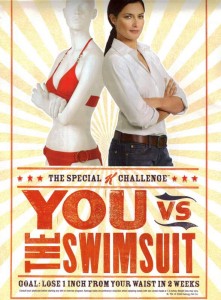 Kellogg’s Special K cereal brand has long been known for its iconic slim woman in a red bathing suit. In a bold, Dove-soap-like new ad campaign, they have decided to feature “real women” – which apparently means women with larger BMIs – in red bathing suits. A Special K spokeswoman explains,
“We want to encourage a responsible attitude when it comes to body image and to show that losing weight isn’t just about the way you look or a certain size you need to conform to, but more importantly about the way it makes you feel.
The fact that we are using real women for the first time of a variety of shapes and sizes is the perfect way to encourage women to think differently about losing weight and not just focus on the numbers on the bathroom scales.”
While I certainly appreciate the intent, I think there may be an even better way of achieving the objective of avoiding an over-emphasis on the bathroom scale. Instead of normalizing and accepting overweight bodies, why not show what women of the same percent body fat look like? That might be a healthier way to help us wrap our minds around the fact that (for example) 21% body fat on one woman might look very different than 21% body fat on another… Of course body fat alone is not a perfect measure of health – cardiovascular fitness doesn’t always correlate with it. But it’s a potential new way of normalizing healthy bodies rather than accepting a new overweight standard.
In fact, with the upcoming summer Olympic games, it might be fun to show the many faces of fitness. Women athletes at the peak of their performance look very different from one another. How about putting them all in red bathing suits?
Anyway, I thank Special K for opening the discussion – and I encourage us all to strive for optimal health. But as a physician, I believe that we shouldn’t accept overweight bodies as a new health standard. Good health does come in many shapes and sizes, but not in high levels of body fat.
December 30th, 2011 by Berci in News, Video
No Comments »

2011 was a very intense and exciting year regarding the developments and new insights of the relationship between medicine/healthcare and social media. Here are my favourite stories from 2011 selected and featured month by month.
January
I had the honour to be included in the Advisory Board of the Mayo Clinic Center for Social Media; I wrote about how a Samsung Galaxy Tab changed totally my online activities, how Google Translate can be used in medicine and featured HealCam, a medical alternative of ChatRoulette.

February
Facebook diagnosis by surgeon saved a friend; there was a lively discussion whether pharma companies can edit Wikipedia entries about their own products, it turned out Wikipedia can be a key tool for global public health promotion; and Scienceroll won the Best Medical Technology/Informatics Blog category for the third time in a row in the Medgadget’s Weblog Awards.

March Read more »
*This blog post was originally published at ScienceRoll*
December 27th, 2011 by BarbaraFicarraRN in Health Policy, Opinion
1 Comment »


Bill Crounse, MD, Senior Director, Worldwide Health, Worldwide Public Sector Microsoft Corporation shares his insights and describes four leading trends and technologies that will transform health and health care in 2012 and beyond.
These leading technologies include: cloud computing, health gaming, telehealth services and remote monitoring/mobile health.
Telehealth, Remote Monitoring, Mobile Health
I’d like to focus on telehealth and remote monitoring/mobile health since I feel telehealth is the nucleus of patient care, and telehealth can help reduce health care costs, and improve quality health care for patients. Telehealth technology combined mobile technology such as smartphones will make monitoring patients conditions easier and more efficient, and “cheaper and more scalable.”
Patient Quality Health Care
Through the Accountable Care Organizational Model (ACO), the core concept is to Read more »
*This blog post was originally published at Health in 30*
December 26th, 2011 by PeterWehrwein in Research
1 Comment »

We are fast entering the era of the electronic health record, when it will be possible to call up our medical records on our computers and mobile devices. Medication lists, lab results, appointment schedules—they’ll all be available with clicks of your mouse or taps on the screen of your smartphone or tablet.
But one question that’s far from settled is whether the electronic health record should include the notes that doctors make about them. A doctor’s notes can be straightforward, such as a reminder that an additional test might be needed. But they can also include somewhat speculative observations and hunches about a patient and his or her medical conditions. The Open Notes project is a research program designed to test the consequences of giving patients access to doctors’ notes. Harvard-affiliated Beth Israel Deaconess Medical Center is one of the test sites.
The Open Notes project is far from finished. But results of a survey of the expectations that doctors and patients have for note sharing are being reported in today’s Annals of Internal Medicine.
I don’t think there are any great surprises here. More than half of the primary care physicians Read more »
*This blog post was originally published at Harvard Health Blog*