November 6th, 2014 by Dr. Val Jones in Opinion, Research
No Comments »
 I have spent many blog hours bemoaning the inadequate communication going on in hospitals today. Thanks to authors of a new study published in the New England Journal of Medicine, I have more objective data for my ranting. A prospective intervention study conducted at 9 academic children’s hospitals (and involving 10,740 patients over 18 months) revealed that requiring resident physicians to adopt a formal “hand off” process at shift change resulted in a 30% reduction of medical errors.
What was the intervention exactly? Details are available via mail order from the folks at Boston Children’s Hospital. It may take me a few weeks to get my hands on the curriculum (which was supported by a grant from the Department of Health and Human Services). I’m not sure how complex the new handoff initiative is in practice (or if it’s something that could be replicated without government-approved formality) but one thing is certain: disciplined physician communication saves lives.
I myself (without a grant from HHS or a NEJM study to back my assertions – ahem) proposed a set of comprehensive communication practices that can help to reduce medical errors in the hospital. My list involves more than peer hand-offs, but also nursing communication, EMR documentation strategies, and reliance on pharmacists for medication reconciliation and review. It is more than just an information exchange protocol for shift-changes, it is a lifestyle choice.
I applaud the I-PASS Handoff Study for its rigorous, evidence-based approach to implementing communication interventions among pediatric residents in children’s hospitals. I am stunned by how effective this one intervention has been – but a part of me is saddened that we practically had to mandate the obvious before it got done. What will it take for physicians to adopt safer communications strategies for inpatient care? I’m guessing that for many of us, it will involve enrollment in a workshop with hospital administration-driven requirements for participation.
For others of us – regular communication with staff, patients, and peers already defines our medical practice. But because (apparently?) we are not in the majority, we’ll just carry on our instinctual carefulness and wait for the rest to catch up. At least now we know that there is a path forward regarding improving communication skills and transfer of patient information. If we have to force doctors to look up from their iPhones and sit around a table and speak to one another – then so be it. The process may improve our lives while it saves those of our patients.
April 22nd, 2014 by Dr. Val Jones in Health Policy, Humor, Opinion
1 Comment »
 In my last post I wrote about the communication difficulties caused by electronic medical records systems. The response on Twitter ranged from sentiments including everything from “right on, sister” to “greedy doctors are only complaining about EMRs because of their price tag.” The disconnect between policy wonk’s (and EMR vendor’s) belief in the transformative power of EMRs and exasperated clinician users of these products is jaw-dropping. Physicians are often labeled as obstinate dinosaurs, blocking progress, while policy wonks are considered by physicians to be living in an alternate reality where a mobile phone app could fix all that is wrong with the healthcare system.
Being on the dinosaur side, I thought I’d try a quick experiment/analogy to demonstrate that EMR dissatisfaction is not a mere cost artifact. To show what happens when a digital intermediary runs medical information through a translator, I selected a random paragraph about the epidemiology of aphasias from an article in Medscape. I copied and pasted it into Google translator and then ran it backwards and forwards a few times in different languages. In the end, the original paragraph (exhibit A) became the second paragraph (exhibit B):
Exhibit A:
“Not enough data are available to evaluate differences in the incidence and clinical features of aphasia in men and women. Some studies suggest a lower incidence of aphasia in women because they may have more bilaterality of language function. Differences may also exist in aphasia type, with more women than men developing Wernicke aphasia.”
Exhibit B:
“Prevalence and characteristics of men and women are expected to afasia is not enough information available. If afasia some studies, women work more, not less, because they show that the spoken language. There may be differences in the type of OST, women and men to develop more of a vernikke afasia, more.”
Although the B paragraph bears some resemblance to A, it is nearly impossible to determine its original meaning. This is similar to what happens to medical notes in most current EMRs (except the paragraph would be broken up with lab values and vital signs from the past week or two). If your job were to read hundreds of pages of B-type paragraphs all day, what do you think would happen? Would you enthusiastically adopt this new technology? Or would you give up reading the notes completely? Would you need to spend hours of your day finding “work-arounds” to correct the paragraphs?
And what would you say if the government mandated that you use this new technology or face decreased reimbursement for treating patients? What if you needed to demonstrate “meaningful use” or dependency and integration of the translator into your daily workflow in order to keep your business afloat? What if the scope of the technology were continually expanded to include more and more written information so that everything from lab orders to medication lists to hospital discharges, nursing summaries, and physical therapy notes, etc. were legally required to go through the translator first? And if you pointed out that this was not improving communication but rather introducing new errors, harming patients, and stealing countless hours from direct clinical care, you would be called “change resistant” or “lazy.”
And what if 68,000 new medical codes were added to the translator, so that you couldn’t advance from paragraph to paragraph without selecting the correct code for a disease (such as gout) without reviewing 150 sub-type versions of the code. And then what if you were denied payment for treating a patient with gout because you did not select the correct code within the 150 subtypes? And then multiply that problem by every condition of every patient you ever see.
Clearly, the cost of the EMR is the main reason why physicians are not willing to adopt them without complaint. Good riddance to the 50% of doctors who say they’re going to quit, retire, or reduce their work hours within the next three years. Without physicians to slow down the process of EMR adoption, we could really solve this healthcare crisis. Just add on a few mobile health apps and presto: we will finally have the quality, affordable, healthcare that Americans deserve.
June 21st, 2013 by Dr. Val Jones in Health Tips, Research
7 Comments »
 It is estimated that in seven years from now, half of all Americans will suffer from one or more chronic diseases, a majority of which are weight related. The American Medical Association recently declared that obesity itself is a disease. Obesity advocacy groups say that this move will lead to better health outcomes by providing more treatment options, preventative programs and education, as well as better reimbursement for treating individuals fighting obesity.
But what do patients need to know about weight loss? The good news is that a medically healthy weight does not require a very low percent body fat.
Weight loss for health – not for appearance – comes with a different (and in many cases much less demanding) set of recommendations. So for the purposes of this blog post, I’ll focus on key evidence-based advice for patients at risk for weight related disease…
1. You don’t need to lose that much weight to realize substantial health benefits.
A five to ten percent loss of body weight can lower risk for heart disease and other killers. For obese patients, even a modest weight reduction can have significant health benefits. An eleven pound reduction in weight leads to a fifty-eight percent decrease in the chance of developing diabetes. Even just losing two pounds reduces the risk of diabetes by sixteen percent.
2. Most people who succeed at losing weight (and keeping it off) do so with a combination of diet and exercise.
According to the National Weight Control Registry (NWCR) (a database of more than ten thousand Americans who have successfully kept at least 30 pounds off for a year or more):
- Ninety-eight percent of Registry participants report that they modified their food intake in some way to lose weight.
- Ninety-four percent increased their physical activity.
3. Walking is the most common form of exercise reported by successful weight loss subjects.
According to the NWCR, their study participants’ most frequently reported form of activity was walking. That’s not to say that other forms of activity (such as interval and strength training) aren’t an important part of a healthy lifestyle, but it is encouraging to know that brisk walking is a simple, affordable, and easily accessible place to start for most people.
4. Exercise itself (even without weight loss) is one of the most powerful preventive health interventions available.
Physical exercise has been shown to reduce blood pressure; decrease the risk for type 2 diabetes, strokes, certain types of cancer, and heart disease; improve arthritis symptoms and sleep disorders, and reduce erectile dysfunction, anxiety and depression. No pill or procedure can come close to providing all these amazing health benefits.
5. Diet is more important than exercise for shedding pounds of fat.
As I often tell my patients, “You can’t outrun your mouth.” Which means – you can eat far more calories in a short period of time than you can ever hope to burn with exercise. For this reason, diet plays a larger role in weight loss than exercise.
6. It’s more important to lose fat than to lose it by following a particular diet.
If diet is so important for losing weight, the next logical question is “Which diet is best?” Interestingly, the answer may be – whichever one you’ll stick to. Now, of course there are some diets that are more nutritionally sound than others – but the benefits of fat loss are so great, that health benefits are achieved even on relatively “unhealthy” diets. In a landmark diet comparison study, Michael Dansinger showed that study participants achieved similar benefits (such as improved cholesterol profiles, blood pressure, and inflammatory markers) from adhering to any of four vastly different diet regimes ranging from low fat, high carb to low carb, high fat.
7. The healthiest diets limit refined carbohydrate and animal fat intake, while maximizing fruit, vegetable, and healthy fats and protein.
I’ve just argued that a variety of diets work if you stick to them, and adherence is the key to fat loss, and even modest amounts of fat loss can have substantial health benefits. So does it really matter which diet you choose? In the long run, yes. Research has shown that there are some common nutritional principles that result in optimal health. The key ones are:
- Avoid refined carbohydrates as much as possible (such as sugar, fructose, and white flour/rice products). Unrefined carbs (such as whole grains, flax, oatmeal, brown rice, quinoa, berries, and cruciferous veggies) are an important part of a healthy diet.
- Avoid animal fats (trans fats). Healthy fats such as olive, fish and nut oils are preferable.
- Eat a diet rich in fiber, fruits and vegetables.
- Choose lean protein sources, including beans, eggs, chicken, fish, pork, yogurt, and fish.
- Limit alcohol intake and opt for water as your main source of hydration fluid.
8. Aim to lose 1 pound per week.
Cutting out approximately 500 calories from your daily caloric needs (established with a calorie calculator or by personal trial-and-error) is about as much as people can tolerate comfortably over periods of time. Diet adherence decreases as deficits exceed 500 calories per day.
9. The optimal, minimal amount of exercise for the average American adult is about one hour of moderate intensity exercise each day.
There is some disagreement on optimal exercise duration – some groups recommend half an hour per day (American College of Sports Medicine), others (such as the Institute of Medicine) a full hour. A review of the various positions and guidelines is available here. In terms of types of activity, there is general consensus that strength training twice a week should be added to moderate daily aerobic activity for best results.
10. You probably don’t need to take any vitamin or nutrition supplements.
Contrary to popular belief, most Americans (even with their sub-optimal eating habits) meet all of their basic dietary requirements with food intake. Non FDA-approved weight loss supplements have not been found to provide lasting benefits for weight loss and are generally ineffective and sometimes dangerous.
Weight loss drugs and surgical procedures may be effective last resorts for those who have failed to achieve results with diet and exercise. New prescription anti-obesity drugs and FDA-approved over-the-counter options are effective at helping patients shed extra pounds, but often come with unwanted side effects such as anal leakage and adverse cardiac events.
In conclusion, obesity underlies most of America’s chronic disease burden but can be reversed with modest weight loss through diet and exercise modifications. Patient adoption of long-term lifestyle changes are challenged by economic factors (e.g. healthy food “deserts” in inner cities), sedentary lifestyles, poor urban planning, excessive fast food and sugary beverage consumption, increasing portion sizes, and high tech conveniences that reduce energy expenditure, among other factors.
Patients are more likely to begin weight loss programs if recommended to do so by their physician, though studies suggest that they take advice more seriously if their physician is not overweight or obese herself. In our efforts to treat obesity, it may be especially important to lead by example.
June 22nd, 2012 by Dr. Val Jones in Health Tips, Opinion
10 Comments »
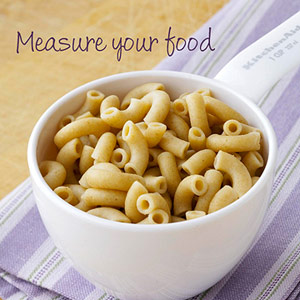 I was raised by a health food zealot, and have been “eating clean” for most of my life. I have been an editor of a peer-reviewed nutrition and obesity journal, a food critic, and a dairy farmer. I am passionate about food – but I am also passionate about science. And I have to tell you, that for measurable health benefits, how much you eat is more important than what you eat.
I know this is controversial, and I’m certainly not saying that we should throw out all our leafy green veggies and grilled chicken and chow down on a diet of Twinkies and beer. But what I am saying is that the relative importance of food volume versus food quality has been misrepresented. We are focusing too much on specific nutrients and not enough on total caloric intake. I’d guess that what we eat is about 10% of the obesity problem, and how much we eat is 90% of the problem, but we spend 90% of our time talking about changing and improving what we eat rather than portion control strategies.
Consider these research-based findings :
1. The CDC has determined that 90% Americans get all the nutrients they need from the food they eat. Even “crappy” US diets actually do provide the minimum nutrients needed to avoid disease and malnutrition. I know this is surprising, but vitamins and supplements are simply not needed by most people.
2. Measurable health benefits occur from weight loss as small as 5-10% of total body weight. You don’t need to be a bikini model to achieve the health benefits of weight loss. You can decrease your blood pressure, sugar, and cholesterol with modest weight losses. In my opinion, leanness under about 25% body fat (for women) is mostly an aesthetic choice, not one of medical necessity.
3. Exercise benefits are largest at minimal levels. Going from sedentary to slightly active provides a larger health benefit than all additional increments of exercise. Thirty minutes of exercise, five times a week, is the minimum bar set by the Department of Health and Human Services. Anything beyond that is still valuable, but doesn’t decrease health risks by as much.
4. It matters more to lose weight, than it matters how you do it. Head-to-head studies of one diet versus another have repeatedly shown minimal differences in health benefits between the diet groups. The benefits occur from the weight loss, not from the manner in which it was lost.
This is all good news. Americans can achieve healthier outcomes with less effort than generally believed. Regular exercise, and a calorie-controlled diet (rather than rigidly controlling the macro and micro nutrients) are all that is required to substantially reduce the risk of many costly and unpleasant diseases. If you want to further optimize your health by eating a diet rich in fruits and veggies, whole grains, low-fat dairy, healthy fats, and lean protein please do so! But better to be a normal weight than obese due to eating too much of that healthy diet.
The bottom line is that you don’t have to give up eating the things you like, you just have to eat less of them. Even Olympian Carmelita Jeter eats Hostess cup cakes occasionally. And she’s the fastest woman in the world!
P.S. This blog post was inspired by a Twitter conversation with @Judith_Graham who said that the complicated issue of what to eat was too difficult to address in 140 character exchanges. Thank you, Judith!
P.P.S. Also, I’ve been thinking a lot about well-meaning but misguided (IMO) health policy issues raised by mayor Bloomberg’s ban on Big Gulps and the AMA’s endorsement of soda taxes. Bloomberg was pointing in the right direction (the size of the soda, not the soda itself was the problem), but I don’t believe you can regulate good behavior. Education and personal responsibility are the way to go.
December 9th, 2011 by BarbaraFederOstrov in Health Policy, News
No Comments »
There’s plenty of of analysis, criticism and praise of HHS Secretary Kathleen Sebelius’ controversial decision to prevent the “morning after” contraceptive pill Plan B from being sold over the counter at drugstores and to girls under 17 without a prescription. The top question: how much did election-year politics affect the decision?
President Barack Obama, father of two daughters, defended Sebelius today and said he was not involved in her decision. The New York Times quotes him:
The reason Kathleen made this decision is that she could not be confident that a 10-year-old or an 11-year-old going to a drug store should be able — alongside bubble gum or batteries — be able to buy a medication that potentially, if not used properly, could have an adverse effect.
Here’s a roundup of the national conversation so far:
NPR’s Julie Rovner reports today on the angry reactions from women’s health advocates, who note that Sebelius’ reasoning – that young girls might not use the OTC birth control correctly – sets a double standard for birth control. She quotes former assistant FDA commissioner Susan Wood: Read more »
*This blog post was originally published at Reporting on Health - Barbara Feder Ostrov's Health Journalism Blog*