If Emergency Medicine Physicians Told Hospitalists The Truth…



Occupational Therapy Environment, Saint Luke's Hospital, WA
For most physicians who practice inpatient medicine, acute inpatient rehabilitation facilities are mysterious places with inscrutable admissions criteria. This is partly because physical medicine and rehabilitation (PM&R) has done the poorest job of public relations of any single medical specialty (Does anyone know what we do?), and also because rehab units have been in the cross hairs of federal funding cuts for decades. The restrictive CMS criteria for inpatient rehabilitation have resulted in contortionist attempts to practice our craft in an environment where clinical judgment has been sidelined by meticulous ICD-9 coding.
But I will not bore you with the reasons behind our seemingly capricious admissions criteria. Instead I will simply tell you what they are in the simplest way possible. After much consideration, I thought it would be easiest to start with the contraindications to acute rehab – I call these “red lights.” If your patients have any of these, then they will not qualify for transfer to the acute inpatient rehab unit. I followed the absolute contraindications with relative contraindications (you guessed it, “yellow lights”) – these patients require some clinical and administrative judgment. And finally, I’ve listed the official green lights – the diagnosis codes and medical necessity rules for the ideal inpatient rehab candidate.
I hope that these rules demystify the process – and can help discharge planners, rehab admissions coordinators, and acute care attending physicians alike help to get the right patients to acute inpatient rehab.
RED LIGHT (Patient does not meet criteria, admission is not currently indicated):
YELLOW LIGHT (The patient may not be a good rehab candidate, clinical/administrative judgment required regarding admission):
GREEN LIGHT (The patient is a good candidate for acute inpatient rehab if they have no red or yellow lights, meet criteria for medical necessity AND meet the impairment categories listed below):
MEDICAL NECESSITY DEFINITION:
Acute inpatient rehabilitation services are medically necessary when all of the following are present:
13 Diagnosis Codes Approved by CMS for Acute Inpatient Rehab
1. Stroke
2. Spinal cord injury
3. Congenital deformity
4. Amputation
5. Major multiple trauma
6. Fracture of femur (hip fracture)
7. Brain injury
8. Neurological disorders, including:
• Multiple sclerosis
• Motor neuron diseases (Guillain Barre, ALS)
• Polyneuropathy
• Muscular dystrophy
• Parkinson’s disease
9. Burns
10. Arthritis: Active polyarticular rheumatoid arthritis, psoriatic arthritis, and seronegative arthropathies
resulting in significant functional impairment of ambulation and other activities of daily living;
11. Vasculitis: Systemic vasculidities with joint inflammation resulting in significant functional impairment of ambulation and other activities of daily living
12. Severe or advanced osteoarthritis (osteoarthrosis or degenerative joint disease) involving two or more weight bearing joints (elbow, shoulders, hips, or knees but not counting a joint with a prosthesis) with joint deformity and substantial loss of range of motion, atrophy of muscles surrounding the joint, and significant functional impairment of ambulation and other activities of daily living
13. Knee or hip joint replacement, or both, during an acute care hospitalization immediately preceding the inpatient rehabilitation stay and also meets one or more of the following specific criteria:
References:
http://www.anthem.com/medicalpolicies/guidelines/gl_pw_a051177.htm
http://www.gpo.gov/fdsys/pkg/FR-2013-08-06/pdf/2013-18770.pdf
 It’s no secret that most physicians are unhappy with the way things are going in healthcare. Surveys report high levels of job dissatisfaction, “burn out” and even suicide. In fact, some believe that up to a third of the US physician work force is planning to leave the profession in the next 3 years – an alarming statistic.
Direct primary care practices are touted as the best way to restore patient and provider satisfaction. Those brave enough to cut out the “middle man” (i.e. health insurers, both public and private) find a remarkable reduction in billing paperwork, unrecovered fees, and electronic documentation requirements. I know many physicians who have made the switch and are extremely happy to be able to spend most of their time in direct patient care, unfettered by most rules, regulations, and coding systems. They can solve problems via phone, email, text, video chat, or in-office as the need arises without having to worry about whether or not their manner of interaction will be reimbursed.
Direct primary care is probably the best way to find freedom and happiness in practicing outpatient medicine. But where does that leave physicians who are tied to hospital care due to the nature of their specialty (surgeons, intensivists, anesthesiologists, etc.)? Is there any way for them to find a brighter way forward?
I have found that working as a locum tenens hospital-based physician has dramatically improved my work satisfaction, and it may do so for you too. Here’s why:
1. You can take as much time off as you want, anytime you want. Do not underestimate the power of frequent vacations on your mental health. The frenetic pace of the hospital is much more tolerable in short doses. My attitude, stamina, and ability to stay focused is dramatically improved by working only 2-3 week stretches at a time. When I feel good, I can spread the cheerfulness, and I am happy to spend longer hours at work to give my patients more of my time.
2. You can avoid most political drama. Hospitals are incredibly stressful environments filled with hierarchical and territorial land mines. Being a short-timer allows you to avoid many conflicts. Administrators never nag you, or hold you responsible for perceived departmental deficiencies. You don’t need to attend committee meetings or become involved in personality quirk arbitrage. You can stay above the fray, focusing purely on the patients.
3. You learn all kinds of new things. Exposure to different patient populations, hospital expertise and different peer groups exposes you to a broader swath of technology and humanity. No longer will you be tied to the regional practice idiosyncrasies of a single hospital – you’ll learn how to tackle problems from many different angles. That knowledge earns you respect, and serves to cross-pollinate your own specialty, making you – and those you learn from – better doctors.
4. You are free to leave. There’s something refreshing about knowing that you can leave a place that you don’t like without any repercussions. No matter how unpleasant a locums assignment, it will end, and you can saunter off to brighter pastures.
5. You make more money. Believe it or not, locums work can be quite lucrative if you find the right assignments. I know a team of hospitalists who travel the country together, negotiating higher rates since they are a “one stop” solution. Their housing, travel, and cars are paid for by the agency, and they have take home pay (before taxes) around $350K per year. I personally think that working that many hours as a locum tenens physician kind of defeats the purpose of avoiding burn out, but some people like to do it that way.
6. You can live in the warm states in the winter, and the cold ones in the summer. Enough said.
7. You can try before you buy. Maybe you’re not sure where you want to sink down career roots. Or maybe you’re not sure you’ll like living in a certain city or part of the world? Maybe your family isn’t sure they want to move to a new location? Locum tenens assignments are the perfect way to try before you buy.
8. You can use your experience to become an excellent consultant. With long term exposure to various hospital systems, you are in a unique position to develop an encyclopedic knowledge of best practices. Sharing how other hospitals have solved their challenges can spark reform at other institutions. You can become a real force for positive change, not just on a micro level, but system and state-wide.
Working as a locum tenens physician may enhance your career satisfaction and promote professional advancement. What it will not solve, however, is the following:
1. You still have to work within the framework of bureaucracy endemic to hospitals. You’ll need to learn to use multiple different EMR systems and fill out most of the same paperwork that you do as a full-timer. This is painful at first, but once you’ve mastered the most common EMR systems (I’ve only really encountered 5 different ones in 2 years of locum tenens work) you’ll find a clinical rhythm that fits into most frameworks.
2. You will be living out of a suitcase. If the disruption of frequent travel is too much for you (or your family) to bear, then perhaps the locums lifestyle is not for you.
3. You will be annoyed by the process of getting multiple medical licenses and hospital credentialing. Agencies try to help with this burden, but mostly, you’ll need to suffer through this part yourself.
4. You will have to live with some degree of uncertainty. Part of the nature of working as a locum tenens physician is that clients (hospitals) change their minds frequently. They try to fill open positions with local staff or hire additional full-timers, using locums as their more expensive back ups. Assignments fall through frequently, so you’ll need to be ready to change course quickly.
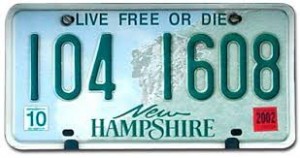
Overall, I believe that locum tenens work can provide the practice freedom that many hospital-based physicians crave. If you’re eager to get off the unrelenting clinical treadmill, this is an easy way to do it. At a recent assignment near New Hampshire, I mused at the license plates that I passed on my way to work: “Live free or die” is their state motto. And I think it captures my sentiments exactly.
 If you (or a loved one) have been admitted to a hospital recently, you were probably surprised by the number of times you were asked the same questions. At first you might assume that the staff are being diligent in double-checking your information, but after the fifth healthcare provider asks you to explain why you’re there, you start to feel as if interacting with “the system” is like talking to a person with no short term memory. It’s as if the hospital itself has some kind of dementia.
Recent adoption of electronic data collection, shift working, team management, and over-specialization have exponentially increased the complexity of patient care. Unfortunately, the complexity is fueling medical errors, repeat and unnecessary testing, as well as misdiagnoses. As primary care physicians have eloquently argued, being cared for by those who don’t know you can be a huge cost driver, and create all manner of unnecessary anxiety. Perhaps a true story will help to illustrate my point?
Not too long ago, I was caring for a patient in an acute rehab unit. Over a three week period of time I got to know her idiosyncrasies quite well. She had had a recent chest surgery and the surgical site was exquisitely tender, but without evidence of infection. In addition, she was allergic to certain kinds of tape and had had an unfortunate blistering reaction to the tape that had been near her surgical site. She had anxiety disorder that was well managed with medicine and talk therapy. She had a large family who visited her daily, some of whom had decided not to vaccinate their children. I had spent a good deal of time helping them to understand the risks associated with those choices.
I signed out my patient’s care to the weekend hospitalist team on Friday afternoon, and was alarmed to discover my patient in an isolation room on Monday morning, in the midst of a nervous breakdown, and surrounded by gowned family members who were furiously calling for emergency transport of distant children to various hospitals. I had not heard a peep from the hospitalists about events over the weekend, and immediately gowned up to find out what was going on.
My patient sobbed, “The doctor told me I have shingles. Now my grand children are going to get chicken pox and they’ll have brain damage!”
“Which doctor told you that you have shingles?” I asked.
“I don’t know his name. Some doctor who was here this weekend,” she wailed.
“How did he know you had shingles?” I said, sitting down next to her bed, trying to console her.
“He looked at my chest rash.” She replied, pointing to the patch of contact dermatitis at the site of the recent surgical tape removal. “He asked me if it was painful and I said ‘yes.'”
“But it’s the surgery site that’s painful as it has always been, right?” I said.
“Yes, it’s the same pain.”
It dawned on me that a linear patch of painful blisters did look a lot like shingles, especially to someone who had never seen the patient before. I could see why the hospitalist suspected it, but unfortunately he wasn’t aware of her long standing wound tenderness or tape reaction. The fallout from this well-meaning misdiagnosis was especially large, given the psycho-social context. A large, anxious family, with many unvaccinated kids who had traveled from far away to see grandma in the rehab unit over the weekend. It was the perfect storm.
Needless to say, it took me several days to unravel the damage, reassure the family, and recall the “emergency chicken pox” ER visits that were planned in distant parts of the state (where the kids made their home). The pregnant nurse who was treating the patient over the weekend had to create a full report to employee health about her “high risk encounter.” And in the end, the family and nursing staff didn’t feel completely certain that she didn’t have shingles, since it was officially documented in the EMR by at least one physician, no matter what my argument.
This is just one example of how cross-sectional relationships with patients (rather than the preferred, longitudinal kind), can wreak havoc. Because of the incredible degree of turnover inherent in today’s inpatient care systems, patients are examined “from scratch” by every new shift of nurse, physician, physical therapist, case manager, etc. There is very little context available to assist with interpreting how the patient is doing compared to their previous state. Searching for such pearls can be time consuming in a medical chart that is not designed for clear communication, but billing purposes.
What are we to do when faced with a new patient with a concerning complaint? Search the chart for historical clues, look for a staff member who has known them longer than one shift, or perhaps ask the patient:
“So can you tell me again why you came to the hospital?”
 One of my biggest pet peeves is taking over the care of a floor-full of complicated patients without any explanation of their current conditions or plan of care from the physician who most recently treated them. Absent or inadequate verbal and written “handoffs” of patient care are alarmingly common in my experience. I work primarily as a locum tenens physician, traveling across the country to “cover” for my peers on vacation or when hospitals are having a hard time recruiting a full-time MD. This type of work is particularly vulnerable to gaps in continuity of care, and has heightened my awareness of the prevalence of poor sign-outs.
Recent research suggests that communications lapses are the number one cause of medical errors and adverse events in the healthcare system. An analysis published in the Archives of Internal Medicine suggests various kinds of consequences stemming from inadequate transfer of information, including missed diagnoses, incomplete work ups, ICU admissions, and near-miss errors. I have personally witnessed all manner of problems, including medication errors (the patient’s full list of medical conditions was not known by the new physician), lack of follow up for incidental (though life-threatening) findings discovered during a hospital stay, progression of infection due to treatment delay, inappropriate antibiotic therapy (follow up review of bacterial drug resistance results did not occur), accidental repeat fluid boluses in patients who no longer required rehydration (and had kidney or heart failure), etc.
It has long been suspected, though not unequivocally proven, that sleep deprivation (due to extended work hours and long shifts) is a common cause of medical errors. New regulations limiting resident physician work hours to 80 hours a week have substantially improved the quality of life for MDs in training, but have not made a remarkable difference in medical error rates. In my opinion, this is because sleep deprivation is a smaller contributor to the error problem than incomplete information transfer. If we want to keep our patients safe, we need to do a better job of transferring clinical information to peers assuming responsibility for patient care. This requires more than checklists (made popular by Atul Gawande et al.), it’s about creating a culture of carefulness.
Over the past few decades, continuity of care has been undermined by a new “shift worker” or “team” approach. Very few primary care physicians admit patients to local hospitals and continue to manage their care as inpatients. Instead, hospitalists are responsible for the medical management of the patient – often sharing responsibility as a group. This results in reduced personal knowledge of the patient, leading to accidental oversights and errors. The modern shift-worker model is unlikely to change, and with the rise of locum tenens physicians added to the mix – it’s as if hospitalized patients are chronically cared for by “float staff,” seeing the patient for the very first time each day.
As a physician frustrated with the dangers of chronically poor sign-outs, these are the steps that I take to reduce the risk of harm to my patients:
1. Attend nursing change of shift as much as possible. Some of the most accurate and best clinical information about patients may be obtained from those closest to them. Nurses spend more face-to-face time with patients than any other staff members and their reports to one another can help to nip problems in the bud. I often hear things like, “I noticed that Mr. Smith’s urine was cloudy and smelled bad this morning.” Or “Mrs. Jones complained of some chest pain overnight but it seems to be better now after the Percocet.” These bits of information might not be relayed to the physician until they escalate into fevers, myocardial infarctions, or worse. In an effort to not “bother the physician with too much detail” nurses often unwittingly neglect to share subtle findings that can prevent disease progression. If you are new to a unit or don’t already know the nursing staff well, join their morning or evening sign out meeting(s). They (and you) will be glad you did.
2. Pretend that every new patient needs an H&P (complete history and physical exam). When I pick up a new patient, I comb through their medical chart very thoroughly and carefully. I only need to do this once, and although it takes time, it saves a lot of hassle in the long run. I make note of every problem they’ve had (over the years and currently) and list them in a systems-based review that I refer to in every note I write thereafter.
3. Apply the “trust but verify” principle. I read other physicians’ notes with a careful eye. Electronic medical records systems are notorious for “copy and paste” errors and accidentally carrying over “old news” as if it were an active problem. If a physician notes that the patient has a test or study pending, I’ll search for its result. If they are being treated empirically for some kind of infection, I will look for microbiologic evidence that the bug is sensitive to the antibiotics they are receiving. I’ll ask the patient if they’ve had their radiology study yet, and then search for the result. I’ll review the active medication list and see if one of my peers discontinued or started a new medicine without letting me know. I never assume that anything in the medical record is correct. I try my best to double check the notes and data.
4. Create a systems-based plan of care, reconcile it each day with the active medication list. I like to organize patient diseases and conditions by body systems (e.g. cardiovascular, endocrine, gastrointestinal, neurologic, dermatologic, etc.) and list all the diseases/conditions and medications currently being offered to treat them. This only has to be done thoroughly one time, and then updated and edited with additional progress notes. This helps all consultants and specialists focus in on their particular area of interest and know immediately what is currently being done for the patient (both in their system of interest and as a whole) with a glance at your note. Since medications often have multiple purposes, it is also very helpful to see the condition being treated by each medication. For example, if the patient is on coumadin, is it because they have a history of atrial fibrillation, a prosthetic heart valve, a recent orthopedic procedure, or something else? That can easily be gleaned from a note with a systems-based plan of care.
5. Confirm your assessment and plan with your patient. I often review my patients’ medication and problem list with them (at least once) to ensure that they are aware of all of their diagnoses, and to make sure I haven’t missed anything. Sometimes a patient will have a condition (otherwise unmentioned in their record) that they treat with certain medications at home that they are not getting in the hospital. Errors of omission are not uncommon.
6. Sign out face-to-face or via phone whenever possible. These days people seem to be less and less eager to engage with each other face-to-face. Texting, emailing, and written sign-outs often substitute for face-to-face encounters. I try to remain “old school” about sign-outs because inevitably, something important comes up during the conversation that isn’t noted in the paper record. Things like, “Oh, and Mr. Smith tried to hit the nursing staff last night but he seems calmer now.” That’s something I want to know about so I can preempt new episodes, right nursing staff?
7. Create a culture of carefulness. As uncomfortable as it is to confront peers who may not be as enthusiastic about detailed sign-outs as I am, I still take the initiative to get information from them when I come on service and make sure that I call them to provide them with a verbal sign-out when I’m leaving my patients in their hands. By modeling good sign offs, and demonstrating their utility by heading off problems at the pass, I find that other doctors generally appreciate the head’s up, and slowly adopt some of my strategies (at least when working with me). I have found that nurses are particularly good at learning to tell me everything (no matter how small it may seem at the time) and have heard time and again that things “just run so much more smoothly” when we communicate and even “over-communicate” when in doubt.
“The Devil is in the details.” This is more true at your local hospital than almost anywhere else. Reducing hospital error rates is possible with some good, old-fashioned verbal handoffs and a small dose of charting OCD. Let’s create a culture of carefulness, physicians, so we don’t get crushed with more top-down bureaucratic rules to solve this problem. We can fix this ourselves, I promise.
It’s no secret that doctors are disappointed with the way that the U.S. healthcare system is evolving. Most feel helpless about improving their work conditions or solving technical problems in patient care. Fortunately one young medical student was undeterred by the mountain of disappointment carried by his senior clinician mentors…
I am proud to be a part of the American Resident Project an initiative that promotes the writing of medical students residents and new physicians as they explore ideas for transforming American health care delivery. I recently had the opportunity to interview three of the writing fellows about how to…

Book Review: Is Empathy Learned By Faking It Till It’s Real?

I m often asked to do book reviews on my blog and I rarely agree to them. This is because it takes me a long time to read a book and then if I don t enjoy it I figure the author would rather me remain silent than publish my…
The Spirit Of The Place: Samuel Shem’s New Book May Depress You

When I was in medical school I read Samuel Shem s House Of God as a right of passage. At the time I found it to be a cynical yet eerily accurate portrayal of the underbelly of academic medicine. I gained comfort from its gallows humor and it made me…
Eat To Save Your Life: Another Half-True Diet Book

I am hesitant to review diet books because they are so often a tangled mess of fact and fiction. Teasing out their truth from falsehood is about as exhausting as delousing a long-haired elementary school student. However after being approached by the authors’ PR agency with the promise of a…