The Pros And Cons Of CrossFit: A Physician’s Perspective
 I’ve been following (and often participating in) fitness trends for decades. From Jim Fixx’s outdoor running to Jane Fonda’s work out videos, to Conan-the-Barbarian body building, to step aerobics, to Tae Bo, to hot yoga, to Zumba, and now CrossFit… America’s exercise pendulum has been swinging wildly across the spectrum of possible physical activities. So have we finally reached a balanced mix of strength and cardio for optimum fitness? Maybe.
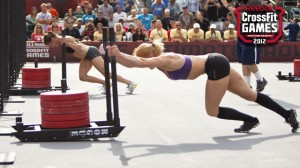
CrossFit is a system of exercise and nutrition (founded in 2000 by Greg Glassman) that claims to “forge elite fitness.” Their Reebok-sponsored annual games boast that the winners have proven themselves to be “the fittest on earth.” CrossFit advocates a mix of aerobic exercise, gymnastics (body weight exercises), and Olympic weight lifting. Workouts are typically short—30 minutes or less—and intense, requiring maximal physical exertion.
I’ve attended multiple regional Cross Fit competitions, watched national games, competed in a CrossFit style competition, and worked out with several CrossFit athletes as well as attempted their work outs (WOD) on occasion, though I am not a member of a CrossFit gym. All this is to say that I’ve spent a good deal of time contemplating the merits of CrossFit, both as an athlete and as a physician trained in sports medicine. And here’s what I think:
Pros:
Difficulty. High intensity interval training (HIIT) is an effective and highly efficient way to improve muscle strength and cardio-vascular endurance. In my opinion, CrossFit’s greatest contribution to the fitness industry is its emphasis on HIIT, something that has not been sufficiently emphasized in the past.
Nutrition. CrossFit emphasizes the importance of healthy nutrition as part of its fitness strategy. This is sorely lacking in other systems/regimens. While I might quibble with some of the more extreme “Paleo” proponents within the CrossFit community, there’s no arguing that a diet rich in fruits and vegetables, lean protein, healthy oils, and complex carbohydrates (no sugars or refined flours) is a healthy way to eat.
Community. Peer support encourages consistency in participation. CrossFit does a good job in building community and making everyone feel welcome. All levels of fitness (and all ages) are welcome to join a CrossFit gym and participate to the best of their ability in the workout of the day (WOD).
Affordability. CrossFit gyms are relatively inexpensive to outfit (less high-tech equipment) and are easy to scale. For this reason they provide greater access to people at all income levels, which is a huge plus.
Portability. CrossFitters learn how to use their own body weight to create challenging exercise routines anywhere, anytime. There is no longer any excuse not to get a good workout in, whether you are traveling and can’t get to the gym or you are too busy to break free from the kids to do a more formal work out.
Cons:
Frequent Injury. CrossFit injury rates are substantially higher than most other fitness regimens. Herniated disks, muscle and tendon ruptures, rhabdomyolysis are not uncommon. In fact, most CrossFit athletes that I know presume that “injury just comes with the territory” and I frequently see Facebook photos of bloody/blistered hands as some kind of badge of honor. I myself sustained a low back injury even when carefully observing my technique during a CrossFit workout, and a dear friend actually ripped off one of the heads of his bicep when attempting an Olympic weight maneuver, while another friend fractured her wrist after falling down during a series of box jumps to exhaustion. Trust me when I say that if you do CrossFit long enough, you’re bound to become injured in some way.
Challenging Technique. Correct exercise form is hard to master, and since many CrossFit moves derive from gymnastics and Olympic weight lifting (sports that take many years to perfect), it is incredibly important to perform movements according to correct mechanical form. Although CrossFit experts strongly agree that good form is the key to safe and effective exercise, the fact is that people don’t always follow directions. In fact, most athletes that I’ve watched at CrossFit gyms suffer from poor form in one or more of their moves – sometimes because of inexperience, and other times because they are too exhausted to perform their final rep(s) correctly and their attention has waned. Functional movement is freer than the usual, controlled weight scenarios in a gym’s circuit training machines. And with that freedom comes the benefit of activating more muscles at a time, but the danger of injury, especially for new initiates or older athletes.
Peer Pressure. The flip side of having a “strong community” that encourages participation, is that the same community may push participants to engage in unsafe exercise practices. I’ve often seen well-meaning CrossFit instructors encourage people to pick up heavier weights than they feel comfortable with in order to push them to become stronger. There is a fine line between healthy encouragement to challenge yourself, and dangerously heavy weight lifting. It’s normal to want to “keep up with the Joneses” to your right and left during a WOD, but when Mr. Jones is a 250 pound tower of muscle, you might not want to be lifting the same weights.
Glorification of the mesomorph. There’s no doubt that committed CrossFitters develop enviably lean, muscular bodies. However, I wince a bit at the tendency for CrossFitters to promote the idea that their way is “THE best way” to be fit, and the bravado surrounding their competitions for “fittest on earth” is exclusionary and unfair. Just because an athlete was born with a different body type, ill-suited to Olympic weight lifting for example, doesn’t mean they can’t be fittest on earth (a rather subjective measure – why not an Ironman as the fittest?) There’s not much variation in the body types of those who are at the top of the CrossFit heap (i.e. large muscle mass, not too short or tall), which speaks to the fact that ultimately this sport is not optimal for all-comers (nor is the position of linebacker on a football team).
My bottom line: CrossFit must be approached with caution, though it provides some excellent HIIT and nutrition principles that can optimize one’s health. If you enjoy strength training (more than cardio or yoga for example) and like camaraderie but can resist the temptation to push yourself into the injury zone, then CrossFit may be for you.
I personally recommend (and participate in) what I would call “CrossFit light” – meaning workouts of similar CrossFit intensity but without extreme weight/maneuvers, and scaling up slowly (especially when new to exercise or a Masters athlete), adding additional cardiovascular training, and eating a diet slightly higher in complex carbohydrates than is generally recommended by strict “paleo” type CrossFitters. And of course, I do not believe that my way is the best or only way to be fit. If you like running, cycling, yoga, Pilates, or even step aerobics – good for you! Aim to be active for an hour/day – and add a little strength training in as you can. If you do that much, you may not be the “fittest on earth” but you’ll be doing more exercise than 96% of Americans!


 According to

 Last month, my family was involved in a