Eye diseases and vision loss are becoming more common in the United States as diabetes rates rise and the population ages. Many eye conditions worsen very slowly and have no noticeable symptoms in their early stages. For this reason, getting an annual eye exam is extremely important. But is there anything we can do to prevent eye disease from a nutritional perspective? Experts believe that there is such a thing as an “eye-healthy diet.” I interviewed Dr. Jeffrey Anshel, President of the Ocular Nutrition Society, and Dr. Elizabeth Johnson, a leading nutrition researcher, to get their views on the subject. Please listen to the full HealthyVision podcast here.
Some of the my favorite learning points from the show:
1. Which foods are healthy for the eyes? The human retina contains about 1000 times more concentrated carotenoids (found primarily in plant pigments) than any other part of the body. Our eyes use these pigments to protect themselves from the photo-damage of sunlight. Carotenoids (including beta-carotene, lycopene, lutein, and zeoxanthin) are found in highest concentrations in dark green, leafy and brightly colored vegetables. Egg yolks are also a good source of carotenoids. Interestingly, our retinas have a predilection for omega-3 fatty acids (found in fatty fish) to protect the eyes from UV radiation. My bottom line – the most eye-healthy meal on earth is probably a salmon salad Niçoise (see photo image above)!
2. Are carrots good for our eyes? While carrots can be part of healthy diet, choosing carrots as our primary source of vegetable intake may not be a good idea. Carrots contain beta-carotene, which competes with other carotenoids for transport molecules. Beta-carotene is a pretty good competitor and can “bump off” lutein and zeaxanthin from getting transported to the retina. Adults don’t process beta-carotene as well as kids do, so too many carrots may not be a great thing after all (especially as we get older)!
3. Should I take nutritional supplements for the eye? It’s always best to get your carotenoids from real food. However, some people (who take blood thinners for example) cannot eat dark green leafy vegetables because they also contain Vitamin K which can interfere with the medicines. For those who cannot get sufficient carotenoids from food, supplements may be beneficial.
4. What is the connection between obesity and chronic eye disease? While obesity is a risk factor for diabetes, and diabetes can cause chronic eye disease, there may be another problem at play. Carotenoids are fat soluble, and so they are preferentially stored in fat cells rather than remaining suspended in our blood stream. When we have larger fat stores, that fat may “mop up” the healthy vegetable carotenoids that we eat, without allowing them to be transported to the eyes to support retinal structures. Some researchers suggest that obese individuals may need to increase their carotenoid intake with supplements in order to prevent eye pigment deficiencies and potential macular degeneration. Losing body fat is also an important strategy of course.
Other questions answered in the podcast:
* How does cooking impact the nutritional value of fruits and veggies?
* Is there such a thing as over-supplementation (especially with Zinc)?
* How many veggies do I need to meet my daily carotenoid requirements?
* How do I know which vitamin supplements to trust?
I hope you enjoy the podcast – and redouble your efforts to eat a diet rich in fruits, veggies, fish and eggs and maintain a healthy weight. Remember that even though your mom may have told you that Bugs Bunny’s diet was best for your eye health, Popeye’s veggie of choice is even better for you!
If you were invited to be part of a nuclear radiation clean up crew, I bet you’d want to wear protective gear. Not just the white hazmat bunny suit, but the gloves, goggles, mask and booties as well, right? But when it comes to ultraviolet radiation exposure, we often put on “half a suit” as it were. We cover our skin with sunscreen (maybe) but we don’t regularly protect our eyes. I’m not sure why we forget this step, but it’s time to get serious about eye protection.
In a recent interview with dermatologist, Dr. Jeanine Downey, and optometrist, Dr. Stephen Cohen, we discussed the long term damage that UV radiation can cause to the skin and eyes. I hope you’ll listen to our entire conversation here:
Sun damage of the skin has a familiar appearance – dark spots, wrinkles, thinning, and enlarged pores. UV radiation causes visible damage to the eyes as well – yellowish corneas (the “whites” of the eyes), scars (called pterygia), and crow’s feet. Over time, eyelid skin can become cancerous from sun exposure, while eyeballs develop cataracts and macular degeneration (which can lead to blindness). The risk of these diseases and conditions can be greatly reduced with sun protection measures. And it’s not that hard to do…
Some quick tips to protect your eyes:
1. Wear a wide-brimmed hat to protect your face and eyes from the sun.
2. Wear wrap-around sunglasses that absorb at least 99 to100 percent of both UVA and UVB rays for maximum eye protection.
3. If you wear contact lenses, ask your eye doctor about whether or not your lenses have UV protection. ACUVUE® OASYS® Brand Contact Lenses offers the highest level of UV blocking available, blocking at least 90 percent of UV-A rays and 99 percent of UV-B rays. Although UV-blocking contact lenses provide important additional protection for wearers, they do not completely cover the eye and surrounding area, and should not be considered as a substitute for UV-blocking sunglasses. For maximum protection, UV-blocking contact lenses should be worn in conjunction with high-quality, wrap-around, UV-blocking sunglasses and a wide-brimmed hat.
4. Remember that UV rays are more intense when reflected from water and snowy surfaces. Just because it’s the winter time doesn’t mean you don’t need to wear your sunglasses.
So next time you reach for your sunscreen, please remember to take your hat and sunglasses with you too! Fortunately, bunny suits and booties are still optional for UV radiation protection. 😉
Disclosure: Dr. Val Jones is a paid consultant for VISTAKON® Division of Johnson & Johnson Vision Care, Inc.
Dermatologists have done a great job promoting sun safety. We all know that we should use sunscreen or sunblock to avoid burns, and to reapply it religiously when we plan to be outdoors for long periods of time. But how often do we think about protecting our eyes from the same UV rays?
A dear friend of mine has been on a long-term medicine that makes her skin especially sun-sensitive. She did not take sufficient precautions to protect her eyes from UV radiation (though she always wore sunscreen on her skin), and she developed a pterygium that looks just like the photograph above. Her condition reminded me of the importance of eye protection, and I thought I’d offer you 5 excellent reasons to start shielding your eyes from the sun. UV protection is critical for avoiding:
1. Photokeratitis. Photokeratitis is essentially a sunburn of the front layer (cornea) of your eyeball. If you’ve ever had a burning sensation in your eyes after a long day at the beach, or in the snow, you may have burned your eyes. Just as skin sunburns are painful and take a few days to calm down, eye pain can be very uncomfortable. But worse than the temporary discomfort is the increased long-term risks of pterygia, cataracts, and other eye conditions (see below).
2. Pterygia. Pterygia are overgrowths of corneal tissue that can grow across the iris and pupil. They can be cosmetically unsightly, and can block vision if they grow large. They are caused almost exclusively by UV damage, and are most common in people who live near the equator (because their exposure to UV radiation is highest). Surgery is the only known treatment for pterygia, though as many as 50% grow back, and surgical divets in the cornea can cause visual problems.
3. Cataracts. Cataracts are opacities of the eye lenses that lead to partial or total blindness. The exact mechanism by which they occur is unclear, though we know that sun exposure contributes to their development. Cataracts are the number one cause of blindness in the world.
4. Skin Cancers. Basal cell carcinoma (BCC) is a type of skin cancer that primarily develops on skin that has been sunburned, especially in childhood. Melanoma is a deadly form of skin cancer that is much rarer than BCC, but also most commonly develops on skin that has been burned. Squamous cell carcinoma (SCC) is the least invasive type of skin cancer, and usually develops on skin that has had the largest total amount of sun exposure over a lifetime. People who don’t protect the thin eye skin and lids from UV radiation (beginning in childhood) are more likely to develop cancer around the eyes
5. Macular Degeneration. Exposure to the sun’s UV rays can cause damage to the deep structures of the eye, including the retina. Light focused on the macula (the most important part of the retina for vision) can cause damage in the area over time. Macular degeneration results in visual damage and even blindness.
Ok, so I hope I’ve convinced you that UV protection is critically important for your eyes… How can you protect yourself? There are 4 primary strategies:
1. Wear UV protective sunglasses. When buying sunglasses, check out their product labels and avoid glasses that are purely cosmetic – opt for those that block 99-100% of UV A and B rays. Larger glasses and wrap-arounds offer the most coverage. Remember that kids need sunglasses too!
2. Wear a wide-brimmed hat. Although a hat doesn’t always protect you from glare and light reflection from other surfaces, it can reduce the total amount of radiation that reaches your eyes and skin.
3. Wear UV-protective contact lenses. Most people don’t realize that some contact lenses are manufactured with a UV protective layer already built in. Although they are not large enough to protect the entire eye surface (or the skin around the eye) they offer an added layer of protection against harmful UV rays. However, not all contact lenses offer UV protection, and of those that do, not all provide similar absorption levels. An eye care professional can prescribe Class 1 UV-blocking contact lenses, which provide the greatest level of UV protection and which have a Seal of Acceptance for UV Absorbing Contact Lenses from both the American Optometric Association and the World Council of Optometry’s Commissions on Ophthalmic Standards. These lenses block more than 90 percent of UVA rays and 99 percent of UVB rays.
4. Protect your eyes all day. UV radiation for the eyes is actually worse when the sun is lower in the sky. Researchers at the Kanazawa Medical University in Japan found that during early morning and late afternoon, UV exposure to the eyes was about double that of the hours around noon during Spring, Summer and Fall.
For more information about protecting your eyes from the sun, you may enjoy listening to my recent interview with Dr. Stephen Cohen.* He is an optometrist who lives in Arizona – and is therefore well acquainted with UV radiation! Scroll down to the bottom of the page after clicking on the link and you’ll see the podcast.
***
Note that I was paid by Johnson & Johnson Vision Care, Inc. to host the radio show with Dr. Cohen.
You probably see your primary care physician once a year, and your dentist twice a year. But how often do you see your eye doctor? Vision is the most valued of the 5 senses, and yet Americans don’t seem to be making regular eye exams a priority. A recent CDC survey suggests that as many as 34.6% of adults over the age of 40 (with moderate to severe visual impairment) believe that they don’t need regular eye exams. About 39.8% of the respondents said that they didn’t get regular exams because they were too costly, or because their health insurance didn’t cover the expense.
Although cost may play a role in peoples’ thinking, a comprehensive eye exam costs as little as $45-50 at retail outlets. I suspect that the real reason why people don’t get regular eye exams is because they incorrectly believe that if their vision is stable, their eyes are healthy.
A comprehensive eye exam is a type of medical check up – it is not just a vision assessment. Eye care professionals can diagnose everything from glaucoma and cataracts to high cholesterol, diabetes, high blood pressure, and even neurologic conditions such as brain tumors and multiple sclerosis. The eyes are more than a “window to the soul” but a window to general physical health. And the good news is that exams are relatively inexpensive and painless – so please consider making them part of your yearly health maintenance routine.
And to my primary care friends – don’t forget to encourage your patients to get annual eye exams. As the CDC notes:
Recommendations from primary-care providers can influence patients to receive eye-care services; persons who had visual screening during routine physical examinations had better eye health because of reminders to visit eye specialists. Public health interventions aimed at heightening awareness among both adults aged ≥65 years and health-care providers might increase utilization rates among persons with age-related eye diseases or chronic diseases that affect vision such as diabetes.
I myself have had an unexpected diagnosis during an eye exam, and feel passionate about the importance of preventive screening. In fact, I’ll be the upcoming host of a new eye health education initiative – a radio show called, “Healthy Vision with Dr. Val Jones” supported by ACUVUE brand contact lenses. The first show will be released here today, and it’s also available at Blog Talk Radio.
Fortunately for me, my recent brush with the healthcare system was not as frightening as Dr. Dappen’s (he blogs here every Wednesday and recently had a mild heart attack). However, it was provided me with some amusing blog fodder.
Last week I was minding my own business, planning to purchase a new batch of contact lenses from a local optometrist, when I was required (under threat of withholding my lenses) to undergo a vision exam. Much to my disappointment, my right eye was not behaving itself, and refused to correct to 20/20 despite a good deal of lens fiddling on the part of the doctor. A slit lamp retinal evaluation followed, and the optometrist concluded that my right eye’s macula “looked like an 85-year-old’s.”
Well, that was not the most welcome of observations. I asked for the differential diagnosis (being that I’m quite a few years away from 85) and wondered how I’d developed macular degernation. He suggested that it could also be a “central serous” which is (apparently) a stress-related swelling of the macula that requires no treatment and usually resolves on its own.
“So basically you’re saying that my eye could be ‘bugging out’ because of stress.” I said. “And you’d like me to see an ophthalmologist just in case it’s something worse and equally untreatable?”
“Right.”
So I made an appointment with a local ophthalmologist – one of the few working on Christmas Eve – and was sorry to have him confirm that there was indeed something wrong with my retina. He even ordered an eye angiogram (I didn’t know those existed, but it makes perfect sense) and I was injected with a vegetable dye. Photographs were taken through my dilated pupils at regular intervals as the dye wound its way through my retinal vasculature.
“It’s not a central serous.” He said with a serious tone. “And you can see the macular defect here on this photograph.”
“So my right eye is like an 85-year-old’s?” I asked, wondering how I’d been so fortunate to have one part of my body on the aging fast-track.
“Well, not exactly. I think it’s unlikely to be age-related macular degeneration. You probably have retinal thinning caused by your nearsightedness.”
“You mean all that straining to see the chalk board wore out my retina?”
“No. What I mean is that your eye is supposed to be shaped like a baseball, but yours is an egg shape. So your retina is stretched thin and is starting to wear in your macula area.”
“Well can you suck out some of the vitreous gel and shape my egg back into a baseball?”
“No. Unfortunately that doesn’t work.”
“How do you know?”
“The Russians tried it in the 1960s.”
“Ok, well how do I take some of the tension off my stretched out retina?”
“You can’t.”
“Well if I lose weight or eat carrots or exercise, or stop wearing contacts, or get lasik… would any of that help?”
“No.”
“So there’s nothing I can do to prevent further damage, and nothing to repair or treat it.”
“Right.”
Pause.
“I don’t like this condition.”
“Well, you’ll have to come and see me once a year so I can monitor the progression. Sometimes the body responds to the retinal damage by growing blood vessels in the area, and that can cause further visual deficits. But we can zap those new vessels with a laser and decrease the damage.”
“So my eye might overgrow with blood vessels like weeds in a garden.”
“It might. But it also may stay exactly the same for the rest of your life.”
“Well, the uncertainty is anxiety-provoking.”
“I’ll see you in a year. You’ll probably be fine. Don’t worry. Oh, and if you see any ‘floaters’ or flashes of light, come in to see me immediately.”
“What would that indicate?”
“A retinal tear that would need laser therapy right away. People with thin retinas can have spontaneous tears. Just keep that in mind.”
“Um… ok.” I said, smiling feebly.
So here I am, with one wonky eye, not knowing if it will get worse or remain the same indefinitely. There’s nothing I can do but watch the progression once a year with an ophthalmologist. Like so many patients, I’m in a gray zone where prognostication is a challenge and reversal of disease is not possible. I have one 85- year-old eye. May it bring me wisdom, courage, and more empathy for patients.
It’s no secret that doctors are disappointed with the way that the U.S. healthcare system is evolving. Most feel helpless about improving their work conditions or solving technical problems in patient care. Fortunately one young medical student was undeterred by the mountain of disappointment carried by his senior clinician mentors…
I am proud to be a part of the American Resident Project an initiative that promotes the writing of medical students residents and new physicians as they explore ideas for transforming American health care delivery. I recently had the opportunity to interview three of the writing fellows about how to…
I m often asked to do book reviews on my blog and I rarely agree to them. This is because it takes me a long time to read a book and then if I don t enjoy it I figure the author would rather me remain silent than publish my…
When I was in medical school I read Samuel Shem s House Of God as a right of passage. At the time I found it to be a cynical yet eerily accurate portrayal of the underbelly of academic medicine. I gained comfort from its gallows humor and it made me…
I am hesitant to review diet books because they are so often a tangled mess of fact and fiction. Teasing out their truth from falsehood is about as exhausting as delousing a long-haired elementary school student. However after being approached by the authors’ PR agency with the promise of a…


 Eye diseases and vision loss are becoming more common in the United States as diabetes rates rise and the population ages. Many eye conditions worsen very slowly and have no noticeable symptoms in their early stages. For this reason, getting an annual eye exam is extremely important. But is there anything we can do to prevent eye disease from a nutritional perspective? Experts believe that there is such a thing as an “eye-healthy diet.” I interviewed Dr. Jeffrey Anshel, President of the Ocular Nutrition Society, and Dr. Elizabeth Johnson, a leading nutrition researcher, to get their views on the subject. Please listen to the full HealthyVision podcast here.
 I hope you enjoy the podcast – and redouble your efforts to eat a diet rich in fruits, veggies, fish and eggs and maintain a healthy weight. Remember that even though your mom may have told you that Bugs Bunny’s diet was best for your eye health, Popeye’s veggie of choice is even better for you!
 If you were invited to be part of a nuclear radiation clean up crew, I bet you’d want to wear protective gear. Not just the white hazmat bunny suit, but the gloves, goggles, mask and booties as well, right? But when it comes to ultraviolet radiation exposure, we often put on “half a suit” as it were. We cover our skin with sunscreen (maybe) but we don’t regularly protect our eyes. I’m not sure why we forget this step, but it’s time to get serious about eye protection.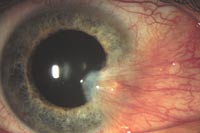
 You probably see your primary care physician once a year, and your dentist twice a year. But how often do you see your eye doctor? Vision is the most valued of the 5 senses, and yet Americans don’t seem to be making regular eye exams a priority. A