November 14th, 2011 by HarvardHealth in Health Tips
No Comments »

I was hiking in the woods recently with a group of women friends when something caught my attention. It wasn’t an interesting bird or plant, but the surprising number of “pit stops” my friends needed to make.
Their frequent detours into the bushes struck me because I had just finished working on Better Bladder and Bowel Control, the latest Special Health Report from Harvard Medical School. According to the report, incontinence is the unintended loss of urine or feces that is significant enough to make it difficult to do ordinary activities without frequent trips to the restroom. In the United States, about 32 million men and women have some degree of incontinence. For women, incontinence is a common but rarely discussed result of childbirth and aging—that could explain the pit stops of my hiking friends, who were all mid-life mothers. For men, incontinence is most often a side effect of treatment for prostate disorders.
Many things can go wrong with the complex system that allows us to control urination. Read more »
*This blog post was originally published at Harvard Health Blog*
June 25th, 2011 by AnnMacDonald in Health Tips, Research
No Comments »

On Saturday, while thousands of Boston Bruins fans gathered at Government Center to celebrate the team’s recent Stanley Cup victory, a hundred or so true die-hards met a few blocks away at a Massachusetts General Hospital conference to talk about complementary and alternative medicine for psychiatric disorders. While I hated to miss the Bruins parade, I’m glad I attended the MGH conference.
I’ve always been a bit of a skeptic about so-called natural therapies for one simple reason: they don’t have to go through the same rigorous testing in clinical trials that medications do. At the same time, I realize that FDA-approved drugs don’t work for everyone. One in three adults with major depression, for example, can’t completely improve their mood and other symptoms even after trying multiple antidepressants.
Clearly, we need better options for treating mental health disorders. The MGH conference convinced me that some types of complementary and alternative medicine—or CAM, for short—might be worth trying. The presenters, all psychiatrists who treat patients at MGH, backed up their recommendations with scientific evidence. Several of them also contributed to the American Psychiatric Association’s recent report on CAM therapies.
We’ll be doing a story on CAM therapies for psychiatric disorders in an upcoming issue of the Harvard Mental Health Letter. For now, here are some things I learned on Saturday: Read more »
*This blog post was originally published at Harvard Health Blog*
February 20th, 2011 by John Mandrola, M.D. in Opinion, Research
No Comments »

 It tastes sweet. It’s pleasurably fizzy. And free of calories. What’s more, the FDA says NutraSweet (aspartame) is safe. So what’s not to like about diet soft drinks?
A bunch. The ongoing debate about the healthiness of diet soft drinks reminds me of the old adage, “If something sounds to be true, it probably is.”
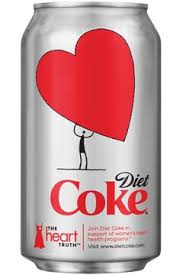
Artificially-sweetened “diet” drinks get touted as healthy alternatives to sugary drinks because they contain no calories or carbohydrates. On paper it seems plausible to think they are inert, no more dangerous than water. The Coca-Cola Company sublimely strengthens this assertion by putting a big red heart on Diet Coke cans.
But diet-cola news (Los Angeles Times) presented at the International Stroke Conference 2011 suggests otherwise. This widely-publicized observational study of 2,500 older patients (average age=69) from New York showed that drinking diet soda on a daily basis increased the risk of having a heart attack or stroke by 61 percent. The abstract — not a peer-reviewed study — stated that this association persisted after controlling for other pertinent variables.
Sure, this is only a look back at 559 patients who had a vascular event. The study asserts only an association, not that diet colas cause heart attacks and strokes. That’s a big difference.
That said, however, I don’t view these results as trivial either. This trial builds on the results of prior studies of diet drinks which strongly suggest that despite their lack of calories, diet drinks don’t prevent obesity. Read more »
*This blog post was originally published at Dr John M*
January 31st, 2011 by Dinah Miller, M.D. in Health Tips, Research
1 Comment »


 Meditation sounds like a great idea from the perspective of a psychiatrist: Anything that calms and focuses the mind is a good thing (and without pharmaceuticals, even better).
Personally, I tried transcendental meditation as a kid (more to do with my mother than with me) and found it to be boring. I have trouble keeping my thoughts still. They wander to what I want for dinner, and should I write about this on Shrink Rap, and will Clink and Victor ever eat crabcakes with me again, and did I remember to give my last patient informed consent, and a zillion other things. Holding my thoughts still is work.
The New York Times Well blog has an article on meditation and brain changes. In “How Meditation May Change the Brain,” Sindya N. Bhanoo writes:
The researchers report that those who meditated for about 30 minutes a day for eight weeks had measurable changes in gray-matter density in parts of the brain associated with memory, sense of self, empathy and stress. The findings will appear in the Jan. 30 issue of Psychiatry Research: Neuroimaging.
M.R.I. brain scans taken before and after the participants’ meditation regimen found increased gray matter in the hippocampus, an area important for learning and memory. The images also showed a reduction of gray matter in the amygdala, a region connected to anxiety and stress. A control group that did not practice meditation showed no such changes.
Lower stress, lower blood pressure, higher empathy. I may have to give meditation another try.

*This blog post was originally published at Shrink Rap*
January 26th, 2011 by GarySchwitzer in Health Tips, Opinion
1 Comment »

 The February issue of Prevention magazine has an article entitled “Surprising Faces of Heart Attack” profiling “three women (who) didn’t think they were at high risk. Their stories are proof that you could be in danger without even knowing it.” No, their stories are not proof of that.
The story is about three women in their 40s. The story varyingly states that the three should have had the following screening tests:
— Advanced cholesterol test, carotid intimal medial thickness test ( CIMT)
— Advanced cholesterol test and stress echocardiography
— Cardiac calcium scoring and CIMT
There’s an accompanying piece: “7 Tests You’re Not Having That Could Save Your Life.”
 I asked one of our HealthNewsReview.org medical editors, Harold Demonaco, director of the Innovation Support Center at the Massachusetts General Hospital, to review the two pieces. As his day-job title suggests, he deals with review of the evidence for new and emerging healthcare technologies. He wrote:
The section “7 Tests you are not having that could save your life” states: “If you have not had these cutting edge screenings, put this magazine down and call your doctor. Now.”
Wow. While much of the information is correct, it is the context that is disturbing. Suggesting that these tests are essential in everyone is a bit over the top. Some of the information provided for each test is basically correct. However in some cases the recommendations go well beyond national guidelines.
The major issue here is the tacit assumption that tests are infallible, without any downsides and are always a good thing. That is simply not the case. So who should get these tests? Read more »
*This blog post was originally published at Gary Schwitzer's HealthNewsReview Blog*