December 28th, 2011 by BarbaraFederOstrov in News, Research
No Comments »
 Last week, I wrote about controversial research linking fallout from Japan’s earthquake-damaged Fukushima nuclear plant to infant deaths in the United States.
The research, which was harshly criticized by Scientific American’s Michael Moyer and others, was published in the peer-reviewed Journal of International Health Services, and I had asked the journal’s editor-in-chief Vicente Navarro for his response to the criticisms.
Navarro, professor of health policy at Johns Hopkins University’s Bloomberg School of Public Health, emailed me this comment today: Read more »
*This blog post was originally published at Reporting on Health - Barbara Feder Ostrov's Health Journalism Blog*
December 13th, 2011 by AndrewSchorr in True Stories
No Comments »


Film adaptation of "Tuesdays with Morrie"
Many of you know about, or have read, the highly recommended book, Tuesdays With Morrie. I am reading it now with my 14-year-old son, Eitan, as part of an assignment for his ninth grade English class. Morrie, a college professor in Boston, was dying, withering away with ALS. Each Tuesday he would have a visit from one of his favorite former students, Mitch, a journalist from Detroit. Morrie, a man in his 70’s, mused about many things including the meaning of life and the inevitability of death. He was prepared for his end.
The other day I spoke about that book with a former high school English teacher – not Eitan’s. The circumstance was not good. The woman, 37, had been diagnosed with stomach cancer just six weeks ago. She’d been having heartburn and it wouldn’t go away. Endoscopy showed the cancer and other tests revealed its spread to her liver and lung – stage 4. The woman and her husband, her high school sweetheart, sat across from me at lunch. They have three young children, age Read more »
*This blog post was originally published at Andrew's Blog*
October 20th, 2011 by Lucy Hornstein, M.D. in Opinion, Research
No Comments »

Hallelujah. At last there is an actual, published paper (full text behind subscription firewall, unfortunately) objectively documenting not only a lack of longevity benefit for several commonly consumed dietary supplements, but a numerical association indicating potential harm. Finally!
Investigators looked at nearly 39,000 women (in scientific terms: a lot) over 19 years of follow up (in scientific terms: a long time) and found increased risk of death in women who took supplemental iron (strongest association), copper, zinc, magnesium, Vitamin B6, and multi-vitamins.
Wow.
If nothing else, that should at least give one pause when considering whether or not to take supplements at all, especially in the demographic studied (the “older female”). But are they overstating their case? Scare-mongering? Not at all. In fact, the following caution was explicitly added by the researchers: Read more »
*This blog post was originally published at Musings of a Dinosaur*
October 15th, 2011 by AndrewSchorr in Opinion, True Stories
No Comments »
It’s too young to die at age 56. It’s too young to die when you have four children and a wife. It’s too young to die when you have led one of the most successful technology companies ever. It’s too young to die when you are very rich, have so much more to do and to give back. But pancreatic cancer doesn’t care. This time, again, one of our most deadly cancers won.
Medicines, nutrition, surgery, liver transplant, apparently Steve Jobs, celebrated CEO of Apple, tried them all. But, as I wrote in a recent blog, continuing was just too much. To be sure, Jobs did not have the most common type of cancer in his pancreas. His was a neuroendocrine tumor and life expectancy can be longer. But, as has been noted widely in the media, Steve Jobs came to know that his mortality clock was ticking. His eight year-survival was probably what he knew he was facing all along. Read more »
*This blog post was originally published at Andrew's Blog*
September 30th, 2011 by RyanDuBosar in Research
No Comments »

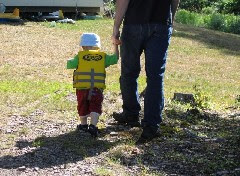
Married men who have no children have a 17% higher risk of dying from cardiovascular disease after the age of 50 than men with two or more children. But whether that’s because of a physical cause, a sociological effect or self-selection (sick people may choose not to have kids) isn’t known.
To determine if the number of kids predicts cardiovascular death, researchers used data from the NIH-AARP Diet and Health Study of nearly 135,000 men ages 50 to 71 without prior cardiovascular disease who were followed-up for an average of 10 years. That study mailed 3.5 million questionnaires from 1995 through 1996 to AARP members living in California, Florida, Pennsylvania, New Jersey, North Carolina, and Louisiana or in Atlanta or Detroit. Nearly 586,000 people returned the questionnaire, which underwent follow-up surveys in 1996-1997 and 2004-2006. Results appeared online Sept. 26 in the journal Human reproduction.
Almost all (92%) men had Read more »
*This blog post was originally published at ACP Internist*