How Sprained Ankles Can Lead To Cancer Drug Rationing
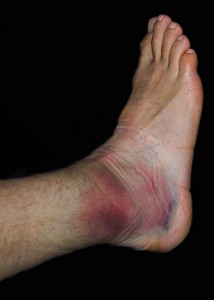 New York Times blogger Tara Parker Pope describes how her daughter was recently “the victim” of excessive medical investigation. Apparently, the little girl twisted her ankle at dance camp and experienced a slower than normal recovery. Four weeks out from the sprain, Tara sought the help of a specialist rather than returning to her pediatrician. The resulting MRI led to blood testing, which led to more testing, and more specialist input, etc. until the costs had spiraled out of control – not that Tara cared much because (as she admits) “I had lost track because it was all covered by insurance.”
Instead of any twinge of guilt on the part of Ms. Pope for having single-handedly called in the cavalry for an ankle sprain, she concluded that her daughter was a victim of medical over-investigation. But what would any physician do in the face of a concerned pseudo-celebrity parent (with a huge platform from which to complain about her medical treatment)? The doctor would leave no stone unturned, so as to protect herself from accusations of “missing a diagnosis” or being insufficiently concerned about the ankle sprain.
The responses to Ms. Pope’s personal “horror story” about over-treatment (and the waste of billions of dollars inherent in the US medical system) were amusing. One commenter writes, “Why not think of the unnecessary $210 billion as a fiscal ‘stimulus?’ Makes as much sense as any other program in the Age of Obama/Krugman.” And another, “[Of course there’s over-treatment] because the federal government subsidizes it! Medicaid, Medicare, and third party private insurance all promote the use of wasteful health care spending. And Obamacare will put that process on steroids.”
Whether or not you agree that socialized medicine reduces healthcare costs, it seems to me that we all have a responsibility not to over-utilize medical resources so that they will still be there when we really need them. Over-investigating every pediatric ankle sprain will simply drain our collective resources, ultimately resulting in further healthcare rationing. New York Times writer Peter Singer has argued that rationing is inevitable and decisions about cancer drug treatment will become the purview of US government agencies as time goes on. I’m pretty sure he’s right.
That being the case, why spur on rationing? Ms. Pope’s victim mentality demonstrates her lack of insight into the true causes of rising healthcare costs – one of which is patient demand. Ms. Pope herself is contributing to the healthcare waste she despises by requesting excessive testing in an environment where physicians are afraid to say no due to legal pressures (or a NYT writer’s bully pulpit). Demand drives costs, and there is a finite limit on our resources. Personal responsibility must play a role in healthcare utilization, just as efforts to protect our environment and scarce resources require participation by individuals. Ultimately, one child’s ankle investigation comes at the price of another patient’s cancer treatment.
Was it the physicians’ responsibility to put the brakes on her daughter’s over-testing? Maybe, but I’d prefer to live in a world where patients can invoke additional testing when their personal judgment suggests that it’s important. Ms. Pope knew better, but requested the additional testing because her insurance paid for it. Free care leads to more care – especially more unnecessary care. Ms. Pope’s daughter was not a victim of over-testing, but a beneficiary of that luxury that may soon evaporate.
We can create a healthcare system where no ankle gets more than a physical exam and ibuprofen (so we can forcibly prevent over-utilization), or we can teach people to use healthcare resources responsibly. Unfortunately, that will require that patients have a little more financial skin in the game – as Ms. Pope has demonstrated. The alternative, a distant oversight body regulating what you can and can’t have access to in healthcare, is where we’ll probably end up. Some day in the future Ms. Pope will recall the day when she was able to get unlimited medical investigations for her daughter without question or cost, and she’ll marvel at how that freedom has been lost. By that time, I suppose, I’ll be one of those people who is being denied cancer treatment by my government.
 Distracted Driving: Studies of

 “Bueno es saber que los vasos