August 10th, 2012 by Dr. Val Jones in True Stories
3 Comments »
 Dr. Pauline Chen recently wrote an interesting, if not slightly sterile, article about the prevalence of bullying in medical school. A survey published by JAMA in 1990 suggested that 85% of medical students had experienced some kind of mistreatment during their third year of training, and a quarter of the respondents said that they would have chosen a different profession had they known in advance about the extent of mistreatment they would experience.
One medical school (UCLA) took these sobering statistics to heart and implemented an anti-bullying program of sorts. Thirteen years after it was initiated, more than half of all medical students still said that they had been intimidated or physically or verbally harassed.
I recently wrote a fairly tongue-in-cheek blog post about why doctors are jerks. But I didn’t really delve into the more sinister side of the bullying culture. Some of my experiences in medical training were soul-suckingly bad, and just to add some flavor to Dr. Chen’s analysis, let me share some real-life anecdotes.
My worst experiences in medical training occurred during Ob/Gyn rotations. I don’t know if this has been the experience of other medical students, or if my gender had anything to do with it, but I spent time with a group of female residents who were so toxic to med students that the department chairman actually warned us about them ahead of time in a private meeting. He let us know that these residents had a history of “hazing” medical students, particularly females. I had always been a very conscientious and hard working student, so I presumed that they wouldn’t have much to criticize. My plan was to work hard, keep my head down, and get out unscathed. Unfortunately, nothing went as planned.
The tone was set for me the first day when I witnessed a female, Asian anesthesia resident slap a pregnant Hispanic woman who was in labor. The woman was frightened and spoke no English and was beginning to hyperventilate from pain. The resident was trying to put in an epidural anesthetic and the woman was moving around too much for her to get the needle safely into position. So instead of calling for a translator, the resident started raising her voice, eventually screaming at the woman to calm down. The woman was crying uncontrollably, so the resident slapped her, and told her that she was “going to lose her baby” if she didn’t shut up. The husband was also terrified and could understand some English. He translated to his wife that she was going to lose the baby and started begging her to be calm. I stood in the doorway with my mouth open. The resident told me to get the f-out of there as she threw her gloves at me.
I suppose the humiliation of being caught abusing a patient was enough to channel her hate towards me, so she told the Ob/Gyn residents that I was an incompetent medical student. For the rest of the month I was targeted by the hazing team, and like a pack of wolves they descended, bound to make my every moment a living hell. During the delivery of my first baby (a touching experience that moved me to tears), the new mom experienced a small tear during the birthing process. The residents blamed it on me, and convinced me that I had personally caused her harm by not “supporting her perineum” correctly. I was mortified and fell for the lie – hook, line, and sinker.
When a woman went into labor it was customary for the residents to page the medical student on call and have him or her assist with the vaginal birth or c-section. My peers were paged in a timely manner, while I was either paged at random times or paged to the wrong parts of the hospital so that I appeared to be late to several deliveries (especially when a senior physician evaluator was present to witness it). Once I caught on to this I had to remain awake 24/7 at the nursing station (rather than the more secluded med student lounge) so that I could follow visual cues regarding where and when to assist. After several shifts without sleep the residents began locking the chairs in their lounge so that I would have no where to sit or rest, but would be forced to remain standing “on guard” all night.
One page was particularly painful at the time (but almost laughable in retrospect). A resident took it upon herself to page me just to tell me some important news: I was the worst medical student in the history of the program.
Of course, my final resident evaluation was dripping with venom. I recall statements such as, “Valerie suffers from narcolepsy,” and “she is uniformly late and is never prepared… she doesn’t answers her emergency pages… she occupies valuable space at the nursing station instead of remaining in the medical student on-call room… her performance in deliveries borders on dangerous.” And on it went. I wish I had the maturity to take all of that in stride at the time and see that these women were nuts, and it had nothing to do with me personally. But I was too close to it then, and I bore the pain with a stiff upper lip.
I still think about that poor patient who was slapped, and I kick myself for not standing up to the resident who hit her. I guess I was in such shock that I didn’t know what to do. But living through this abuse helped me to become a stronger patient advocate during my residency years. Just two years after my brush with the Ob/Gyn residents, I gained a reputation for being the intern you never f-with. I know I saved the lives of some who were slipping through the cracks of the system, and I was willing to call in the hospital ethics committee if I had to. Yes, that pregnant woman’s suffering was not totally in vain – because she helped me to find my own cojones. And for that, I will always be grateful.
July 27th, 2012 by Dr. Val Jones in Health Policy, Opinion
5 Comments »
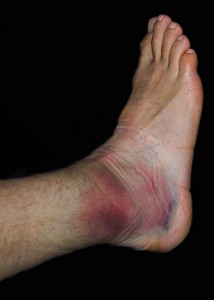 New York Times blogger Tara Parker Pope describes how her daughter was recently “the victim” of excessive medical investigation. Apparently, the little girl twisted her ankle at dance camp and experienced a slower than normal recovery. Four weeks out from the sprain, Tara sought the help of a specialist rather than returning to her pediatrician. The resulting MRI led to blood testing, which led to more testing, and more specialist input, etc. until the costs had spiraled out of control – not that Tara cared much because (as she admits) “I had lost track because it was all covered by insurance.”
Instead of any twinge of guilt on the part of Ms. Pope for having single-handedly called in the cavalry for an ankle sprain, she concluded that her daughter was a victim of medical over-investigation. But what would any physician do in the face of a concerned pseudo-celebrity parent (with a huge platform from which to complain about her medical treatment)? The doctor would leave no stone unturned, so as to protect herself from accusations of “missing a diagnosis” or being insufficiently concerned about the ankle sprain.
The responses to Ms. Pope’s personal “horror story” about over-treatment (and the waste of billions of dollars inherent in the US medical system) were amusing. One commenter writes, “Why not think of the unnecessary $210 billion as a fiscal ‘stimulus?’ Makes as much sense as any other program in the Age of Obama/Krugman.” And another, “[Of course there’s over-treatment] because the federal government subsidizes it! Medicaid, Medicare, and third party private insurance all promote the use of wasteful health care spending. And Obamacare will put that process on steroids.”
Whether or not you agree that socialized medicine reduces healthcare costs, it seems to me that we all have a responsibility not to over-utilize medical resources so that they will still be there when we really need them. Over-investigating every pediatric ankle sprain will simply drain our collective resources, ultimately resulting in further healthcare rationing. New York Times writer Peter Singer has argued that rationing is inevitable and decisions about cancer drug treatment will become the purview of US government agencies as time goes on. I’m pretty sure he’s right.
That being the case, why spur on rationing? Ms. Pope’s victim mentality demonstrates her lack of insight into the true causes of rising healthcare costs – one of which is patient demand. Ms. Pope herself is contributing to the healthcare waste she despises by requesting excessive testing in an environment where physicians are afraid to say no due to legal pressures (or a NYT writer’s bully pulpit). Demand drives costs, and there is a finite limit on our resources. Personal responsibility must play a role in healthcare utilization, just as efforts to protect our environment and scarce resources require participation by individuals. Ultimately, one child’s ankle investigation comes at the price of another patient’s cancer treatment.
Was it the physicians’ responsibility to put the brakes on her daughter’s over-testing? Maybe, but I’d prefer to live in a world where patients can invoke additional testing when their personal judgment suggests that it’s important. Ms. Pope knew better, but requested the additional testing because her insurance paid for it. Free care leads to more care – especially more unnecessary care. Ms. Pope’s daughter was not a victim of over-testing, but a beneficiary of that luxury that may soon evaporate.
We can create a healthcare system where no ankle gets more than a physical exam and ibuprofen (so we can forcibly prevent over-utilization), or we can teach people to use healthcare resources responsibly. Unfortunately, that will require that patients have a little more financial skin in the game – as Ms. Pope has demonstrated. The alternative, a distant oversight body regulating what you can and can’t have access to in healthcare, is where we’ll probably end up. Some day in the future Ms. Pope will recall the day when she was able to get unlimited medical investigations for her daughter without question or cost, and she’ll marvel at how that freedom has been lost. By that time, I suppose, I’ll be one of those people who is being denied cancer treatment by my government.
July 25th, 2012 by Dr. Val Jones in Health Tips, Opinion, True Stories
6 Comments »
 Six weeks ago I had a skin lesion removed by a plastic surgeon. About 7 days after the biopsy, I received a letter from the pathology lab where the sample had been analyzed under a microscope. I eagerly opened the letter, assuming that it contained test results, but was disappointed to find a bill instead. As a physician, it felt strange to be in a position of having to wait for a colleague to give me results that I was trained to understand for myself. However, I knew that in this case I was wearing my “patient hat” and that I’d need to trust that I’d receive a call if there was an abnormality. I haven’t received a call yet, and I assume that no news is good news. But what if no news is an oversight? Maybe there was a communication breakdown between the path lab and the surgeon (or his office staff) and someone forgot to tell me about a melanoma? Unlikely but possible, right?
Patients experience similar anxiety in regards to lab tests on a constant basis. In a perfect world, they’d receive results at the same time as their doctors, along with a full explanation of what the tests mean. But most of the time there’s a long lag – an awkward period where patients have to wait for a call or make a nuisance of themselves to office staff. Shouldn’t there be a better way?
The New York Times delves into the issue of “the anxiety of waiting for test results,” with some helpful tips for patients in limbo:
As patients wait for test results, anxiety rises as time slips into slow motion. But experts say patients can regain a sense of control.
- Start before the test itself.
- Because fear can cloud memory during talks with doctors, take notes. If you can, bring a friend to catch details you may miss.
Some pretest questions:
- What precisely can this test reveal? What are its limitations?
- How long should results take, and why? Will the doctor call with results, or should I contact the office?
- If it’s my responsibility to call, what is the best time, and whom should I ask for?
- What is the doctor’s advice about getting results online?
Do I think that patients should have access to their results without their physician’s review? While my initial instinct is to say “yes,” I wonder if more anxiety may be caused by results provided without an interpreter. There are so many test results that may appear frightening at first (such as a mammogram with a “finding” – the term, “finding,” may mean that the entire breast was not visualized in the image, or that there was a shadow caused by a fatty layer, or -less commonly – it can also indicate that a suspicious lesion was observed). I’m not arguing that patients can’t understand test results on their own, but medicine has its own brand of jargon and nuances that require experience to interpret.
Consider the slight deviations from the mean on a series of blood tests. They can be perfectly normal within the patient’s personal context, but may simply be listed by the lab as high or low. This can cause unnecessary anxiety for the patient. And what about PAP smear results that are listed as “ASCUS” – atypical squamous cells of undetermined significance? These can occur if the patient merely had recent sexual intercourse, and are not necessarily indicative of cancer at all.
And what about the “ambulance chasing lawyers” out there? Will there be additional frivolous law suits created by lab test results reported direct-to-consumer as abnormal in some way (when they really aren’t, given the full clinical picture) and patients assuming that their physician was negligent by not reporting the abnormality to them sooner? It could happen.
In the end I think that physicians all need to make a concerted effort to forward (with an explanation when necessary) lab test results to patients as quickly as possible. But since doctors are the ones ordering the tests in the first place, they do have a right to see them (before the patient when appropriate) – and an obligation to pass on the information in a timely and fully explained manner. That’s the value of having a physician order a test – their expertise in interpreting the results are part of the package (and cost). When patients order their own tests (and in some cases they can) then they should be first to receive the results.
As for me, I’m going to have to resort to “office staff nuisance” to get my results confirmed… just like any other regular patient. Oh well. 😉
December 25th, 2011 by ChristopherChangMD in News, Opinion
No Comments »

 I admittedly snorted out loud when I read a New York Times article earlier last week regarding increased physician distraction due to electronic devices, especially with the advent of the smartphone with its emails, text messages, calls, and other alerts that ping intermittently throughout a typical work day.
There is no question that electronic devices distract physicians as the article pointed out… But that’s like complaining about a leaky faucet when there’s a flooded basement and a hole in the roof.
The bigger problem that should be mentioned is hospital bureaucracy which probably creates just as much if not more unintended distractions for physicians and nurses.
What many patients and lay public may not realize is that Read more »
*This blog post was originally published at Fauquier ENT Blog*
November 13th, 2011 by ChristopherChangMD in Research
No Comments »
 Researchers in Iowa have discovered what makes a lion or tiger roar so effectively. Apparently, there is a layer of fat within large feline vocal cords that makes the vocal cords especially prone to vibrate easily with minimal exhalation effort.
What import does this have to humans?
Well, there are patients who have a very weak voice due to vocal cord atrophy as well as vocal cord paralysis. Standard interventions include voice therapy as well as surgical procedures using an implant or injectable material in order to “bulk” up the vocal cord.
In fact Read more »
*This blog post was originally published at Fauquier ENT Blog*