September 1st, 2015 by Dr. Val Jones in Book Reviews
1 Comment »
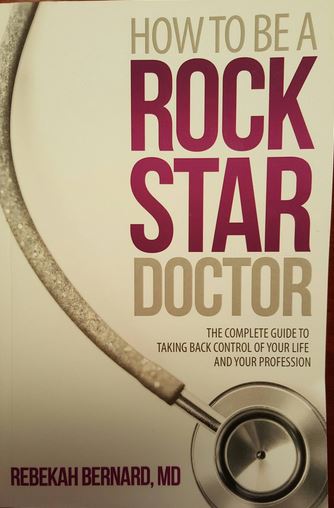 I’m often asked to do book reviews on my blog, and I rarely agree to them. This is because it takes me a long time to read a book – and then if I don’t enjoy it, I figure the author would rather me remain silent than publish my true thoughts. Most of the reviews that I end up writing are unsolicited, but today is an unusual exception. A colleague asked me to read her book, “How To Be A Rock Star Doctor.” I got half way through when she checked in to see how things were going. I had to tell her that I didn’t agree with some of her advice to young doctors, and I worried that she would be discouraged by my honesty.
I was very pleasantly surprised to find that she welcomed the criticism and actually asked me to write my review – favorable or unfavorable as I saw fit. She is the very first author to take that position (others have thanked me for not writing a review) and I am proud of her for it.
In essence, How To Be A Rock Star Doctor, is an easy-to-read primer for young primary care physicians looking to setup their first outpatient practice. The troubling part of the book (for me) was Dr. Bernard’s approach to the empathy fatigue that can set in for overworked physicians. In her view, we must “fake it” if we’ve lost it or don’t have it.
The book contains specific advice for how to appear empathic. Smiling broadly (no matter how one is feeling internally), dressing in a white coat, and exuding confidence, are recommended because we should see our patient interactions as an acting role – we are on stage, and they are depending on us to look/act the part.
Although Dr. Bernard rightly points out that there is research to support smiling as a means to achieving a happier mood, I was left with a certain uneasiness about the idea of putting on an act for patients. Something about the potential for dishonesty didn’t feel right to me. But then again, maybe the alternative – just being oneself – can create a poor therapeutic relationship if we’re in a bad mood for some reason.
I have heard many times that doctors can be uncaring to patients. Heck, I’ve even blogged about terrible interactions that I’ve had with my peers when I was in the patient role. But what is the solution? Should doctors learn how to imitate the qualities of a compassionate physician to achieve career success, or should we go a little deeper and actually try to be caring and let the behavior flow from a place of sincerity?
On the one hand, any tips to make the doctor-patient relationship go more smoothly should be welcomed… but on the other, if patient care is just an act, then what kind of meaning do our relationships have? If we act empathic do we eventually become empathic? Maybe yes, maybe no.
One thing I’m sure of, Dr. Bernard has opened an interesting discussion about how to handle stress, burnout, and create an excellent therapeutic experience in the midst of a broken healthcare system. She is willing to take criticism, and has endeared herself to me through our email exchanges. While I may not agree with all of her strategies to optimize patient satisfaction, one thing seems clear: she is as advertised — a rock star doctor.
Check out her book and find your own path forward. 🙂
November 17th, 2014 by Dr. Val Jones in News, Research
4 Comments »

A Cost Effective Fitness Band
In a new study published in the Annals of Internal Medicine, researchers found that overweight and obese patients who used a popular smart phone app (MyFitnessPal) did not lose significant weight after a 6 month trial period. The randomized controlled trial is the first of its kind to demonstrate that well-liked mobile apps may be ineffective for most users.
Two hundred and twelve racially diverse (73% female) patients treated at two UCLA primary care clinics were enrolled in the study. All indicated that they were interested in losing weight and 79% who completed the study indicated that they were “somewhat” or “completely” satisfied with the app, while 92% reported that they’d recommend it to a friend.
Unfortunately, as pleased as the subjects were with the app, there was no statistically significant difference in weight loss between the intervention and control groups. On average, the MyFitnessPal users lost 0.66 lbs in 6 months.
The authors note:
“Most participants rarely used the app after the first month of the study… Given these results it may not be worth a clinician’s time to prescribe MyFitnessPal to every overweight patient with a smart phone… Our analysis did not show any demographic covariates to be important predictors of app use.”
This study serves as a reminder that “popular” and “effective” do not always go hand-in-hand when it comes to weight loss interventions. While mHealth apps are expected to earn $26 billion by 2017, one is left to wonder if this money will be well spent or if we’ll all be “somewhat to completely satisfied” with the apps without anything medically significant to show for it?
April 25th, 2014 by Dr. Val Jones in Opinion, True Stories
No Comments »
 If you (or a loved one) have been admitted to a hospital recently, you were probably surprised by the number of times you were asked the same questions. At first you might assume that the staff are being diligent in double-checking your information, but after the fifth healthcare provider asks you to explain why you’re there, you start to feel as if interacting with “the system” is like talking to a person with no short term memory. It’s as if the hospital itself has some kind of dementia.
Recent adoption of electronic data collection, shift working, team management, and over-specialization have exponentially increased the complexity of patient care. Unfortunately, the complexity is fueling medical errors, repeat and unnecessary testing, as well as misdiagnoses. As primary care physicians have eloquently argued, being cared for by those who don’t know you can be a huge cost driver, and create all manner of unnecessary anxiety. Perhaps a true story will help to illustrate my point?
Not too long ago, I was caring for a patient in an acute rehab unit. Over a three week period of time I got to know her idiosyncrasies quite well. She had had a recent chest surgery and the surgical site was exquisitely tender, but without evidence of infection. In addition, she was allergic to certain kinds of tape and had had an unfortunate blistering reaction to the tape that had been near her surgical site. She had anxiety disorder that was well managed with medicine and talk therapy. She had a large family who visited her daily, some of whom had decided not to vaccinate their children. I had spent a good deal of time helping them to understand the risks associated with those choices.
I signed out my patient’s care to the weekend hospitalist team on Friday afternoon, and was alarmed to discover my patient in an isolation room on Monday morning, in the midst of a nervous breakdown, and surrounded by gowned family members who were furiously calling for emergency transport of distant children to various hospitals. I had not heard a peep from the hospitalists about events over the weekend, and immediately gowned up to find out what was going on.
My patient sobbed, “The doctor told me I have shingles. Now my grand children are going to get chicken pox and they’ll have brain damage!”
“Which doctor told you that you have shingles?” I asked.
“I don’t know his name. Some doctor who was here this weekend,” she wailed.
“How did he know you had shingles?” I said, sitting down next to her bed, trying to console her.
“He looked at my chest rash.” She replied, pointing to the patch of contact dermatitis at the site of the recent surgical tape removal. “He asked me if it was painful and I said ‘yes.'”
“But it’s the surgery site that’s painful as it has always been, right?” I said.
“Yes, it’s the same pain.”
It dawned on me that a linear patch of painful blisters did look a lot like shingles, especially to someone who had never seen the patient before. I could see why the hospitalist suspected it, but unfortunately he wasn’t aware of her long standing wound tenderness or tape reaction. The fallout from this well-meaning misdiagnosis was especially large, given the psycho-social context. A large, anxious family, with many unvaccinated kids who had traveled from far away to see grandma in the rehab unit over the weekend. It was the perfect storm.
Needless to say, it took me several days to unravel the damage, reassure the family, and recall the “emergency chicken pox” ER visits that were planned in distant parts of the state (where the kids made their home). The pregnant nurse who was treating the patient over the weekend had to create a full report to employee health about her “high risk encounter.” And in the end, the family and nursing staff didn’t feel completely certain that she didn’t have shingles, since it was officially documented in the EMR by at least one physician, no matter what my argument.
This is just one example of how cross-sectional relationships with patients (rather than the preferred, longitudinal kind), can wreak havoc. Because of the incredible degree of turnover inherent in today’s inpatient care systems, patients are examined “from scratch” by every new shift of nurse, physician, physical therapist, case manager, etc. There is very little context available to assist with interpreting how the patient is doing compared to their previous state. Searching for such pearls can be time consuming in a medical chart that is not designed for clear communication, but billing purposes.
What are we to do when faced with a new patient with a concerning complaint? Search the chart for historical clues, look for a staff member who has known them longer than one shift, or perhaps ask the patient:
“So can you tell me again why you came to the hospital?”
March 31st, 2014 by Dr. Val Jones in Health Policy, Health Tips, Opinion, Research
2 Comments »
 A Canadian study published today in the Annals of Internal Medicine suggests that about one third of new prescriptions (written by primary care physicians) are never filled. Over 15,000 patients were followed from 2006 to 2009. Prescription and patient characteristics were analyzed, though patients were not directly interviewed about their rationale for not filling their prescriptions.
In short, patients were less likely to fill a prescription if the treatment was expensive, but certain types of drug indications had consistently higher non-fill rates:
- Headache (51% not filled)
- Ischemic heart disease (51.3% not filled)
- Thyroid agents (49.4% not filled)
- Depression (36.8% not filled)
Overall, hormonal (especially Synthroid), ENT (especially Flonase), skin, and cardiovascular drugs (especially statins) had the highest non-fill rates.
As far as those prescriptions more likely to be filled, antibiotics (especially for urinary tract infections) ranked number one.
Trends towards prescription compliance were seen among older, healthier patients, and those who were switching medications within a class rather than starting an entirely new drug. Patients who received prescriptions from a doctor that they visited regularly (rather than a new provider) were also more likely to fill their prescriptions.
This study was not designed to elucidate the exact rationale behind prescription non-adherence, but I am willing to speculate about it. In my experience, patients are less likely to fill a prescription if a reasonable over-the-counter alternative is available (think headache or allergy relief). I also suspect that they are less likely to fill a prescription if they believe it won’t help them (skin cream) or isn’t treating a palpable symptom (statin therapy for dyslipidemia). Finally, patients are probably nervous about starting a medicine that could effect their metabolism or cognition (thyroid medication or anti-depressant) without a full explanation of the possible benefits and side effects.
I was surprised to see how compliant patients seem to be with antibiotic agents (at least, filling the initial prescriptions). Given the increasing rates of antibiotic resistance, this reinforces the need to limit prescriptions to those agents truly indicated, and to analyze bacterial sensitivities during the treatment process to optimize medical management.
My take home message from this study is that providers need to do a better job of explaining the reasoning behind new prescriptions (their necessity, consequences of non-compliance, and risk/benefit profiles) and reviewing the overall cost to the patient. If a cheaper, effective alternative is available (whether OTC or generic), we should consider prescribing it. Providers can likely improve medication compliance rates with a little patient education and price consciousness. Extra time should be spent with patients at higher risk for non-compliance due to their personal situation (age, degree of illness, income level) or if a specific drug with lower compliance rates is being introduced (Synthroid, statins, etc.) Regular follow up (especially with the same prescriber) to ensure that prescriptions are filled and taken as directed is also important.
August 11th, 2013 by Dr. Val Jones in Opinion, True Stories
No Comments »

On Assignment In California Vineyard
This post is the continuation of my personal thoughts and reflections about what it’s like to work as a Locum Tenens (traveling temp) physician.
Q: Where are the most favorable locums jobs?
This is an interesting question and depends a little bit upon personal taste and priorities. While most locums physicians choose their work based on location (see this nice survey of locum priorities), more experienced locums docs choose their work based on circumstance. What I mean is that it’s more important WHY the hospital needs you, than where the hospital is physically located. It only takes one really bad assignment to learn that lesson the hard way. For instance, if a hospital is recruiting a locum tenens physician because the place is so bad that no one will stay in the job, then I can pretty much guarantee that it won’t matter how nice the city/town/countryside is nearby, you will not enjoy your time there.
Positive prognostic indicators for a good locums assignment include:
1. The person you’re filling in for needs vacation coverage or are on maternity/paternity leave. They are happy with their job and are eager to come back.
2. The hospital is undergoing a growth phase and needs help staffing new wings/wards.
3. The hospital is operating in the black but happens to be in a rural area where it is challenging to find enough physicians to meet the patient needs.
Red flags:
1. The medical director/staff physician “doesn’t have time” to talk to you about the assignment before you commit to doing it.
2. There is more than a second-long pause when you ask the medical director why he/she would want to work there as a locums.
3. The person you’re filling in for was fired due to incompetence or negligence.
4. The person you’re filling in for is on the verge of a nervous break down from overwork, and a locums agency was called in to prevent implosion/explosion type scenarios.
5. There have been multiple staff (nursing usually) strikes at the hospital in the past 6 months.
7. The group with whom you would work is not culturally diverse – and you can imagine having difficulty gaining acceptance by them.
In my experience, you can enjoy living anywhere temporarily if the people and circumstances are pleasant. A nice post-work dinner/coffee with friendly, competent staff – even in a “backwater” setting – trumps a solo trip to a high end, big city restaurant when you are emotionally and mentally exhausted by the misery of a bad hospital. Trust me on this.
As one locums hospitalist put it: “Generally I’ve found the rural hospitals to be the nicest, especially in the midwest. But I’m never going back to South Dakota in the winter.”
Q: How can I negotiate the best salary?
First of all, you need to know that this is a negotiation. When I first started, I just assumed the salary I was offered required a binary response: “Yes, I’ll accept the position,” or “No I’ll keep looking for other opportunities.” That’s why I’m a physician and not a business woman, I guess! Just ask my husband.
Anyway, after a few experiences of getting paid a lower salary than my peers at the same job, I realized the error of my ways. In many cases you can lobby for up to 25% higher pay rate, so you should keep that in mind. In summary, here is where the salary “wiggle room” is:
1. How much overhead your agency charges. Remember the “platinum” agency I referred to in my last post? If you’re working with one of the agencies that is known to be “expensive” then they have more money that they could share with you. If you’re working with a budget agency who competes based on low overhead fees (such as 20% above your base salary rate), then you’ll never get more than $5-10 more/hour from them.
2. If you have a good track record. Once you’ve proven yourself to be an excellent physician, well-liked by the hospital staff where you’ve been assigned, the agency is going to want to keep sending you to new assignments because you’re more likely to get requests to return and will stay longer at each gig. The agency (and the recruiters) make money based on how many hours you bill, so they’d rather send a “sure thing” to a new client than an unknown. They will be more likely to up your salary to seal the deal, knowing they’ll probably get more hours with you in the long run.
3. How desperate the client/hospital is. This is sad to say, but desperate clients will pay higher rates to fill a need. If you’re being offered an unusually high salary for a certain assignment, don’t rejoice, worry (see notes above about “red flags.”)
4. If you bundle. Some enterprising primary care locums docs get together to negotiate group rates. That means, if you have a friend or two who can agree to travel together to a particular place, the agency can pay a higher salary to each of you because they’re getting a larger volume of hours overall. This works really well for internal medicine locums, for example, where hospitals often need multiple docs at a time. It’s actually a brilliant plan, because the people who do it are already sympatico, they have similar work ethics, can share call, sign out to each other, have built in friends to enjoy after work adventures, and arrive as a well-oiled machine. I think this is probably the future of primary care locums. However, if you’re like me (a specialist in a small field) there’s no way to bundle because no hospital ever needs more than one of you at a time. 😉
5. If you take longer assignments. This stands to reason. If you are going to be working for months (rather than weeks) at a certain hospital, then you have more room to negotiate a larger hourly rate based on the volume principle I described above.
Q: How do locums agencies decide how to match you with a given job opportunity?
Based on my experience, the agencies’ order of priorities for matching physicians with clients are:
1. Whoever is available and answers their phone first. The Locums world is very dog-eat-dog for the agencies. It’s a daily race to see who can present physicians to fill needs the fastest. Hospitals are looking for the lowest cost solution to their staffing gaps, and will shop multiple agencies for the same positions at once. The agency who brings the first acceptable C.V.s wins the work. Sometimes when there is controversy over which agency gets the job, the client has to review email time/date stamps to verify which came first. Sometimes it’s a matter of minutes. So… if your recruiter’s voice sounds a little tense, you’ll understand what’s going on in his/her world. And if you’re hungry for locums work, be sure to respond promptly for consideration. That being said, once you’ve established a track record with a few agencies, you’ll have turn away business year-round (especially in primary care).
2. Client preference. Once your C.V. has been presented to the client, they will choose their preferred candidate (if there is more than one option). Usually, they are looking for someone local or whomever will generate the lowest travel expenses. I wish that clients delved a little deeper than that, but my experience is that cost trumps coolness for them most of the time. And when I say “coolness” I mean – wouldn’t you rather have a candidate who writes well, has an unusual background (say – someone who has built medical websites and has been a food critic and cartoonist? Ahem?) than just another chem major straight out of IM residency? Apparently most would say no thanks. Just give me the cheaper one.
3. If they know and like you. Let’s say there are two equally qualified physicians for the same position already screened and signed up for work at a certain agency. If one of you has a track record of being flexible and easy to work with (rather than a demanding, entitled brat – like a few doctors you may know) then the recruiter will put the “nice” person’s CV on top and market you more strongly to the client. Why? Because she doesn’t want to receive whiny phone calls every other day during your assignment about how you don’t like the hospital food. The recruiters have “quality of life” issues too. If you’re lucky and you develop a good, long term relationship with your recruiter, they’ll probably even do YOU a favor and give you a head’s up about upcoming opportunities at the “good” hospitals. And we all know what that means.
4. Whoever will take the lowest hourly rate. In the end, it’s still all about the Benjamins so if there are 2 equally qualified physicians who are similarly “non whiny” then if one will work more days or at a lower rate, then they are more likely to get the job (due to recruiter influence on client preference). But given the large number of positions and the small number of locums to choose from, this game is 80% about who’s available first. Then the rest of the variables follow.
Q: What is the licensing and credentialing process like? How do I make it easier?
The state licensing and hospital credentialing is the most painful administrative part of the whole locum tenens assignment process. If you’re considering an opportunity in say, North Dakota, then you’ll need to get a state license there (Unless you already have one?) as well as passing the scrutiny of the rural hospital credentialing committee where you’ll be working. And yes, everyone seems to want original copies of the intern year you did 15 years ago at the hospital that has since closed. You feel my pain?
There is good news and bad news about this. The good news is that the Locums agencies have hired staff to complete the medical license and credentialing paperwork for you. That is part of the “value” they bring to you as an agency. The bad news is that some of their staff can’t spell. Or they get the chronological order of your residency/fellowship years wrong, etc. thus generating MORE work for you in the long run, correcting errors rather than filling in blanks.
The middle road is to fill out the paperwork correctly yourself the first time, and then offer copies to the agency staff for future licensure/credentialing. They can transcribe better than synthesize, so this seems to be the best way to go, IMO.
Hospital credentialing is nuanced, and depends on the culture of the local hospital in terms of how many references they require and how much documentation detail they request. Some hospitals are swift and lean, others comb through your background as if you are a likely convicted felon.
That being said, one thing is certain – if you plan to work several different locums assignments your referrers are going to be nagged TO DEATH. Everyone needs 2-3 professional references who will be called/contacted mercilessly, first by the Locums agency to make sure you’re not a “problem person” (as described in Part 1), then by the hospital who is considering hiring you (not that they’ve committed yet), then by the credentialing committee (if you pass approval in the first round), then by the state licensing body. So for every potential locums assignment, your professional reference will likely be contacted 4 times, and asked to vouch for you verbally or on paper/via fax. Imagine how many assignments you’ll do in a year and the math gets pretty scary. Be sure your references are ok with all this attention… and give them fair warning. If you can, spread the pain and broaden your reference base.
Q. What advice do you have for Locums agencies?
1. Physicians talk. Whatever sneaky deal-making you’re doing (such as paying people different rates for the same gig or getting a 50% premium at a desperate hospital and then not sharing it with us in salary upgrade) is going to come to light at some point, so keep your nose clean. Please be honest about problem hospitals and work conditions. I know that clients mislead you about work conditions and expectations so as to lure locums to their facility – but try to go the extra mile to figure out in advance if the doctors are really going to be asked to see 16 patients a day or 26 patients a day. Because if we get to the site and we’re being abused and overworked, we associate the negative experience with the agency that put us there. Then you try to wheedle and cajole us into finishing the assignment based on the contract we signed so you can make your cut. Meanwhile we’re putting our careers in danger because we can’t do a thorough job and might miss something important. Not good for physician retention. Better yet, just say no to crisis clients. The money isn’t worth it.
2. Treat us right and you’ll make more money in the long run. I know you’re under pressure to save money on our travel and hotels, but you also have some flexibility in the room rate that you’ll consider. Put us in a nicer hotel for a few bucks extra per night and the whole experience will seem a little brighter. Put us on the preferred rental car program so we don’t have to wait for 2 hours in a rental car line after a full day of cross-country travel. Upgrade us to a full size car rather than the beige Corolla we have to live in for months. These little things end up costing you only a few hours of our total billing, but make your agency our go-to employer.
3. Pay us on time. It’s so simple, and costs you nothing. If an agency takes 3-4 months to pay me for an assignment, and then the billing is inaccurate (missing hours)… I’m going to choose another agency next time. Your value to me is partly in the ease of payment – a direct deposit a week from when I fax my time sheets sends me the message that you have your act together and are respectful of my time. Making me sift through miss-billed records from half a year ago is just not acceptable.
4. Try to understand why we whine. Locums work is not easy. We are often separated from our friends and family, in an unfamiliar setting, learning complicated hospital processes with patients who are sick and dying. We don’t know if the nurses or consultants are competent while we ourselves are under intense scrutiny until the staff gets to know us. We have to build trust, navigate complicated electronic medical records systems, satisfy hospital coding and billing demands, and keep a ward full of patients (with their team of specialists whom we’ve yet to meet) on the path to healing. All this, and we are legally responsible for everything that goes on in the lives of those under our care. When we get home to our Days Inn at the end of our 15 hour shift in our beige Toyota Corolla to find their exercise equipment broken and the lobby overrun with monster-truck rally participants, we may be a tad whiny. Please don’t think ill of us for that. Just do what you can to help us feel better. We, and our patients, will thank you.
***
Dr. Jones is available on a consulting basis through Better Health LLC. She may be reached at val.jones@getbetterhealth.com