August 22nd, 2011 by Steve Novella, M.D. in Health Policy, Opinion
4 Comments »

In 1994 Congress (pushed by Senators Harkin and Hatch) passed DSHEA (the Dietary Supplement Health and Education Act). As regular readers of SBM know, we are not generally happy about this law, which essentially deregulated the supplement industry. Under DSHEA supplements, a category which specifically was defined to include herbals, are regulated more like food than like medicinals.
Since then the flood-gates opened, and there has been open competition in the marketplace for supplement products. This has not resulted, I would argue, in better products – only in slicker and more deceptive claims. What research we have into popular herbals and supplements shows that they are generally worthless (except for targeted vitamin supplementation, which was already part of science-based medicine, and remains so).
A company can essentially put a random combination of plants and vitamins into a pill or liquid and then make whatever health claims they wish for their product, as long as they stay within the “structure-function” guidelines. This means they Read more »
*This blog post was originally published at Science-Based Medicine*
May 25th, 2011 by admin in Health Tips, Research
No Comments »
An Embarrassment of Riches?
Much has been written here about the dietary supplement business, a multibillion dollar industry with powerful political connections, and about the woeful inadequacy of regulation which allows widespread marketing of supplements without a solid basis in science or scientific evidence.
The veterinary supplement market is a pittance compared to the human market, but still a billion-dollar pittance that is growing rapidly. Unfortunately, the resources available for good quality research in veterinary healthcare are also a pittance, and it is not at all unusual for our pets to suffer, or even be euthanized, as a result of treatable diseases for want of money to pay for needed care. So $1 billion a year spent on nutritional supplements may not be such a good deal if these products don’t effectively prevent or treat disease. Read more »
*This blog post was originally published at Science-Based Medicine*
November 25th, 2008 by Dr. Val Jones in Audio, Expert Interviews
7 Comments »
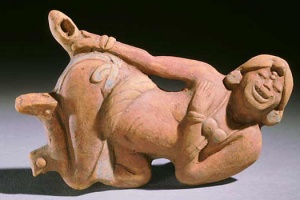
Photo Credit: authenticmaya.com
The blogosphere has been buzzing lately about the idea of “fecal transplants,” probably because this treatment (first studied in the 80’s) was recently mentioned on Grey’s Anatomy. Proponents of the therapy (which involves the introduction of donor stool into a patient via enema or naso-gastric tube) say that it can rejuvenate intestinal flora and cure c. diff colitis, and various inflammatory bowel disorders. I had my doubts about these claims and decided to interview gastroenterologist Dr. Brian Fennerty to get to the bottom (sorry abou the bad pun) of this issue.
Dr. Fennerty is a Professor of Medicine in the Division of Gastroenterology at Oregon Health & Science University in Portland, Oregon, where he also serves as Section Chief of Gastroenterology.
Listen to the podcast here:
[Audio:http://blog.getbetterhealth.com/wp-content/uploads/2008/11/brianfennertyfecallq.mp3]
Dr. Val: What exactly is a “fecal transplant?”
Dr. Fennerty: First, by way of background, you need to understand that the GI tract is populated with thousands of varieties of “good” bacteria that are essential for our health. If we didn’t have bacteria in our colon and small intestine, we would die. Fecal transplantation is the repopulation of a person’s gut bacteria (flora) with fecal matter from somebody else. Some argue that this helps to treat certain diseases.
Dr. Val: How is this procedure performed?
Dr. Fennerty: As it was originally described, fecal transplantation involved removing the undigested food particles from the stool sample of a “healthy” person, and then spinning it so that a pellet (of hundreds of thousands of species and quasi-species of bacteria) remains. The pellet is then introduced to the patient through a nasogastric tube into the small intestine, or the pellet can be resuspended in liquid and introduced into the rectum via an enema. The idea is that the bacteria will colonize the patient’s colon and squeeze out the bad bacteria that are in there.
Dr. Val: What are fecal transplants purported to do?
Read more »