June 15th, 2013 by Dr. Val Jones in Health Tips
1 Comment »
 A blogger friend of mine referred me to an article about a female runner struggling with gastrointestinal distress. She asked for advice regarding how to prevent the “runner’s trots” and felt fairly mystified regarding its cause. Since up to half of runners face this problem at some point (especially women), I thought I’d post some advice that comes from experience… ahem.
The urge to use the restroom during exercise is caused by increased intestinal motility, likely triggered by any (or all) of the following: jostling of internal organs, relative intestinal ischemia (decreased oxygen getting to the intestines as blood is diverted to the muscles for work and to the skin to cool the body), dehydration, and adrenaline-related anxiety/stress hormones. I’ve noticed that hot weather greatly increases the likelihood of runner’s diarrhea as it contributes to additional blood diversion as well as dehydration through excessive sweating. Basically, don’t be surprised if you need to plan your summer runs around bathroom stops.
That being said, there are a few things that can decrease the urgency and frequency of this unpleasant intestinal drama:
1. Watch what you eat before your run – avoid fiber, caffeine, fake sugar, or anything that generally makes YOU have to move your bowels more frequently (milk and/or soy products are a culprit for some). Ideally, these things should be avoided up to 12-24 hours before you run.
2. Stay hydrated. Get ahead of the game by drinking a liter of water before your run and continue to hydrate during exercise (as appropriate for the climate and your effort level.)
3. Run at a slower pace if the weather is hot. I often find that dropping the pace by a minute or two per mile can magically reduce the intestinal symptoms. Interval training can help you challenge your speed limits while offering active recovery periods for your body to cool down and let your gut chill out.
4. Run in the morning when it’s cooler and you’ve had less to eat. Running after a day full of eating is looking for trouble.
5. Try to evacuate your bowels before your run – this is fairly obvious, but take the time you need to get this taken care of.
If the weather is hotter than 85 degrees, I’d consider running on a treadmill in an air conditioned space.
I found this comprehensive list of strategies to avoid the trots quite helpful. Please check it out – and good luck on your summer runs and races. Perhaps we’ll cross paths at a rest stop near you!
November 20th, 2012 by Dr. Val Jones in Announcements, Humor
1 Comment »
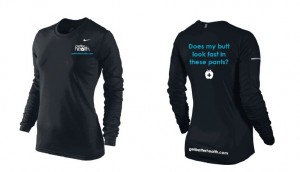
Does my butt look fast in these pants?
Since I started running (in earnest) a couple of years ago, I’ve been doing what I can to stay motivated. Running is a great sport because 1) it’s cheap 2) you can do it anywhere 3) it’s hard. So, because of #3 I welcome all opportunities to make running fun – and wearing amusing shirts during races seems like as good a strategy as any.
The idea for the “Does my butt look fast in these pants?” shirt came from a sign I saw at a recent marathon. A guy was cheering on the ladies with a homemade sign that read: “Your butt looks fast in those pants!” I laughed so hard it took me a quarter mile to recover. So I shamelessly stole his idea and made a Better Health women’s running shirt out of it. If you think it’s cool and want one too – I’d be happy to print you one. The larger the batch we order, the less expensive it will be.
So if you’re looking for a funny Christmas gift… or if you just want to thwart the race competition by making it impossible for them to pass you without sputtering out a laugh, let me know. Email me if you’d like to order a shirt and we’ll discuss details. My email is: val.jones@getbetterhealth.com (They are made of Nike dry-fit fabric, come in the colors shown only, and are available in Ladies S, M, L – if guys show interest I suppose we could order a run of men’s shirts too?). Let’s prepare to GET BETTER HEALTH this season… and run our way to victory in the battle of the bulge. 😆
July 9th, 2012 by Dr. Val Jones in Book Reviews, Health Tips
1 Comment »
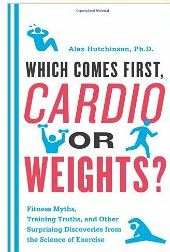 I just finished reading a great little book called, “Which Comes First, Cardio Or Weights? Fitness Myths, Training Truths, And Other Surprising Discoveries From The Science Of Exercise” by Alex Hutchinson, Ph.D. I’m very grateful to Alex for patiently sifting through over 400 research studies in a quest to answer (with evidence, not subjective opinion) some of our most nagging exercise questions.
Alex is the perfect guy to do this exercise myth-busting as he is a competitive runner, professional journalist, and has a Ph.D. in physics. His writing is crisp, uncluttered, and bears the understated humor of a Canadian. To be honest, I enjoyed his book so much that I was contemplating blogging about most of his conclusions. However, I don’t want to teeter on the edge of copyright infringement, so I’ll just provide you with some highlights from my favorite sections of the book:
1. Do compression garments help you exercise? I’ve wondered this many times as I jiggled my way down the road on a long run. I’ve always liked the theory behind tight outer-garments, that they reduce unnecessary movement during running, thus making one’s movement more efficient and reducing the bounce and drag on muscles and skin. They may also help with blood return to the heart and reduction in peripheral edema, speeding recovery from exercise. Believing the plausibility of the argument, I have indeed sprung for some rather expensive running tights.
So what does the scientific literature have to say about compression garments’ role in exercise? Apparently there is nothing conclusive yet. Small studies have shown no clear improvement in exercise economy, athletic power or endurance, or recovery from exercise. The only measurable benefits appear to have occurred in those who believed that the compression garments would help their performance. A nice reminder of the importance of the “mind-body” connection in athletic pursuits. Bottom line: if you like how you feel in compression garments, by all means wear them. But don’t expect any dramatic improvements in anything more than your jiggle factor.
2. Will sitting too long at work counteract all my fitness gains? The short answer to this question is: possibly. I was surprised to note that at least one large study found that sitting for more than six hours per day increased one’s risk of death by 18-37% regardless of how much exercise one performed in the other eighteen hours of the day. Long periods of sitting appear to be quite bad for your health, so getting up and moving around every hour or more is important if you have a sedentary job or lifestyle.
3. Does listening to music or watching TV help or hurt my workout? Listening to faster-tempo music can result in increased exercise effort (in many cases completely unconsciously), while TV-watching usually results in a reduced exercise effort. This is because watching videos requires visual attention and subtle changes in balance and movement occur to accomplish it.
4. Will stretching help me avoid injuries? As a person with limited flexibility, I found this section of the book to be quite comforting. As I have blogged previously, stretching has not been shown to reduce the risk of injury or post-exercise soreness. In fact, it can decrease power and speed for certain athletes, though it is important for those who intend to perform great feats of flexibility (such as gymnastics).
5. Should I take pain killers for post-workout soreness? Interestingly, non-steroidal anti-inflammatory drugs (NSAIDs) are not particularly effective in reducing post-exercise pain and can even interfere with muscle repair. NSAIDs block prostaglandins, which are important in collagen synthesis. While NSAIDs are useful in reducing inflammation and swelling in acute injuries (such as an ankle sprain), general muscle soreness isn’t a good reason to pop some ibuprofen.
6. Will drinking coffee help or hinder my performance? I’m one of the few people I know who doesn’t drink coffee, so I was surprised to discover that I may have been missing out on an important exercise enhancer. According to decades of research, caffeine is likely to improve your exercise performance. Studies have shown that pure caffeine (not necessarily in its coffee form) enhances sprint performance as well as endurance activities up to two hours. In 2004 the World Anti-Doping Agency removed caffeine from its list of restricted substances, so expect to see some caffeinated athletes in this summer’s Olympics.
7. What’s the best way to breathe during exercise? If you’ve ever marveled at your own panting, you’ve also probably wondered if there is a more efficient way to breathe – or at least a less embarrassing way. The answer is no. Studies have shown that people who consciously work to make their breathing less labored expend more energy and get less oxygen in the process. So, keep on breathing the way your body wants to… you’re naturally more efficient at it than you think.
I hope that these little tidbits have whet your appetite for more of Alex’s excellent insights. I have fully equipped myself with fast-paced music and a little caffeine, as I move my inflexible, jiggly, panting self down the road on another long run.
June 13th, 2012 by Dr. Val Jones in Health Tips, Opinion, Research
1 Comment »
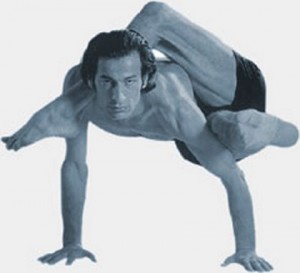 If you’re like me, you probably feel guilty about not making stretching a part of your regular exercise routine. I attributed my history of low back pain to lack of stretching, although when I began practicing yoga last year I experienced no lasting benefits. Stretching was uncomfortable and I saw very little improvement in my flexibility for all my efforts. I eventually gave up after one well-meaning yogi told me that I may just be “genetically incapable” of making much progress. I turned to strength training and running with complete resolution of my back pain – though with a continued inability to bend over and touch my toes or sit cross legged for prolonged periods. Oh well. No traditional Japanese dining for me!
And so it was with great surprise that I read the conclusions from a recent analysis (by Alex Hutchinson, Ph.D.) of the science of stretching. I recommend that you read it for yourself (along with the links to the primary source literature). But I’m going to summarize his findings here:
Q: Does stretching reduce the risk of injuries during exercise?
A: Not that we can prove.
Q: Does stretching help you avoid soreness after exercise?
A: No.
Q: Does stretching make you stronger or faster?
A: No. In fact, there is some evidence that stretching can have the opposite effect. Why? Muscles have spring-like properties, so that when they are stretched out, they become less able to transmit as much force. Imagine the difference between the power of a thick, metal spring and a thin metal spring. Studies have shown that the more flexible you are, the less efficient you are as a runner.
My take away message is that there’s no need to flagellate yourself into stretching if you don’t like it. It really depends on what you need to do with your body – if you’re a gymnast, then stretching will always be a part of your life. If you’re a runner who hates yoga, so be it. You may never win a toe-touching competition, but then again, you can probably crush the Primal Games competition. Wish me luck as I attempt to do just that in two weeks!
December 30th, 2011 by John Mandrola, M.D. in Opinion, Research
1 Comment »

It is risky.
Stay fresh. Avoid repeating yourself. Don’t rant. Never preach. These would be the ‘rules’ of supposedly good blogs.
And, of course, doctors that dare to take a stance on health issues risk being perceived as pretentious. I get this.
So it is with trepidation that I write a follow-up to last week’s CW post about right ventricular damage immediately after an extreme race effort. Notwithstanding the pompousness concern, I also wish to avoid being labeled anti-exercise. Few believe more strongly in the healing powers of exercise.
But last Wednesday’s comments (both on the blog, Facebook and here on Dr. Val Jones’ BetterHealth blog) were just too good to let rest.
On the assessment of studies: Read more »
*This blog post was originally published at Dr John M*