March 27th, 2017 by Dr. Val Jones in Health Policy, True Stories
No Comments »
 We’ve all heard the saying, “age is just a number.” Nowhere is that more important than in the hospital setting. Over the years I’ve become more and more aware of ageism in healthcare – a bias against full treatment options for older patients. Assumptions about lower capabilities, cognitive status and sedentary lifestyle are all too common. There is a kind of “senior profiling” that occurs among hospital staff, and this regularly leads to inappropriate medical care.
Take for example, the elderly woman who was leading an active life in retirement. She was the chairman of the board at a prestigious company, was an avid Pilates participant, and the caregiver for her disabled son. A new physician at her practice recommended a higher dose of diuretic (which she dutifully accepted), and several days later she became delirious from dehydration. She was admitted to the local hospital where it was presumed, due to her age, that she had advanced dementia. Hospice care was recommended at discharge. All she needed was IV fluids.
I recently cared for an attorney in her 70’s who had a slow growing brain tumor that was causing speech difficulties. She too, was written off as having dementia until an MRI was performed to explore the reason for new left-eye blindness. The tumor was successfully removed, but she was denied brain rehabilitation services because of her “history of dementia.”
Of course, I recently wrote about my 80-year-old patient, Jack, who was presumed to be an alcoholic when he showed up to his local hospital with a stroke.
Hospitalized patients are often very different than their usual selves. As we age, we become more vulnerable to medication side-effects, infections, and delirium. And so, the chance of an elderly hospitalized patient being acutely impaired is much higher than the general population. Unfortunately, many hospital-based physicians and surgeons — and certainly nurses and therapists — have little or no prior knowledge of the patient in their care. The patient’s “normal baseline” must often be reconstructed with the help of family members and friends. This takes precious time, and often goes undone.
Years ago, a patient’s family doctor would admit them to the hospital and care for them there. Now that the breadth and depth of our treatments have given birth to an army of sub-specialists, we have increased access to life-saving interventions at the expense of knowing those who need them. This presents a peculiar problem – one in which we spend enormous amounts of resources on diagnostic rabbit holes, because we aren’t certain if our patients’ symptoms are new or old. Was Mrs. Smith born with a lazy eye, or is she having a brain bleed? We could ask a family member, but we usually order an MRI.
My plea is for healthcare staff to be very mindful of the tendency to profile seniors. Just because Mr. Johnson has behavioral disturbances in his hospital room doesn’t mean that he is like that at home. Be especially suspicious of reversible causes of mental status changes in the elderly, and presume that patients are normally functional and bright until proven otherwise.
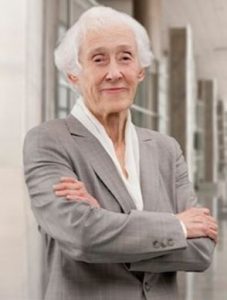
Last month I hit a new age record at my rehab hospital – I admitted a charming, active, 103-year-old woman after a small stroke caused her some new weakness. She was highly motivated in therapy, improved markedly and was discharged to an independent living center. I bet she will live many more years. When I joked that she didn’t look a day over 80, she winked and told me she had stopped counting birthdays years ago. She said, “It doesn’t matter how old you are, it matters what you can do. And I can do a lot.”
September 3rd, 2012 by Dr. Val Jones in Health Tips, True Stories
No Comments »
 I’ve spent the last couple of weeks making house calls to “at risk” seniors in rural South Carolina. At the rate of about 7 house calls per day, I was able to make some observations based on a respectable sample size. I was both surprised and intrigued by the living conditions I encountered, and I’m pleased to report that I have now performed my first physical exam under the careful scrutiny of a cat, rooster, and hen team (photo at left). On another house call I was offered a pygmy goat as a thank-you for my efforts, and countless good-natured folk offered me home made iced-tea and such edible delectables as fish patties and peach honey.
But what struck me the most was that certain seniors were in far better health than others their age, and that the healthier ones all had one thing in common: strict daily exercise regimens. I realize that this is not ground-breaking news (that exercise is good for us), but the stark contrast between those who exercised and those who didn’t could not have been clearer to me.
One particularly charming 85 year old man gave me a tour of his vegetable garden, and explained that he bicycled into town six days a week to give away okra (and other veggies) to church friends and town folk. Growing vegetables and giving them away was his current life’s work, and although he lived in extremely modest circumstances, what he owned was tidy and clean. He was joyful, bright, and had the physique of an athlete.
Contrast this man to another patient in his 80’s who didn’t exercise at all, and stayed inside smoking cigarettes most of the day. He was blind in one eye, nearly deaf, struggled to breathe, had sores on his skin. He was depressed, over-weight, and swollen from heart failure. I was so sad to see his condition, and the relative squalor in which he lived. Urine and smoke odor permeated the house, and I wondered how much longer he would survive.
When I arrived at another octogenarian’s home, I noted that the garage was filled with watermelons of various sizes. Upon further inquiry, the gentleman said that he had hand-picked the watermelons from a plot of land that he owns 2 miles from his house. He brought them back to the house with a wheel barrow… and had made many trips back and forth over the past week. He was taking no medications and had a completely normal physical exam.
And so my days went – back-to-back visits with seniors who either were engaged in an active lifestyle, or who were wasting away, cooped up indoors with advancing dementia and chronic disease. I realized that no medical treatment has the power to overcome the relentless damage that inactivity, smoking, and deconditioning cause. The secret to a healthy old age lies in lifestyle choices, not pill bottles.
As we enjoy the last holiday weekend of the summer, let’s consider how important labor actually is to our mental and physical well being. You’re never too old to haul watermelons down the road, grow okra for your neighbors, or simply commit to smoking cessation and daily walks. If you do this regularly, your health will surely improve – and your quality of life will be enhanced immeasurably. In the end, adding life to years is what medicine is all about.
December 27th, 2011 by BarbaraFicarraRN in Health Policy, Opinion
1 Comment »


Bill Crounse, MD, Senior Director, Worldwide Health, Worldwide Public Sector Microsoft Corporation shares his insights and describes four leading trends and technologies that will transform health and health care in 2012 and beyond.
These leading technologies include: cloud computing, health gaming, telehealth services and remote monitoring/mobile health.
Telehealth, Remote Monitoring, Mobile Health
I’d like to focus on telehealth and remote monitoring/mobile health since I feel telehealth is the nucleus of patient care, and telehealth can help reduce health care costs, and improve quality health care for patients. Telehealth technology combined mobile technology such as smartphones will make monitoring patients conditions easier and more efficient, and “cheaper and more scalable.”
Patient Quality Health Care
Through the Accountable Care Organizational Model (ACO), the core concept is to Read more »
*This blog post was originally published at Health in 30*
December 19th, 2011 by PreparedPatient in Opinion, Research
No Comments »


Who doesn’t think preventive health care is important? Probably nobody if you ask this question abstractly. But when it comes to getting it–well that’s a different matter. Medicare stats show that too few people are getting preventive services even when they are free. It’s darn difficult, it seems, to get people to take good care of themselves.
By mid-November, of the four million or so new beneficiaries who signed up for Medicare this year, only 3.6 percent had had their “Welcome to Medicare” exam. Only 1.7 million of the more than 40 million seniors, most of whom were already on Medicare, had had their “Annual Wellness Visit.” A poor showing indeed given all the hoopla and hype surrounding the preventive benefits that health reform was supposed to bring to seniors.
To review: All new Medicare beneficiaries are entitled to a free physical exam within the first twelve months that their medical, or Part B, coverage becomes effective. It’s a one-time benefit, and Medicare says that seniors are told about the benefit when they sign up. A Medicare spokesperson added that Read more »
*This blog post was originally published at Prepared Patient Forum: What It Takes Blog*