July 27th, 2012 by Dr. Val Jones in Health Policy, Opinion
5 Comments »
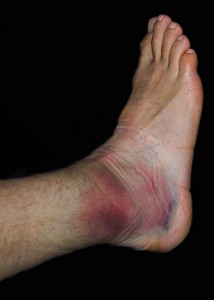 New York Times blogger Tara Parker Pope describes how her daughter was recently “the victim” of excessive medical investigation. Apparently, the little girl twisted her ankle at dance camp and experienced a slower than normal recovery. Four weeks out from the sprain, Tara sought the help of a specialist rather than returning to her pediatrician. The resulting MRI led to blood testing, which led to more testing, and more specialist input, etc. until the costs had spiraled out of control – not that Tara cared much because (as she admits) “I had lost track because it was all covered by insurance.”
Instead of any twinge of guilt on the part of Ms. Pope for having single-handedly called in the cavalry for an ankle sprain, she concluded that her daughter was a victim of medical over-investigation. But what would any physician do in the face of a concerned pseudo-celebrity parent (with a huge platform from which to complain about her medical treatment)? The doctor would leave no stone unturned, so as to protect herself from accusations of “missing a diagnosis” or being insufficiently concerned about the ankle sprain.
The responses to Ms. Pope’s personal “horror story” about over-treatment (and the waste of billions of dollars inherent in the US medical system) were amusing. One commenter writes, “Why not think of the unnecessary $210 billion as a fiscal ‘stimulus?’ Makes as much sense as any other program in the Age of Obama/Krugman.” And another, “[Of course there’s over-treatment] because the federal government subsidizes it! Medicaid, Medicare, and third party private insurance all promote the use of wasteful health care spending. And Obamacare will put that process on steroids.”
Whether or not you agree that socialized medicine reduces healthcare costs, it seems to me that we all have a responsibility not to over-utilize medical resources so that they will still be there when we really need them. Over-investigating every pediatric ankle sprain will simply drain our collective resources, ultimately resulting in further healthcare rationing. New York Times writer Peter Singer has argued that rationing is inevitable and decisions about cancer drug treatment will become the purview of US government agencies as time goes on. I’m pretty sure he’s right.
That being the case, why spur on rationing? Ms. Pope’s victim mentality demonstrates her lack of insight into the true causes of rising healthcare costs – one of which is patient demand. Ms. Pope herself is contributing to the healthcare waste she despises by requesting excessive testing in an environment where physicians are afraid to say no due to legal pressures (or a NYT writer’s bully pulpit). Demand drives costs, and there is a finite limit on our resources. Personal responsibility must play a role in healthcare utilization, just as efforts to protect our environment and scarce resources require participation by individuals. Ultimately, one child’s ankle investigation comes at the price of another patient’s cancer treatment.
Was it the physicians’ responsibility to put the brakes on her daughter’s over-testing? Maybe, but I’d prefer to live in a world where patients can invoke additional testing when their personal judgment suggests that it’s important. Ms. Pope knew better, but requested the additional testing because her insurance paid for it. Free care leads to more care – especially more unnecessary care. Ms. Pope’s daughter was not a victim of over-testing, but a beneficiary of that luxury that may soon evaporate.
We can create a healthcare system where no ankle gets more than a physical exam and ibuprofen (so we can forcibly prevent over-utilization), or we can teach people to use healthcare resources responsibly. Unfortunately, that will require that patients have a little more financial skin in the game – as Ms. Pope has demonstrated. The alternative, a distant oversight body regulating what you can and can’t have access to in healthcare, is where we’ll probably end up. Some day in the future Ms. Pope will recall the day when she was able to get unlimited medical investigations for her daughter without question or cost, and she’ll marvel at how that freedom has been lost. By that time, I suppose, I’ll be one of those people who is being denied cancer treatment by my government.
July 13th, 2011 by admin in News, Opinion
No Comments »

In Keeping Score on How You Take Your Medicine, Tara Parker-Pope of the New York Times, reports on a new initiative from the Fair Isaac Corporation (FICO) known previously for its credit score ratings. FICO has developed a Medication Adherence Score, using publicly identifiable information (like employment status, age and gender) to determine a patient’s score, which it says “can predict which patients are at highest risk for skipping or incorrectly using prescription medications.”
Parker-Pope reports, “By the end of the year, an estimated two million to three million patients will have been given a FICO medication adherence score and a total of 10 million patients are expected to be scored during the next 12 months…FICO officials say insurance companies and other health care groups will use the score to identify those patients who could benefit the most from follow-up phone calls, letters and e-mails to encourage proper use of medication.”
The FICO medication adherence score has not received a universally warm reception: e-Patient Dave and Society for Participatory Medicine member Alexandra Albin point out that the score only accounts for whether prescriptions are purchased, not whether the pills have actually been taken.
In a related effort, Geisinger Health Systems and CVS Caremark are conducting a study to assess whether enhanced doctor-pharmacist communication can help with medication adherence. Shefali S. Kukarni reports in Tracking Down Patients Who Skip Their Drugs that, “The 18-month investigation will track a prescription from the moment it is submitted electronically to the pharmacy until it reaches the patient. If the patient does not pick up the prescription a ‘red flag’ or some form of notification will be sent to the doctor.”
But as Jessie Gruman recently blogged, there is no magic pill to cure poor medication adherence. Read more »
*This blog post was originally published at Prepared Patient Forum: What It Takes Blog*
December 22nd, 2010 by John Mandrola, M.D. in Better Health Network, Health Tips, News, Opinion, Research
No Comments »

 It’s the time of the year when dietary temptations lurk around every corner of the hospital. And since completely abstaining is not always possible, the best antidote for this holiday deluge of inflammation is obvious: Exercise.
No doubt, within the boundaries of common sense, all exercise is good. But is there a best time of day to exercise?
Tara Parker-Pope’s New York Times piece suggests that the most “productive” time of day to exercise is before breakfast. In concisely reviewing a Belgian exercise physiology study, Ms. Parker-Pope points out that, in blunting the undesirable effects of a high fat and sugar diet, pre-breakast (fasting) exercise was metabolically more efficient than was exercise later in the day. That’s really good news for the overweight middle-agers who consistently say: “I really don’t eat very much. I must have a slow metabolism.”
Scientific studies are one thing, but are they validated in the court of real life? Read more »
*This blog post was originally published at Dr John M*
July 10th, 2010 by RamonaBatesMD in Better Health Network, Health Tips, Patient Interviews, True Stories
No Comments »

The New York Times has a series called “Patient Voices” which gives insights from the patients with the disease, physical and emotional changes in their lives, and accommodations made. The most recent series is on patients with alopecia (hair loss).
“The Voices of Alopecia” by Tara Parker-Pope (July 6, 2010):
This week, Patient Voices explores alopecia, an autoimmune disease that leads to a few bald patches to the loss of every hair on a person’s body.
To hear what it’s like to live with alopecia, listen to the Patient Voices audio slideshow that features adults, children and their parents who are coping with the condition.
Listen to these seven people tell what it’s like to live with alopecia:
– Matt Kelly, 43, lost his hair at age 38 over a 6 week time span.
– Jennifer DeFreece, 29, developed alopecia totalis as a child.
– Margaret Staib, 42, an artist with three daughters.
– Rafi Wasselman, 16, says his best medicine is his collection of caps.
– Maureen McGettigan, 47, began losing her hair at age 16.
– Annie Kazmi, 33, tells her daughter Noori’s story. Then Noori tells her own. Read more »
*This blog post was originally published at Suture for a Living*